












































A tech company catering to school districts has removed an AI chatbot named Raina from all student-facing platforms amid concerns that the companion-style bot could foster unhealthy relationships with children. The decision by MagicSchool comes after significant public outcry from parents in the Bend La-Pine Schools district in Oregon, where Raina was introduced earlier this year.
District technology leader Scott McDonald defended the chatbot at a school board meeting on February 10. However, he was unaware that Raina had been disabled on student iPads as of January 28. This revelation has led to increased scrutiny over the district’s approach to adopting educational technology, with parents arguing that the swift integration of such tools is concerning.
Parent protests over Raina dominated the recent school board meeting, where a group of concerned citizens presented a petition against what they perceive as an excessive reliance on screens in classrooms. In interviews, McDonald described the district’s approach to technology as intentional, asserting that teachers have the ultimate control over educational tools, despite parent concerns that tech companies are making critical decisions about student safety.
MagicSchool, based in Boulder, Colorado, did not disclose how many other districts have used Raina in classrooms. However, a spokesperson acknowledged that the issues raised by Bend parents mirrored those that led to Raina’s removal from student-facing platforms. “The concerns Bend La-Pine parents are voicing about how chatbots are normalizing unhealthy relationships during critical brain development are valid, and that’s precisely why we removed Raina from the student-facing platform last month,” said Kirsten Underwood, a MagicSchool spokesperson.
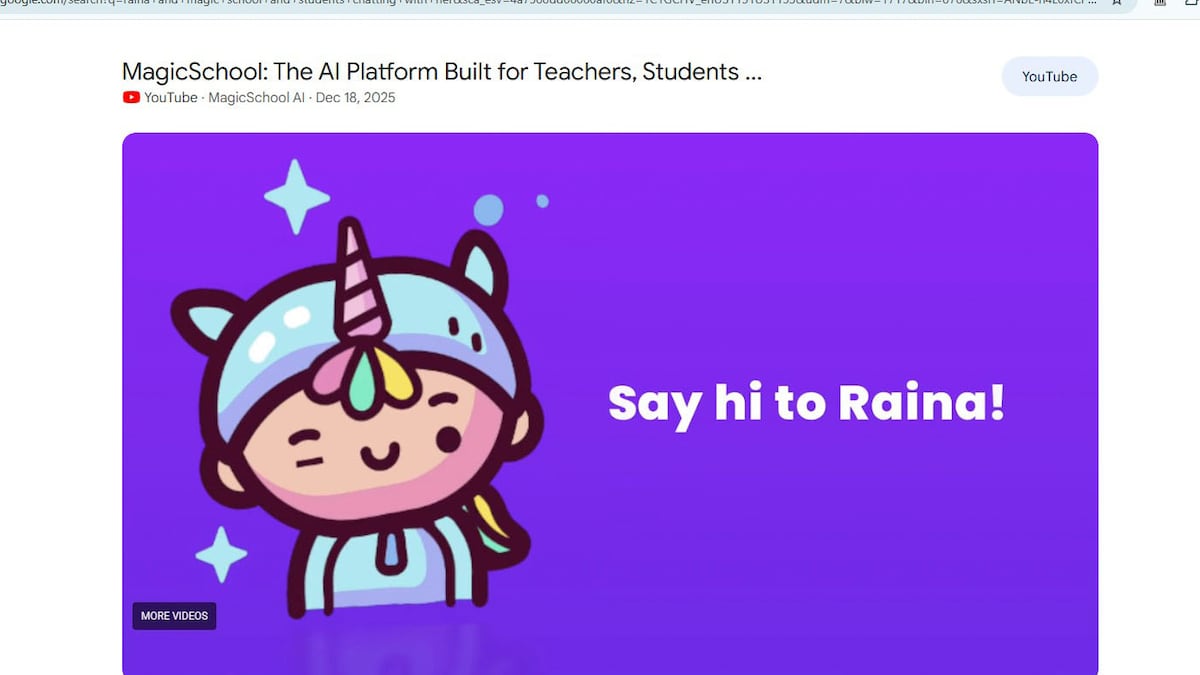
The chatbot was originally marketed as a “new best friend” for both teachers and students, featuring a rainbow-haired character adorned with a unicorn beanie. Following OPB’s reporting, McDonald discovered that Raina was no longer available for student use, despite having previously stated that it could be accessed when enabled by a teacher. McDonald indicated that Raina’s mixed usage warranted continued investment in the AI tool, which costs the district $4 per student annually, leading to an estimated total of over $64,000 for the current enrollment of over 16,000 students.
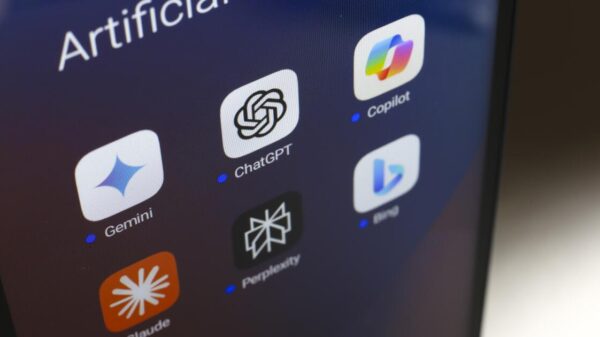
While McDonald refuted claims that the district was rushing technology adoption, stating that many AI tools remain blocked on student devices, the situation has raised questions regarding the vetting process for educational technology. The district has prohibited the use of several high-profile AI tools, including ChatGPT and Google’s Gemini.
On February 10, parents expressed their growing unease about screen reliance in classrooms, including one-to-one student iPads and educational technology apps. The parents gathered over a thousand signatures for their petition in just three weeks. They argued that the district’s failure to know about Raina’s removal undermines claims that the products provided to students are safe and well-vetted. Licensed professional counselor Natalie Houston, who is one of the parents leading the initiative, voiced concerns about children’s interactions with chatbots, noting that children are naturally inclined to trust humanlike entities.
In 2023, the Oregon Department of Education announced guidelines for the use of generative AI in schools, marking a significant step as the first state education agency to do so. However, these are not binding regulations, as the state does not track which AI tools districts opt to implement. State lawmakers are currently considering a bill that would mandate AI programs to remind users that they are interacting with machines rather than humans.
The Bend La-Pine Schools implemented its own AI policy last year, which grants teachers significant autonomy in determining the appropriateness of tools for students. School board member Amy Tatom raised concerns during the February meeting, highlighting issues of iPad misuse and the distraction technology can cause in classrooms. Tatom suggested that the advisory group drafting technology policy should include experts like Houston, who can provide insights into the potential pitfalls of AI.
Parent advocates like Brendan Bouffard, an attorney and father of two children in the district, expressed frustration over what they see as a lack of action on the district’s part in response to concerns about technology. “It seems like in every possible step, in every possible decision to reduce technology, we’re just hitting a brick wall,” he said, criticizing the district’s inclination to invest in technology rather than fostering human connections in education.
As parents continue to call for greater oversight and alternatives to extensive screen time in the classroom, the district is reportedly gathering data on student iPad use, although it lacks a method to track individual screen time. The debate over the role of AI and technology in education remains a contentious topic, as parents and educators seek a balance between innovation and child welfare.
See also Bharat Bodhan AI Conclave 2026 Unites 3,100 to Advance AI in Education Ecosystem
 Ex-Google AI Leader Warns Law, Medical Degrees May Lose Value Amid Rapid AI Advances
 K-12 Schools Face AI Policy Vacuum Amid Rapid Generative AI Adoption and Ethical Concerns
 California Universities See 6% Drop in CS Enrollment Amid AI Program Surge
 Computer Science Enrollment Drops 6% as Students Flock to AI Programs Amidst Job Market Shift