







































Microsoft executive Chris Barry has underscored the increasing urgency surrounding artificial intelligence (AI) in higher education, citing the initiatives at Penn State’s Smeal College of Business as a leading example of institution-wide adoption. In a recent LinkedIn post, Barry, who serves as Corporate Vice President of US Public Sector Industries at Microsoft, noted that universities are beginning to regard AI as a fundamental capability for student success rather than merely an enhancement.
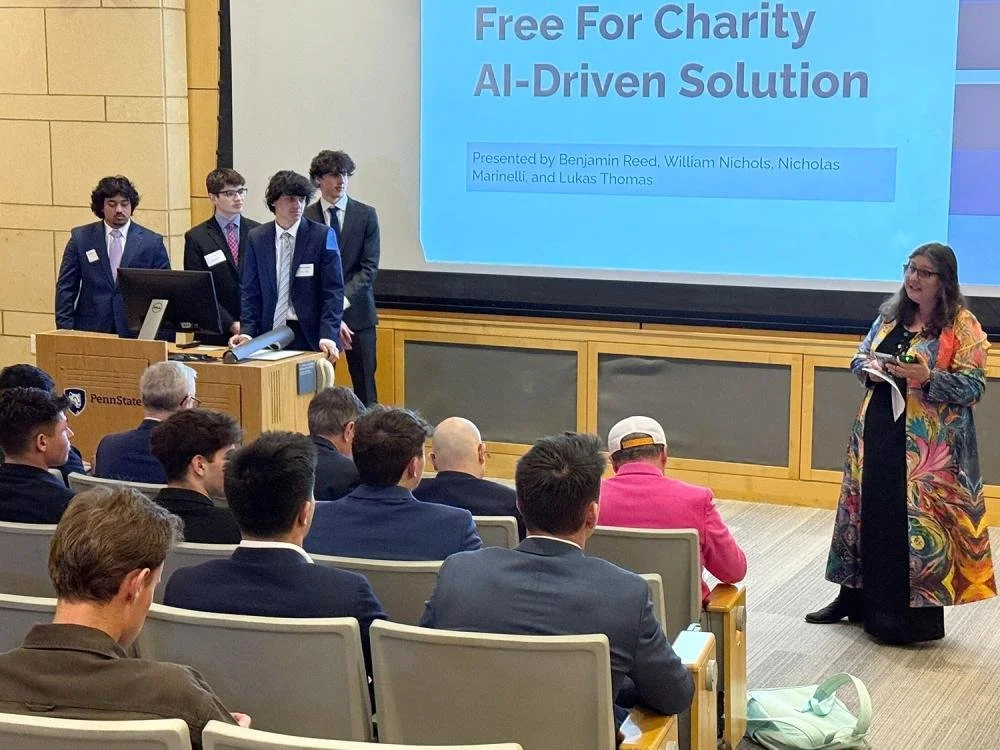
Penn State’s Smeal College of Business, recognized as one of the largest business schools in the United States, has launched a comprehensive AI initiative aimed at integrating artificial intelligence into teaching, research, operations, and workforce development. This initiative reflects a growing recognition among educational institutions of the need to respond to employer expectations and student demand for AI-related skills.
Barry highlighted that in the realm of higher education, there is an urgent need for AI integration. He stated, “In higher education, we’re seeing urgency when it comes to AI. It’s truly becoming a prerequisite for student success, and Penn State Smeal College of Business stands out.” Rather than implementing isolated pilot programs, Smeal’s initiative adopts a “bold, comprehensive approach” to embedding AI across its curriculum and operations.
The Smeal initiative involves a redesign of courses across various departments to incorporate AI applications relevant to each business discipline. The overarching goal is for all graduates to acquire practical AI skills alongside ethical judgment and critical thinking. This shift is coordinated through the AI Innovation in Business Education program, which aims to integrate AI tools and concepts into existing courses rather than treating them as separate entities.
Barry emphasized that enabling faculty and staff to use AI effectively is a hallmark of Smeal’s approach. He noted, “What’s especially powerful is how Smeal is preparing faculty and staff to use AI with confidence.” Faculty and administrators are receiving hands-on training through the Smeal Academy, which includes sessions focused on generative AI and workplace applications. Those who complete the AI@Work training receive dean-sponsored licenses for Microsoft Copilot, empowering them to apply AI in coursework design, research workflows, and administrative functions.
Additionally, Smeal has made strides in its technology usage by piloting BoodleBox, becoming the first college within Penn State authorized to test the platform. BoodleBox, powered by Microsoft Azure, provides access to a variety of AI models within a compliant university environment. Barry explained, “With access to a variety of models, faculty and students can experiment in a protected, compliant environment that meets university standards for privacy, accessibility, and data security.” This capability addresses common concerns related to unmanaged AI adoption in educational settings.
By the fall of 2024, Smeal reports that over three-quarters of its faculty and staff had begun using AI tools. This new initiative formalizes these activities into a coordinated, college-wide strategy. Over the coming year, the college plans to extend AI pilots across its undergraduate and graduate programs, publish responsible AI policies and guidelines, launch a comprehensive AI literacy initiative, and enhance access to approved AI platforms for faculty and staff.
Corey Phelps, John and Karen Arnold Dean of Smeal, characterized the initiative as a timely response to the evolving landscape of business education. Phelps remarked, “AI isn’t a future possibility — it’s here, now. As a leading business school, we have a responsibility to prepare our students not just to use AI, but to lead with it — with purpose, responsibility and integrity. The future success of our graduates depends on how well we rise to this moment.”
See also MBZUAI Opens Applications for 2026 Global AI Leadership Program for Executives
 AI Dialogue Urges Rethink of Education Systems to Enhance Learning Outcomes in 2026
 Pat Yongpradit Joins Microsoft as GM of Global Education and Workforce Policy
 Sazience and MIT AGA Launch AI System to Accelerate Medical Image Interpretation
 AI’s Role in Education Expands: 644% Surge in Job Postings Requiring Generative AI Skills