













































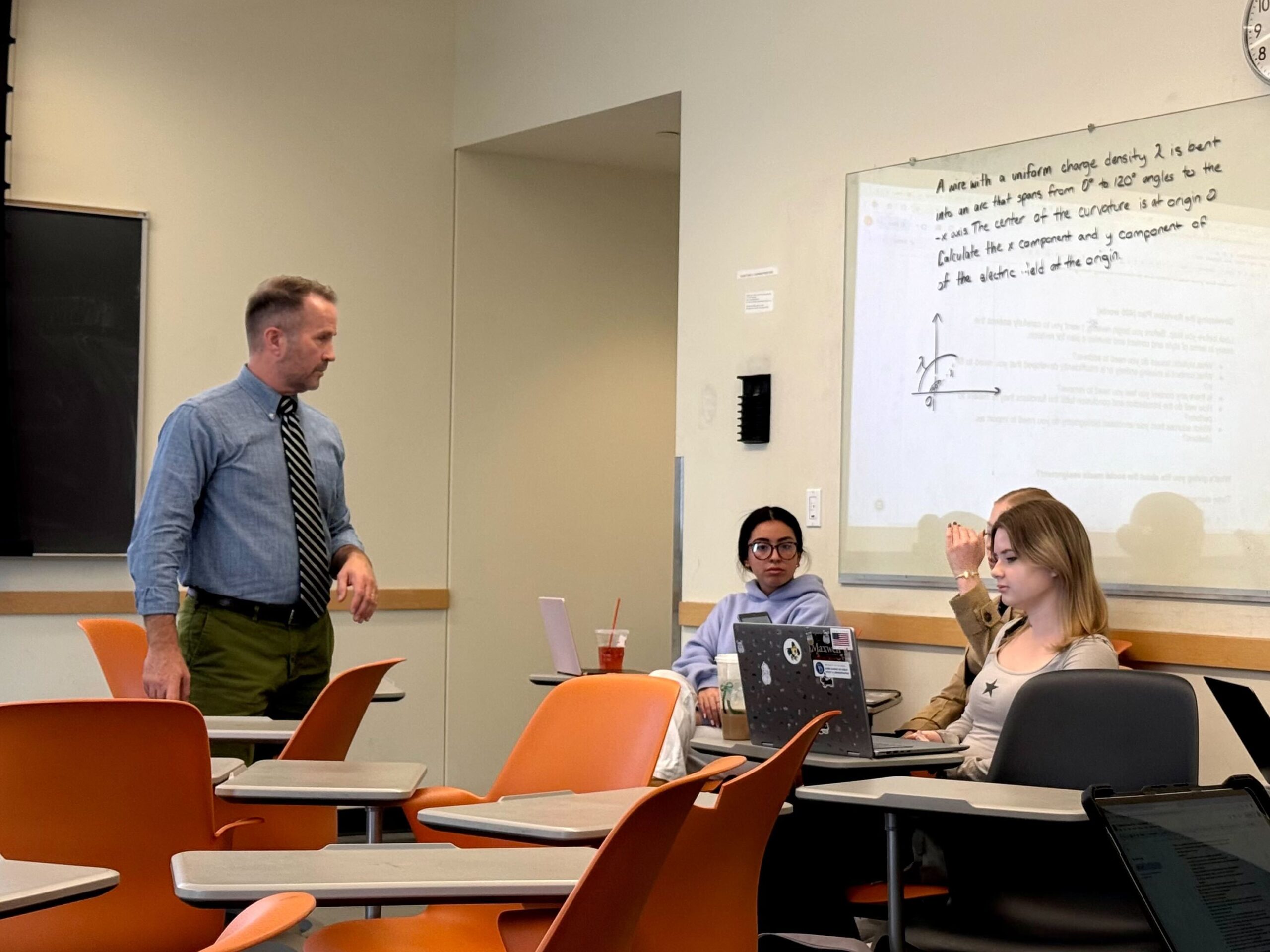
Students at the University of Delaware are grappling with the implications of using artificial intelligence (AI) in their academic work, particularly in a recent English class taught by Professor Kinservik. On the day essays were due, fewer than 20 students representing various majors, including kinesiology and finance, gathered in a small classroom, navigating the complexities of writing with AI tools like ChatGPT and Grammarly.
Kinservik initiated a candid discussion, asking how many students felt that AI had effectively assisted them with their essays. Most hands went up, but when he inquired about the accuracy of the citations provided by these chatbots, nearly all hands dropped. One student recounted how the AI had fabricated an entire list of citations, leading to laughter but highlighting a serious concern: the AI’s limitations in doing the “real work” for students.
Isabella Abdmessih, a freshman majoring in kinesiology, initially approached the semester with skepticism. However, she expressed that the class provided her with a clearer understanding of both the capabilities and limitations of AI. “At first, I was very hesitant, and I think that comes from just not knowing AI’s capabilities,” she said. Abdmessih noted that while the assignment provided her with an essay, it felt as though she was not in control of the material, stating, “It’s not like I had the information and I was controlling the information and manipulating it.”
Abdmessih encountered challenges with tone; her first draft was overly formal for her intended audience. When she requested the AI to adopt a friendlier style, it overcorrected, introducing inappropriate slang. “It is a revolution, it’s something that’s new,” she remarked, appreciating that the class was addressing the transformative nature of AI in education.
Similarly, sophomore finance major Amber Sirrell found the experience emotionally distant, particularly when the AI was employed to write on topics she was passionate about. “Having ChatGPT write something that I’m already really passionate about took away from its creativity because the chatbot is just pulling from somebody else’s writing and somebody else’s writing after that,” she explained, emphasizing the lack of an interpersonal connection in the process.
However, the project also illuminated how AI is already influencing the finance sector, which Sirrell hopes to enter. “With my interview with Savant Wealth Management, we talked about how I’d be peer reviewing AI in the workplace, checking what it puts into documents and correcting it if it’s wrong,” she noted, underscoring the growing relevance of these tools in professional environments.
Both Sirrell and Abdmessih, along with the majority of their classmates, acknowledged that using AI for writing did not provide the shortcut many might expect. Instead, it often required additional labor in terms of fact-checking, editing, and rewriting. For Kinservik, this was intentional. He argued that AI is not replacing students’ efforts but rather reshaping the necessary skills they must acquire. Reading, fact-checking, editing, and synthesizing information are increasingly vital in modern writing.
“If we don’t change our instruction, it’s too easy for students to save time and labor and to be lazy and to use these tools,” Kinservik cautioned. He emphasized the importance of motivating students to engage in their own intellectual work while also critically assessing the use of chatbots, noting that many have not been challenged adequately in this regard.
Kinservik encourages fellow educators to embrace AI and integrate it into their teaching methodologies, rather than resist its presence. He believes that a thoughtful approach can better prepare students for a future where AI plays an integral role in their academic and professional lives. As the landscape of education evolves, understanding and navigating the capabilities of AI will be essential for the next generation of students.
See also Tampa Startup ryco Uses AI to Create Custom Curricula for Schools Nationwide
 University of Toronto Hosts Anthropic AI Hackathon Showcasing Innovative ABA Tools
 Educators Embrace AI: 3 Essential Strategies for Classroom Integration
 AI Video Enhancement Tools Elevate Online Education Quality by 40%—Here’s How
 Amazon Awards $10M to 63 Global Researchers in Spring 2025 AI Research Initiative