





























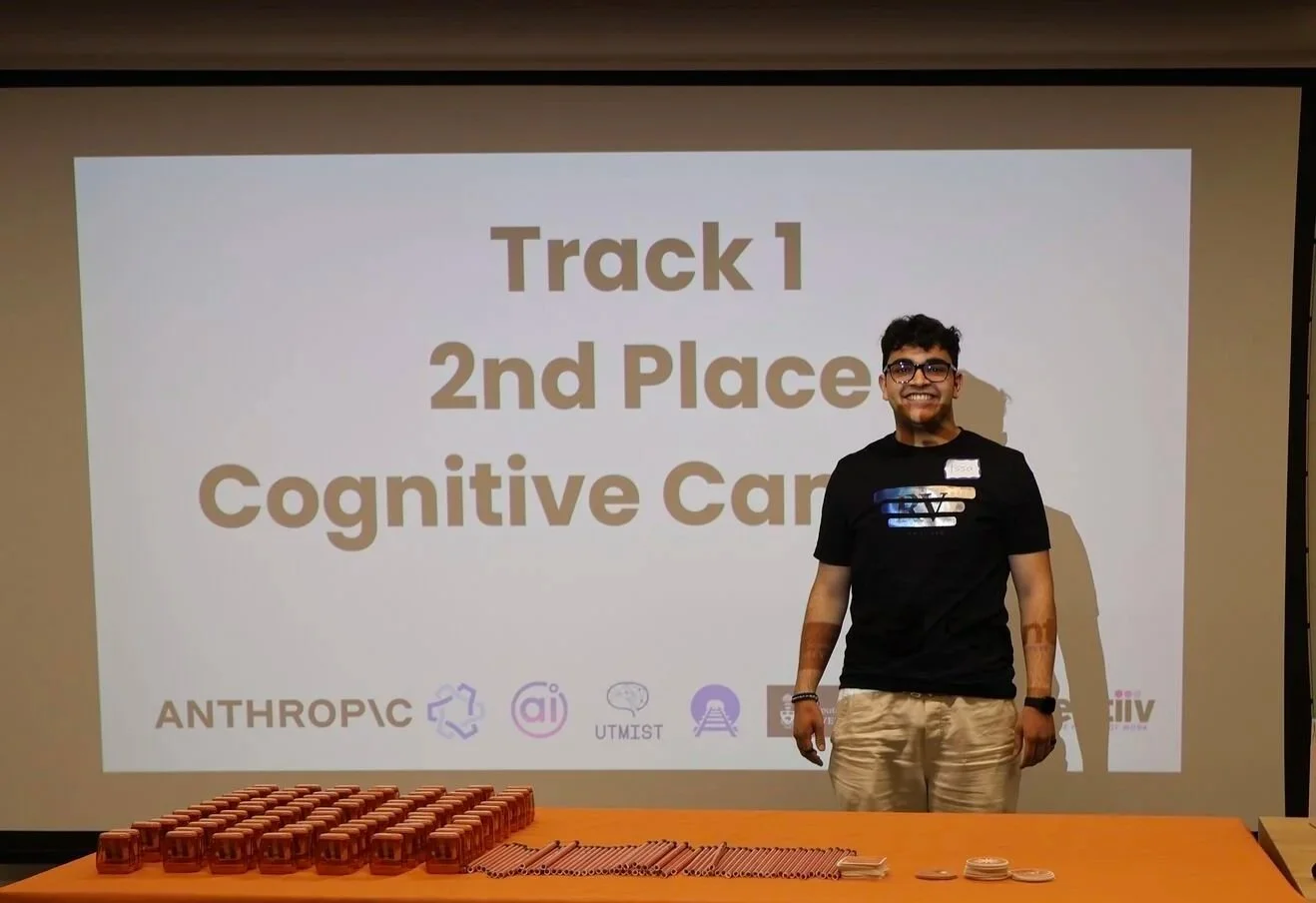
The University of Toronto recently hosted an Anthropic AI Hackathon, aimed at fostering innovation in AI-driven tools utilizing Claude and other machine learning workflows. This event, which took place over the weekend, brought together a diverse group of participants eager to explore the intersection of artificial intelligence and practical applications.
Anthropic, recognized for its Claude family of AI models, focuses on advanced reasoning, analysis, and agentic tasks. During the hackathon, participants developed a variety of projects, including one called ABA Forecast, created by Waseh Niazi, an ABA therapist and data analyst. Niazi took to LinkedIn to share insights about the prototype developed in collaboration with three other team members. Their project aimed to estimate behavioral risk by analyzing contextual variables typically observed in applied behavior analysis sessions.
The team employed a Random Forest Classifier, trained on synthetic data and publicly available datasets. Niazi explained that their model integrated several key variables, including “sleep quality, time of day, transitions, toileting patterns, social context, and environmental conditions through a weather API.” Using Claude, they translated predictions into structured strategy suggestions that align with ABA routines. Niazi emphasized that while the prototype “was developed in under 48 hours and is not a finished product,” it represents a significant step toward combining behavioral science and machine learning to create proactive tools for autism support.
In addition to collaborative efforts, the hackathon also featured individual submissions, showcasing the range of AI applications. Full stack developer and data analyst Issa Al Rawwash shared his experience on LinkedIn, noting that he placed second after independently building his entire system. Reflecting on the challenge, Al Rawwash stated, “Every decision was mine. Every line of code was mine. Every pivot happened in real-time.” He described the experience as an “ultimate test,” highlighting the satisfaction of presenting a complete project to judges as one of the most rewarding moments in his tech career.
The range of applications presented at the hackathon underscored the versatility of AI technologies. Entrants, from behavioral support prototypes to solo-engineered systems, demonstrated how machine learning frameworks can be tailored to meet specific needs within various domains. Niazi concluded his post by inviting others in the fields of ABA, autism services, health technology, or education technology to connect, expressing a desire to explore shared interests and possibilities for collaboration.
This event not only showcased innovative applications of AI but also highlighted a growing interest in integrating technology with behavioral health practices. The development of tools like ABA Forecast illustrates the potential for AI to support practitioners and improve outcomes for individuals with autism. As the field continues to evolve, hackathons like this one will likely play a crucial role in shaping future advancements in the intersection of technology and healthcare.
See also Educators Embrace AI: 3 Essential Strategies for Classroom Integration
 AI Video Enhancement Tools Elevate Online Education Quality by 40%—Here’s How
 Amazon Awards $10M to 63 Global Researchers in Spring 2025 AI Research Initiative
 Hawai‘i Schools Implement AI Guidelines to Enhance Learning and Safeguard Student Data
 Osaretin Agbonavbare Achieves MBA and Advances U.S. AI Leadership with iBARE Platform