



































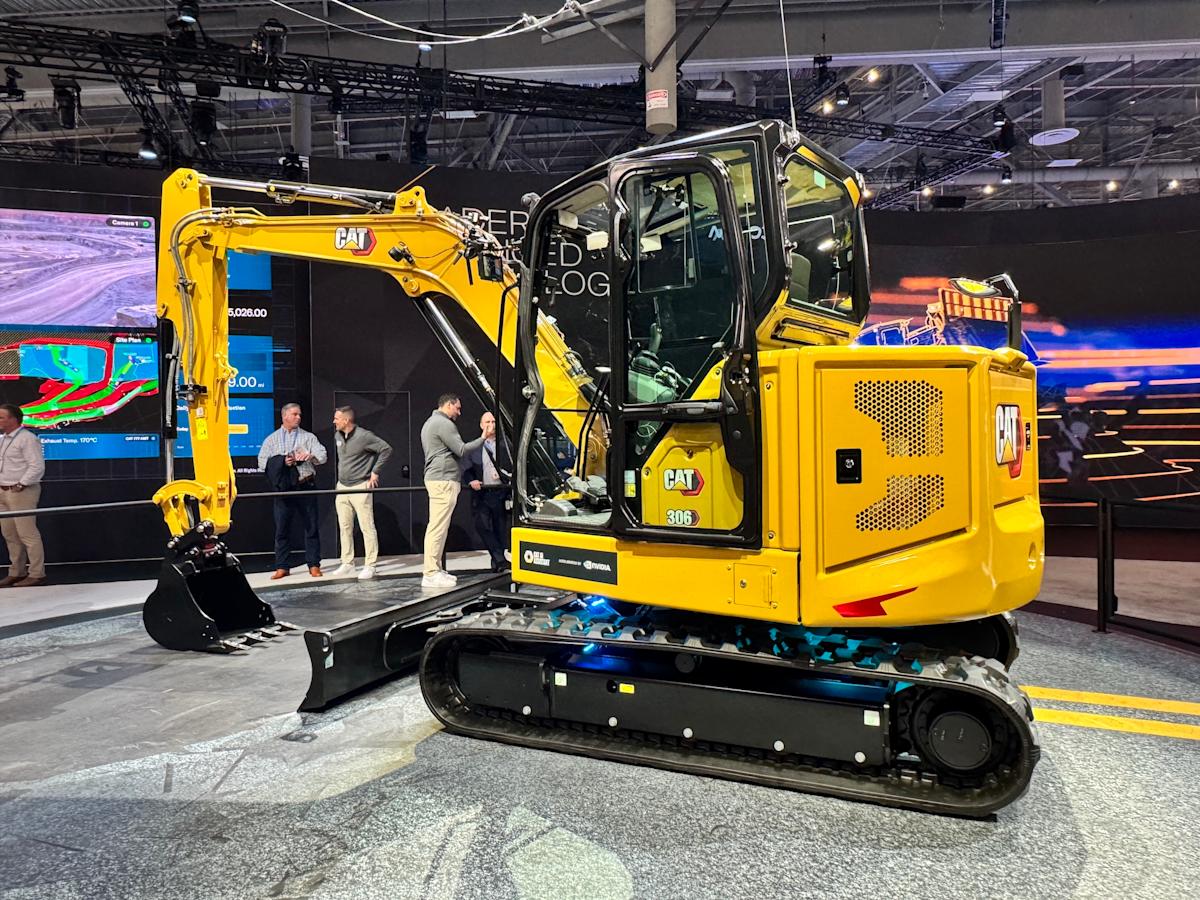
Caterpillar is enhancing its fleet of construction machinery with artificial intelligence through a new partnership with semiconductor powerhouse Nvidia. The company is piloting an AI assistive system in its mid-size Cat 306 CR Mini Excavator, branded as “Cat AI,” which is being showcased at the Consumer Electronics Show (CES) this week.
The innovative system is powered by Nvidia’s Jetson Thor platform, aimed at assisting machine operators with a range of tasks. According to Brandon Hootman, vice president of data and AI at Caterpillar, Cat AI utilizes a fleet of AI agents to provide answers to operator inquiries, access resources, deliver safety tips, and schedule maintenance services.
One of the key advantages of integrating AI into construction machinery is the wealth of data generated and transmitted. “Our customers don’t live in front of a laptop day in and day out; they live in the dirt,” Hootman stated. “The ability to get the insights and take the action that they need while they’re doing the work is very important to them.”
In addition to Cat AI, Caterpillar is exploring the use of digital twins for construction sites, leveraging Nvidia’s Omniverse library for simulation resources. This technology allows the company to experiment with project scheduling scenarios and better estimate the quantity of building materials required. Hootman emphasized that Caterpillar’s machinery sends approximately 2,000 messages to the company every second, providing critical data to enhance these simulations.
Caterpillar has already implemented fully autonomous vehicles in the mining sector, and Hootman regards these pilot programs as essential steps toward expanding automation across the company’s offerings. “The reason that we started here was it was a real challenge of our customers today that needed to be addressed, and also something that we had some real momentum on and we felt like we could bring to market pretty quickly,” he explained. “What we also liked is that it provided a kind of a technology foundation for us to then build upon.”
The collaboration with a storied manufacturer such as Caterpillar aligns seamlessly with Nvidia’s vision for physical AI. Bill Dally, Nvidia’s chief scientist, has previously asserted that the company views physical AI as the next frontier for its powerful graphics processing units (GPUs). During Nvidia’s CES keynote, the company outlined plans for a comprehensive ecosystem for physical AI, which includes open AI models like the Cosmos model family, simulation tools, and developer kits.
While some may perceive physical AI as primarily relevant to robotics firms, Deepu Talla, vice president of robotics and edge AI at Nvidia, indicated that the definition is much broader, as “everyone is building robotics today.” This perspective underscores the growing intersection of traditional industries with advanced technological solutions, marking a shift in how companies approach operations and efficiencies.
The integration of AI into construction equipment is poised to redefine how operators interact with machinery, potentially increasing productivity and safety on job sites. As Caterpillar and Nvidia continue to explore these advancements, the implications for the construction industry could be profound, reflecting a broader trend of automation and digital transformation across various sectors.
See also ATG Raises $15 Million to Launch AI Financial Advisor, Autonomous, by 2026
 AI Agents Expose Finance Weaknesses: Prepare with 4 Key Readiness Steps for Success
 Davis Finance Commission Recommends Targeted SRI Policy, Excludes Occupation Amendment
 AI Bubble Risks: Five Strategies to Safeguard Your Investments from Market Collapse