









































The Hong Kong Special Administrative Region Government has unveiled its 2026/27 Budget, which emphasizes the development of artificial intelligence (AI), financial market reforms, and infrastructure expansion. Aligning closely with China’s 15th Five-Year Plan, this budget seeks to position Hong Kong as a global innovation and technology hub.
In a significant turnaround, the government projects a HK$2.9 billion (US$370.8 million) surplus for the fiscal year 2025/26, reversing an earlier forecast of a HK$67 billion (US$8.6 billion) deficit. This shift reflects a renewed optimism in the city’s economic recovery and strategic initiatives aimed at growth.
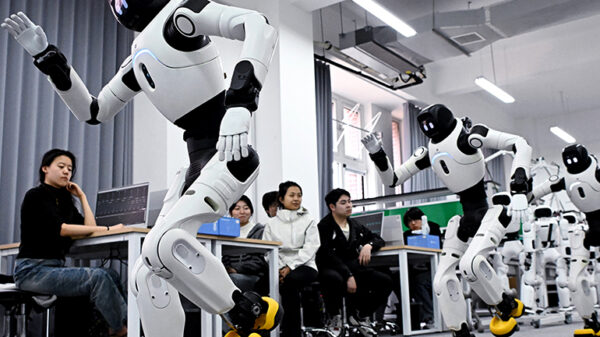
Central to the budget is the focus on AI-driven industrialization and the accelerated development of the Northern Metropolis. Lawmaker Duncan Chiu emphasized the inclusion of emerging sectors, such as aerospace technology and embodied intelligence. Notably, the Hong Kong Academy of Sciences and the Hong Kong Young Academy of Sciences assert that these measures will attract global research and development talent, with Chiu underscoring AI’s crucial role in enhancing urban competitiveness.
Infrastructure funding will receive a boost, with an additional HK$20 billion allocated for the San Tin Technopole and Hetao Hong Kong Park. In a historic shift, HK$150 billion will be moved from the Exchange Fund for the first time in 42 years to finance the Northern Metropolis and other major infrastructure initiatives. This marks a significant commitment by the government to foster technological advancement and urban development.
Financial reforms are also a key component of this budget, aimed at strengthening Hong Kong’s standing in the global financial landscape. According to the Hong Kong Exchanges and Clearing and the Securities and Futures Commission, these reforms will enhance the city’s competitiveness in the international market.
However, the response to the new Main Board Chapter 18C listing rules for specialist technology firms has been tepid, with only two listings recorded since March 31, 2023. In a bid to attract more applicants, regulators have temporarily reduced the minimum market capitalization requirement for pre-commercial specialist technology firms from HK$10 billion to HK$8 billion.
This strategy aligns with broader efforts to position Hong Kong as a bridge for mainland China’s technology sector to expand globally. The government plans to host the first national manufacturing innovation center outside of mainland China, as well as launch an academy aimed at globalizing mainland biomedicine technology.
As Hong Kong forges ahead with its ambitious agenda, the emphasis on AI and technological innovation appears to be a pivotal aspect of its long-term economic strategy. The government’s commitment to fostering a robust environment for innovation and attracting global talent will be crucial in determining the success of these initiatives. The 2026/27 Budget not only outlines immediate financial forecasts but also sets the stage for Hong Kong’s future in the competitive landscape of global technology and finance.
See also Jio Financial Launches Early Access for AI-Powered Finance App Finsider with Reward Points
 ZimX Finance Launches ZiRA, an AI Assistant Tailored for Zimbabweans in Public Beta
 JioFinance Launches Agentic AI App, Revolutionizing Personal Finance for Users in India
 Pluvo Secures $5 Million to Enhance AI Decision Intelligence for Finance Teams