



















































Nvidia took to social media on Tuesday to publicly defend itself after a report indicated that one of its major customers, Meta, is contemplating a transition of part of its AI infrastructure to Google‘s custom chips, known as TPUs. This unusual move for the $4 trillion chipmaker followed a 2.5% decline in its stock price, as investors reacted to the news. Meanwhile, shares of Alphabet, buoyed by positive reviews of its new Gemini 3 model, rose for a third consecutive day.
The initial catalyst for Nvidia’s response was a report from The Information, which disclosed that Google has been marketing its AI chips to a range of clients, including Meta and several large financial institutions. Currently, Google rents these chips via its cloud service, but any shift to deploying TPUs in client data centers would significantly intensify the competition between Google and Nvidia.
This shift in sentiment was enough to unsettle Wall Street and prompted Nvidia to react. In a post on X, the company stated, “We’re delighted by Google’s success—they’ve made great advances in AI, and we continue to supply to Google. Nvidia is a generation ahead of the industry—it’s the only platform that runs every AI model and does it everywhere computing is done.” This statement underscores Nvidia’s commitment to maintaining its leadership in the AI hardware space, despite the encroaching competition.
Analysts have begun to recognize the growing viability of Google’s TPUs as alternatives to Nvidia’s GPUs. Brian Kersmanc, a portfolio manager at GQG Partners, expressed concerns last week that Google’s chips are being acknowledged as a genuine competitor. He noted that the success of Google’s Gemini 3 model, which was trained using TPUs, suggests that the leading AI player is not reliant on Nvidia’s technology for its advancements.
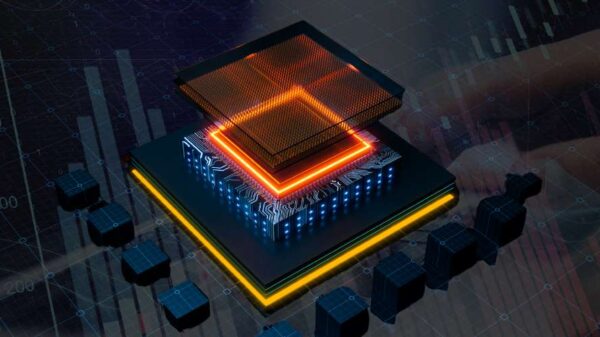
Historically, Google’s AI chips have been seen as effective tools for its internal operations but not a significant threat to Nvidia, which commands over 90% of the AI accelerator market with its general-purpose GPUs. The architectural differences play a key role; TPUs are application-specific integrated circuits (ASICs) optimized for specific workloads, whereas Nvidia promotes its GPUs as versatile solutions capable of handling a wider array of AI models across various environments.
Nvidia emphasized this distinction in its X post, asserting, “Nvidia offers greater performance, versatility, and fungibility than ASICs.” The company also highlighted its latest Blackwell architecture, claiming it remains a generation ahead of competitors. However, the recent traction of Google’s Gemini 3, trained solely on TPUs, has been seen as a game-changer, with some positioning it as a formidable rival to OpenAI‘s leading models.
The implications of Meta considering a pivot to TPUs could signify a deeper shift in industry dynamics, reducing its reliance on Nvidia’s technology. Investors have long speculated about such a move, and if realized, it may alter the competitive landscape in AI infrastructure.
Nvidia’s concerns extend beyond Google. The company is also facing scrutiny from noted investor Michael Burry, who has made headlines for his predictions surrounding the tech industry’s potential bubble. Burry compared Nvidia’s position to that of Cisco during the dot-com boom, suggesting the company could face significant corrections. In response, Nvidia circulated a seven-page memo refuting Burry’s criticisms, which he later shared on his Substack account.
Burry’s warnings included accusations of excessive stock-based compensation and inflated depreciation practices that could mislead investors about the profitability of data center investments. In its memo, Nvidia countered these claims point by point, asserting that its business fundamentals remain robust and its accounting practices transparent. “Nvidia does not resemble historical accounting frauds because Nvidia’s underlying business is economically sound, our reporting is complete and transparent, and we care about our reputation for integrity,” the company stated.
As the AI landscape evolves, the spotlight is increasingly on how companies like Nvidia and Google will navigate the competitive pressures. With the success of Google’s TPUs and the potential for Meta to embrace this technology, Nvidia’s future dominance in the AI accelerator market faces new challenges that may reshape the industry in the coming years.
See also Curvestone AI Partners with White Rose Finance to Automate Compliance Reviews, Reducing Time by 90%
 Andrew Custer Launches B.Y. Private Institute, Aiming for 100,000 AI Financial Students
 Curvestone AI Partners with White Rose Finance Group to Streamline Compliance with Automation
 Deloitte Launches AI-Powered Sales Forecasting Box for Swiss Finance Teams
 Tech Mahindra Launches i.GreenFinance Platform to Streamline Green Loan Compliance