






















































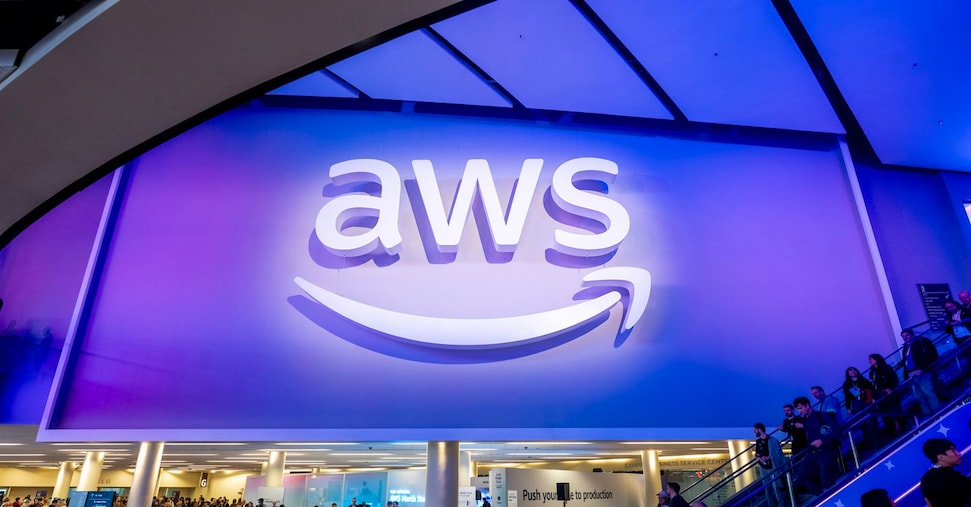
Amazon Web Services (AWS) is shifting its focus from generative AI models to the creation of more interactive AI agents, a move underscored during CEO Matt Garman‘s keynote at re:Invent 2025. Garman emphasized that while generative AI can produce text, code, or images, AI agents are designed to take specific actions and achieve defined goals. This evolution reflects a strategic pivot for AWS toward developing customized agents that enterprises can training on their own data and deploy effectively.
“I believe the advent of AI agents has brought us to a turning point in the trajectory of artificial intelligence: from technical marvel to real value,” Garman stated. He highlighted the importance of action-oriented agents that can execute tasks without constant oversight. This year’s event showcased AWS’s commitment to establishing a comprehensive ecosystem, enabling businesses to set up agentic systems quickly and efficiently, without complex infrastructural challenges. A ready-to-use software development kit (SDK) is central to this initiative, keeping companies engaged within AWS’s broader ecosystem.
At the core of this initiative is the Bedrock AgentCore platform, which provides essential building blocks for creating both effective and governable agents. The platform will support advanced generative AI models including ChatGPT, Anthropic’s Claude, and newer models from the European firm Mistral. These offerings allow users to concentrate on practical applications rather than underlying technologies. Two key automatic features stand out: a policy feature that sets behavioral limits on agents and an evaluation feature that monitors their performance in real-world scenarios, focusing on correctness, usefulness, and security.
In terms of infrastructure, AWS is launching AI Factories to help customers integrate AWS services into their existing data centers, aligning with their governance and data sovereignty needs. Alongside this, Garman revealed the debut of the new Trainium 3 chip, boasting double the energy efficiency of its predecessor. This chip aims to enhance large-scale training and global inference capabilities, positioning itself as a competitive alternative to Nvidia’s offerings while strategically reducing reliance on the AI chip giant.
AWS’s agentic platform also incorporates the Nova 2 model family and introduces Omni, a unified multimodal model capable of integrating speech, text, video, and images. Another innovation, Nova Forge, facilitates the creation of customized models, enabling organizations to tailor solutions to their specific needs. The ultimate goal is to develop the frontier agent class—autonomous, scalable agents capable of orchestrating various tools and data streams without ongoing human intervention.
The agent SDK is framed as a competitive advantage, with its features for policy, evaluation, and memory instilling confidence among users. The AgentCore platform promises elasticity and speed, powered by the performance of the Trainium 3 chip. Among the three initial models introduced in this class, Kiro Autonomous is particularly notable for its role in software development, allowing developers to focus primarily on final oversight. Complementing this are the Security agent and the DevOps agent, both designed to facilitate the deployment of numerous agents across organizations.
Another significant development is Transform, a tool aimed at streamlining migrations and reducing technical debt, thus liberating teams from the limitations of legacy systems. As Swami Sivasubramanian, Vice President of Agentic AI at AWS, articulated, “useful agents are not those that can do everything, but those that are reliable because they operate within clear boundaries.” This perspective underscores the focus on creating dependable agents that can effectively contribute to business operations without overextending their capabilities.
The strategic emphasis on agentic AI signifies AWS’s commitment to evolving its cloud services to meet the changing demands of enterprises, paving the way for a future where AI agents can enhance productivity and operational efficiency across industries.
See also Meta Reveals AI Models ‘Mango’ for Video and ‘Avocado’ for Text, Targeting 2026 Launch
 Hybrid Reasoning Combines Symbolic and Statistical AI for Enhanced Accuracy and Trustworthiness
 IntraGPT Named Most Secure Local AI LLM by AI Magazine Netherlands, Sets New Data Privacy Standard
 Latin America’s 2026 Financial Stability at Risk Due to GenAI and Fintech Vulnerabilities