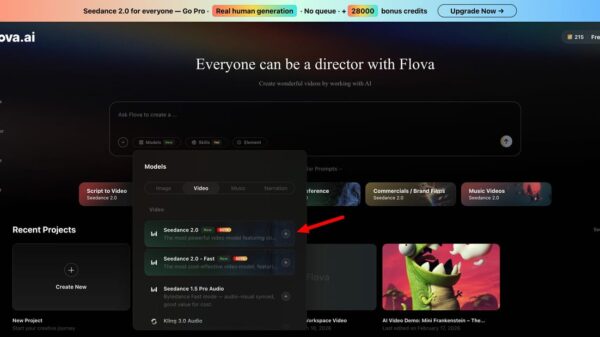





































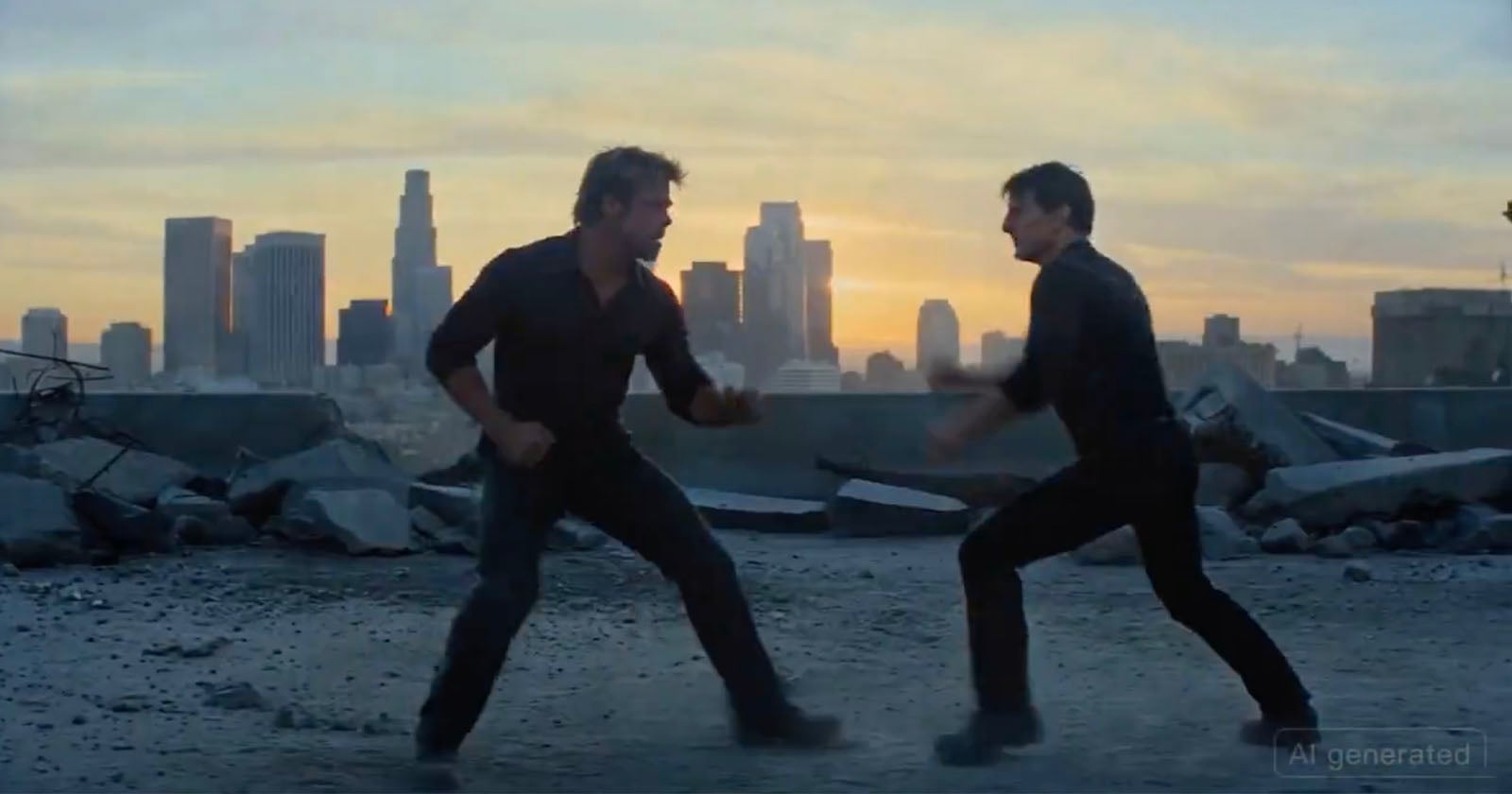
An AI-generated video featuring actors Brad Pitt and Tom Cruise has stirred controversy in Hollywood, following the release of Seedance 2.0 by ByteDance, the creator of TikTok. The video, depicting a fictional fight between the two stars, quickly went viral after its launch last week, prompting a swift legal response from Disney, which sent a cease-and-desist letter to ByteDance, citing “blatant infringement” of its copyright.
The emergence of Seedance has unsettled many in the film industry. Rhett Reese, a writer for the Deadpool franchise, commented that “in next to no time, one person is going to be able to sit at a computer and create a movie indistinguishable from what Hollywood now releases.” This sentiment underscores growing concerns over the implications of AI technology on traditional filmmaking.
In an official statement, Charles Rivkin, the chief executive of the Motion Picture Association, called on ByteDance to “immediately cease its infringing activity.” Disney’s letter was directed to ByteDance’s global general counsel, John Rogovin, who previously served as the general counsel for Warner Bros. Entertainment. His presence at ByteDance may provide some reassurance to Hollywood stakeholders, as concerns mount about potential infringements by a Chinese firm.
In response to the growing criticism, ByteDance has stated that it “respects intellectual property rights” and acknowledged the concerns regarding Seedance 2.0. The company added, “We are taking steps to strengthen current safeguards as we work to prevent the unauthorized use of intellectual property and likeness by users.”
The legal issues surrounding Seedance are reminiscent of ongoing challenges faced by the entertainment industry in combating AI-generated content. Copyright Lately highlighted a separate infringement lawsuit involving Disney, Warner Bros. Discovery, and NBCUniversal against another Chinese AI company, MiniMax. This case has illustrated the complexities of enforcing U.S. copyright law in international contexts, as serving legal complaints under the Hague Convention can be a lengthy and cumbersome process, particularly in China.
As AI technology advances, the boundaries of artistic creation are increasingly blurred, raising questions about the future of the film industry. ByteDance’s decision to pull back on Seedance may mitigate some immediate concerns, but Hollywood’s apprehension about the potential for AI to disrupt traditional content creation remains palpable. As the industry grapples with these emerging technologies, it mirrors challenges faced by photography over the past year, as AI continues to improve its ability to replicate artistic works.
The ongoing dialogue around AI-generated content highlights a critical juncture for Hollywood, where the intersection of creativity and technology prompts urgent discussions about intellectual property rights, artistic integrity, and the future of storytelling. As these issues unfold, industry stakeholders are left to navigate the evolving landscape of entertainment in an increasingly digital age.
See also AI Use Among Youth Reveals Mental Health Impact Linked to Offline Support Systems
 5 AI Tools Transforming Reading Habits for Enhanced Knowledge Retention and Understanding
 Chinese Tech Giants Launch Viral AI Tools, Featuring Realistic Brad Pitt, Tom Cruise Clips
 Google Launches Lyria 3 in Gemini App, Enabling AI Music Creation from Text and Images
 HSE Study Reveals Generative AI Market Struggles with Revenue Despite $10B Investments