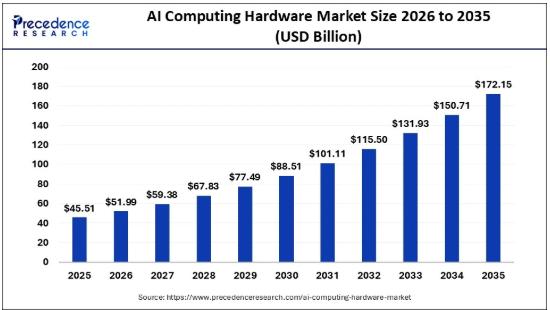



















































The global market for Generative AI in Construction is set to surge, projected to reach approximately USD 2,855.1 million by 2033, a significant increase from just USD 142 million in 2023. This growth reflects a compound annual growth rate (CAGR) of 35% from 2024 to 2033, driven by the construction industry’s escalating need for automation, cost optimization, and enhanced project efficiency. Firms are increasingly adopting generative AI technologies to refine design processes, optimize resource utilization, and shorten project timelines, aligning with the broader trend of digital transformation across construction workflows.
Generative AI allows construction companies to analyze complex datasets, generate diverse design alternatives, and simulate project outcomes prior to execution. This capability helps reduce errors, enhances planning precision, and improves overall project management. As projects grow more complex and data-driven, the embrace of AI-powered solutions is intensifying, positioning generative AI as an essential tool in contemporary construction practices.
In reshaping the future of construction, generative AI facilitates the automated generation of multiple design options tailored to project specifications. Architects and engineers can swiftly evaluate various scenarios, selecting the most efficient designs. This not only fosters creativity but also significantly reduces design time and enhances project outcomes. Additionally, AI models improve planning and scheduling by analyzing project data to optimize timelines and resource allocation, further minimizing delays and elevating operational efficiency.
Market Dynamics and Research Methodology
The scope of the generative AI market in construction encompasses AI-driven solutions utilized in design, planning, project management, and construction execution. It encompasses technologies such as machine learning, natural language processing, and generative models applicable to various construction workflows. The analysis includes applications across residential, commercial, and infrastructure projects, considering both cloud-based and on-premises deployments.
The research methodology evaluates trends in the construction industry, digital adoption, and AI integration across projects, utilizing publicly available data and observed implementations of generative AI solutions. Data validation is underpinned by usage trends and technological advancements, employing a structured approach to ensure consistency and reliability.
Key factors driving market expansion include the growing demand for cost efficiency and productivity within construction projects. Generative AI contributes to optimizing resource usage and minimizing material waste, enhancing project profitability and sustainability. The increasing complexity of construction initiatives necessitates advanced planning and coordination, which generative AI facilitates through enhanced decision-making capabilities driven by data analysis and simulation.
Emerging trends indicate a notable integration of generative AI with Building Information Modeling (BIM) systems, enabling real-time collaboration and improved design accuracy. This synergy enhances BIM by optimizing designs and allowing for early detection of potential issues, thereby transforming construction workflows. Additionally, the use of AI for sustainability and green building initiatives is gaining traction, as generative AI aids in optimizing energy usage, material selection, and overall environmental impact.
Despite the promising landscape, several challenges persist. The high costs associated with implementing generative AI solutions represent a significant barrier, particularly for smaller firms, as advanced software and infrastructure require substantial investments. Moreover, the scarcity of skilled professionals in AI and digital construction technologies complicates the implementation and management of AI systems, potentially hampering broader adoption.
Opportunities abound in the realm of infrastructure development, where significant government investments create demand for advanced technologies. Generative AI holds the potential to enhance planning and execution within these large-scale projects, presenting strong growth prospects. Furthermore, integrating AI with robotics and automation in construction could bolster efficiency and precision, paving the way for innovative practices.
However, ensuring data accuracy and quality for AI models poses a considerable challenge. Generative AI’s efficacy hinges on large datasets; poor data quality can undermine results and decision-making. Additionally, the integration of generative AI with existing construction systems can be complex and time-consuming, particularly for firms relying on legacy systems.
Generative AI is increasingly applied in architectural design and planning, generating a variety of design options and optimizing layouts based on project requirements. This not only enhances efficiency and creativity but also significantly reduces design timelines. In project management, generative AI optimizes schedules and resource allocation, analyzing project data to improve planning and execution while minimizing delays.
As the generative AI market in construction accelerates, companies are capitalizing on these technologies to enhance design, planning, and project management processes. The integration of generative AI with advanced construction tools is reshaping traditional workflows, fostering innovation within the industry. Despite ongoing challenges related to cost, skill gaps, and system integration, the overall outlook for generative AI in construction remains positive, with significant potential to transform global construction practices in the years ahead.
See also Sam Altman Praises ChatGPT for Improved Em Dash Handling
 AI Country Song Fails to Top Billboard Chart Amid Viral Buzz
 GPT-5.1 and Claude 4.5 Sonnet Personality Showdown: A Comprehensive Test
 Rethink Your Presentations with OnlyOffice: A Free PowerPoint Alternative
 OpenAI Enhances ChatGPT with Em-Dash Personalization Feature