










































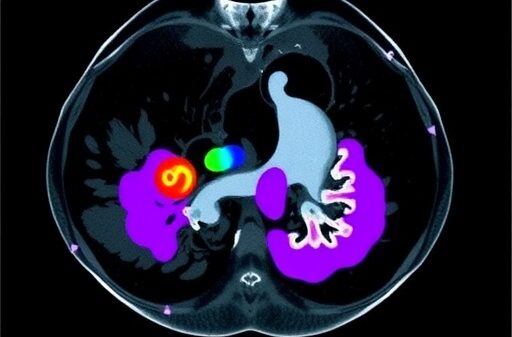




Meta Platforms Inc. unveiled its latest reasoning model, Muse Spark, today, showcasing its capabilities in answering health-related inquiries and analyzing multimodal data. The company plans to integrate this advanced algorithm into its consumer-oriented Meta AI service over the coming weeks while also offering it to developers through a private preview of its application programming interface (API).
Muse Spark has demonstrated superior performance compared to competitors, including Claude 4.6 Opus, Gemini 3.1 Pro, and GPT 5.4, across multiple benchmarks. Notably, it exceeded GPT 5.4’s score by over 2% in the HealthBench Hard evaluation, which assesses AI models’ proficiency in addressing medical questions. This achievement is attributed to a clinical training dataset developed in collaboration with more than 1,000 physicians as part of a comprehensive overhaul of Meta’s AI development processes.
In a blog post, Meta emphasized that Muse Spark operates with significantly less computational power than its predecessor, Llama 4 Maverick, stating, “We can reach the same capabilities with over an order of magnitude less compute than our previous model.” This efficiency positions Muse Spark as a more sustainable alternative to existing baseline models.
Besides health-related inquiries, Muse Spark reportedly excels in scientific chart analysis, outpacing Opus 4.6 and other competitors on the CharXiv Reasoning benchmark, which evaluates technical graphs. This visual reasoning capability is applicable to other scenarios, such as allowing users of the Meta AI app to upload images of grocery store shelves for calorie count estimations of food items.
Meta’s assessments of Muse Spark spanned more than half a dozen benchmarks, showing that it was competitive with leading models like Opus 4.6, Gemini 3.1 Pro, and GPT 5.4. In various evaluations, Muse Spark outperformed at least one of its rivals, covering diverse use cases, including code generation, robot navigation, and tool utilization.
To enhance output quality, users can activate a feature known as Contemplating mode, which launches multiple AI agents to decompose tasks into smaller components executed in parallel. Meta claimed this innovation improved Muse Spark’s score on HLE, a challenging benchmark in the AI sector, by approximately 8%.
Muse Spark is the first of a planned series of multimodal reasoning models. In its blog post, Meta expressed optimism about further developments, stating, “We’re on a predictable and efficient scaling trajectory. We look forward to sharing increasingly capable models on the path to personal superintelligence soon.”
This introduction comes at a time when AI technologies are rapidly evolving, with companies across various sectors racing to improve their capabilities. As competition intensifies, innovations like Muse Spark may redefine standards for AI performance, especially in specialized fields such as healthcare and data analysis. The ability to tackle complex queries efficiently and effectively could significantly impact how consumers and professionals leverage AI in their daily lives.
See also Sam Altman Praises ChatGPT for Improved Em Dash Handling
 AI Country Song Fails to Top Billboard Chart Amid Viral Buzz
 GPT-5.1 and Claude 4.5 Sonnet Personality Showdown: A Comprehensive Test
 Rethink Your Presentations with OnlyOffice: A Free PowerPoint Alternative
 OpenAI Enhances ChatGPT with Em-Dash Personalization Feature