






















































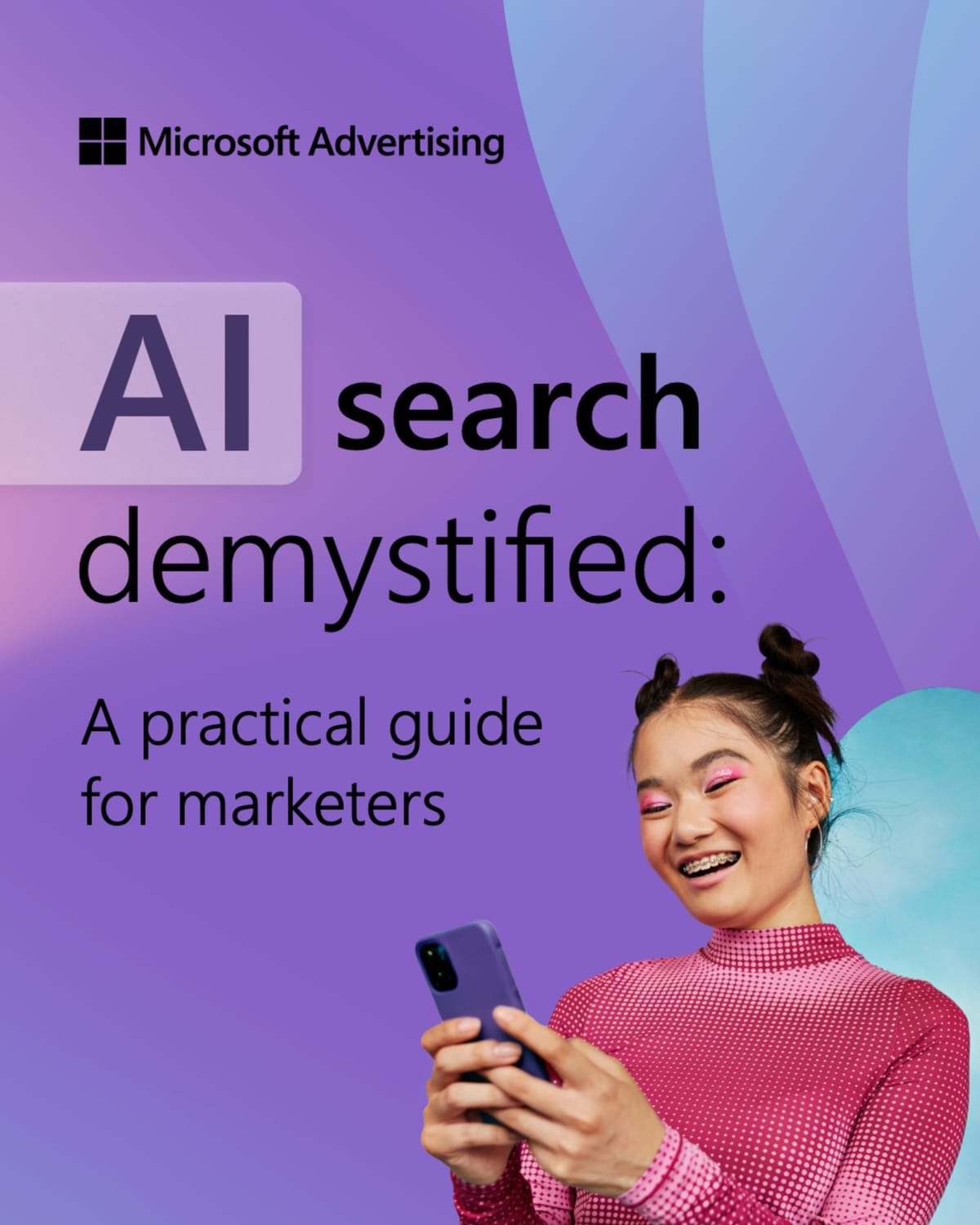
Microsoft Advertising released an updated edition of its AI marketer’s guide on February 11, 2026, designed to assist marketers in adapting to artificial intelligence-powered search environments where traditional keyword optimization no longer dictates brand visibility. The new guide, titled “Understanding AI search: A guide for modern marketers,” responds to feedback from various industry events and conversations, emphasizing the need for clarity as AI technologies reshape digital marketing.
Authored by Paul Longo, General Manager of AI in Ads at Microsoft Advertising, the guide builds upon the previous publication, “A Marketer’s Guide to Chatbots and Agents: From Generative AI to ROI.” It outlines how advancements in AI assistants have resulted in increased capabilities, better context awareness, and a greater ability to provide answers before users click on links.
The guide notes a significant transition from keyword-based queries to conversational interactions, marking an unprecedented shift in how consumers engage with search platforms. Marketers are now required to rethink their strategies as AI systems redefine discovery patterns and influence brand visibility.
Technical Details
Central to the updated guide is an extensive explanation of large language models (LLMs), which underpin contemporary generative AI tools. Understanding LLM functionality is crucial for marketers aiming to optimize their visibility. Microsoft elucidates how LLMs learn and perform tasks while emphasizing the importance of Retrieval Augmented Generation (RAG) in providing accurate and trustworthy responses. RAG is a method that grounds AI outputs in verified information, ensuring a level of reliability that traditional AI systems lacked.
This technical focus marks a departure from older marketing guides which often avoided deep dives into AI architecture, highlighting the growing consensus that marketers must grasp fundamental AI mechanics for effective optimization.
Additionally, the guide outlines two primary pathways for brand visibility in AI search: paid placements and organic visibility. Some AI platforms offer advertising options through sponsored answers or multimedia ads. Microsoft recently reported that its advertising business surpassed $20 billion in annual revenue, underscoring the market viability of AI-enhanced advertising formats.
To surface brands organically, Microsoft describes a three-stage process: baseline understanding, which involves the foundational knowledge acquired by LLMs; grounded refinement, which consists of retrieving web content to verify and enhance accuracy; and precision signals, where structured first-party data informs AI systems about products and services. This structured approach illustrates the increasing precision and authority AI systems require for brand recommendations.
The guide also tackles the evolving landscape of SEO, debating whether Generative Engine Optimization (GEO) is a new discipline or an extension of traditional Search Engine Optimization (SEO). Microsoft acknowledges the validity of both views. Traditional SEO remains vital, as websites need to rank well to be considered by AI systems. However, GEO introduces additional requirements beyond conventional practices, as AI interpretation of content demands clarity in phrasing, formatting, and punctuation.
Concrete examples illustrate this shift: while traditional SEO might describe a product as “waterproof rain jacket,” GEO would expand this to “lightweight, packable waterproof rain jacket with stuff pocket, ventilated seams and reflective piping,” layered with authoritative signals like ratings and return policies.
Experts contributing to the guide, including Aleyda Solis and Britney Muller, emphasize that successful AI search optimization requires a synthesis of perspectives across technical SEO, AI research, and strategic marketing. This collaborative effort aims to help marketers navigate the complexities of AI-driven discovery patterns and maintain brand visibility.
As the digital landscape continues to transform, Microsoft commits to evolving its guidance, offering practical insights for marketers. The guide encourages a proactive strategy, enabling marketers to influence visibility in AI-dominated environments rather than simply react to changes.
The timing of the guide is notable, as Microsoft reported a slowdown in search advertising revenue growth to 10% in its most recent quarter, the lowest since fiscal year 2024. Nevertheless, the company is investing significantly in AI-powered advertising technologies, with performance metrics showing improvements in user engagement when AI tools like Copilot are integrated into customer journeys.
Looking ahead, as 54% of marketers express intentions to increase AI media investments, advertising on conversational AI platforms is gaining traction. Microsoft’s guide offers frameworks for understanding how AI systems assess content quality, emphasizing the importance of structured data and comprehensive product information. Marketers must now balance traditional SEO principles with emerging GEO requirements as they adapt to this new reality.
The guide is available for download on Microsoft Advertising’s platform, positioning the company as a vital resource for marketers navigating these rapid changes. As competitors like Google and Amazon develop their AI capabilities, Microsoft’s focus on practical implementation over abstract discussions could set it apart in a crowded market.
See also Nancy Cartwright, Bart Simpson’s Voice, Opposes AI Replacement, Citing Lack of Heart
 UMass Researchers Unveil Diffence: A New Defense Against Membership Inference Attacks
 Disney and Paramount Issue Cease-and-Desist to ByteDance Over AI Copyright Concerns
 ChatBCI Launches P300 Speller BCI with Context-Driven Word Prediction Using GPT-3.5
 Alibaba Launches Qwen-3.5 Open-Source AI Model with 397 Billion Parameters and Native Multimodality