



































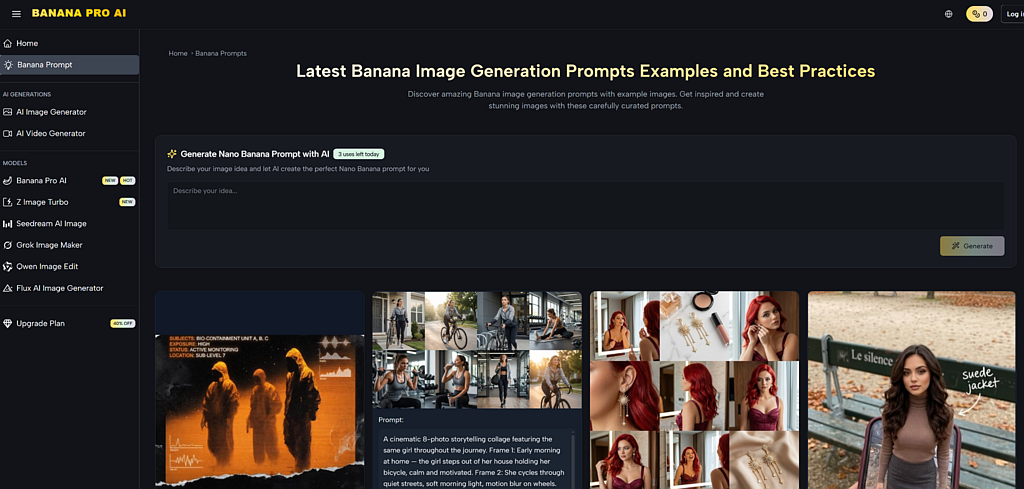
In a recent exploration of AI image generation, one user faced an eye-opening, costly experience that underscored a vital lesson in the technology’s potential. After spending nearly $200 on image generation credits across three platforms, the results ranged from “almost usable” to “complete garbage.” While many might have instinctively blamed the AI models for such outcomes, the critical insight revealed that the real issue was a lack of understanding in effectively communicating with these systems.
Upon discovering the concept of Nano Banana Prompts, it became clear that professional AI artists were not using superior models, but rather, they had mastered the art of crafting better prompts. This awareness shifted the narrative. It was not the technology that was lacking readiness; it was the knowledge of how to engage with it that was fundamentally missing.
The typical journey for users delving into AI image generation often begins with excitement, quickly followed by a harsh reality check. Initially, simple prompts like “a sunset over mountains” yield impressive results, creating a sense of confidence. However, as users attempt to explore more complex requests, such as “a professional businesswoman presenting to clients in a modern conference room with natural lighting,” the discrepancies become apparent. These attempts often produce images where anatomy and perspectives defy logic, leading to frustration and drained credit balances.
This cycle—characterized by a honeymoon phase, escalating complexity, shrinking credit balances, and platform hopping—can result in significant financial loss and wasted time before realizing the necessity of a structured approach. The Nano Banana methodology introduces a reverse-engineering education that emphasizes understanding prompt construction through practical examples, revealing how professional artists achieve their results.
Unlocking the Secrets of Effective Prompting
Engaging with Nano Banana Prompts provides insight into structured image creation, revealing that effective prompts function like architectural blueprints rather than vague descriptions. The breakdown of visual elements, from character definitions to spatial context and light behavior, underscores the importance of specificity. Poorly constructed prompts leave a majority of visual information undefined, forcing AI to make wild guesses that often lead to disappointing results.
The financial implications of adopting this new method are notable. Prior to using Nano Banana, projects involved an average of 12 to 15 generation attempts, costing between $10 and $18, with a success rate of only 60%. However, after implementing the structured method, projects typically require only two to four attempts, reducing costs to around $2 to $5, while increasing success rates to approximately 90%. This represents a substantial cost reduction and improved quality, demonstrating the direct benefits of mastering prompt construction.
The learning process inherent in using Nano Banana Prompts emphasizes a three-layer system: pattern recognition, parameter understanding, and systematic construction. Users begin by recognizing structural patterns in effective prompts, then learn how specific parameters influence outcomes, and eventually develop a collaborative relationship with the AI, enabling more precise and controlled creativity.
However, it is essential to acknowledge the limitations of the system. Users may encounter daily usage caps, requiring strategic planning to optimize the tool for intricate projects. Additionally, the structured format of prompts can initially appear daunting, necessitating time to adapt to the system’s language. Moreover, fluctuations in model availability during peak usage can also disrupt workflow.
Nano Banana Prompts is particularly suited for content creators and small business owners looking for consistent, professional-quality visual assets without the costs associated with hiring photographers. Conversely, it may not appeal to those who enjoy the unpredictability of AI or those seeking instant mastery without investment in learning.
Ultimately, while Nano Banana Prompts does not eliminate the need for creative judgment, it significantly reduces the technical barriers that have historically hindered effective communication with AI systems. The initial investment in understanding how to generate effective prompts has already yielded substantial returns for users, transforming a previously frustrating process into a manageable, reliable creative tool.
See also CraftStory Launches Image-to-Video Model for 5-Minute AI-Generated Videos
 OpenAI Reveals ChatGPT Plus Features, Helping Users Decide on $20 Subscription Value
 AWS Executive Says Generative AI Will Unlock New Markets for Indian Companies
 Diffusion Language Models Achieve Optimal Parallel Sampling with Polynomial Chains
 OpenAI Reveals Efficient Generative AI Deployment Strategies for Enterprises