






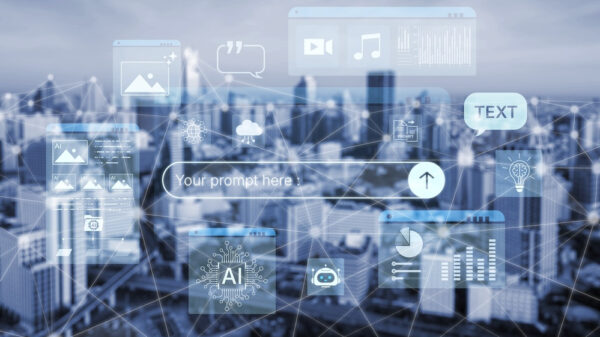

































The era of “text-in, text-out” artificial intelligence has officially concluded as 2026 unfolds, with a significant transformation in the technological landscape marked by the rise of “Omni” models. These native multimodal systems not only process data but also perceive the world with human-like latency and emotional intelligence. The release of models such as GPT-4o and Gemini 1.5 Pro has transitioned AI from a mere productivity tool to a constant companion, capable of seeing, hearing, and responding to our physical reality in real-time.
This evolution presents profound implications. By merging various communication modes—text, audio, and vision—into a single neural architecture, AI labs have reached the “holy grail” of human-computer interaction: full-duplex, low-latency conversation. For the first time, users engage with machines that can detect sarcasm, offer sympathetic tones, or assist in solving complex problems simply by “looking” through a smartphone or smart-glass camera.
The technical foundation underpinning this Omni era lies in the shift from modular pipelines to native multimodality. Earlier AI systems operated like a “chain of command,” wherein one model transcribed speech, another reasoned over the text, and a third converted responses back into audio. This approach often led to high latency and “data loss,” stripping away the nuances of a user’s voice, such as excitement or frustration. Both GPT-4o and Gemini 1.5 Pro have addressed this by training a single end-to-end neural network across all modalities simultaneously.
This advancement has resulted in a remarkable reduction in response latency. For example, GPT-4o has achieved an average audio response time of 320 milliseconds, comparable to the natural human conversation range of 210ms to 320ms. This capability allows for “barge-ins,” where users can interrupt the AI mid-sentence, prompting immediate adjustments to its logic. Meanwhile, Gemini 1.5 Pro introduced a 2-million-token context window, permitting it to “watch” hours of video or “read” extensive technical manuals for real-time visual reasoning. By treating pixels, audio waveforms, and text as a unified vocabulary of tokens, these models can perform “cross-modal synergy,” such as recognizing a user’s stressed facial expression and softening their vocal tone accordingly.
Initial reactions from the AI research community have praised this development as the “end of the interface.” Experts have noted that incorporating “prosody”—the patterns of stress and intonation in language—has bridged the “uncanny valley” of AI speech. With the addition of “thinking breaths” and micro-pauses in late 2025 updates, distinguishing between a human caller and an AI agent has become nearly imperceptible in standard interactions.
The emergence of Omni models has ignited a strategic realignment among tech giants. Microsoft (NASDAQ: MSFT), through its multi-billion dollar partnership with OpenAI, was the first to market with real-time voice capabilities, integrating GPT-4o’s “Advanced Voice Mode” within its Copilot ecosystem. This prompted an agile response from Google, which utilized its integration with the Android OS to launch “Gemini Live,” a low-latency interaction layer serving over a billion devices.
The competitive landscape has also seen Meta Platforms, Inc. (NASDAQ: META) and Apple Inc. (NASDAQ: AAPL) pivot significantly. Meta’s launch of Llama 4 in early 2025 democratized native multimodality, offering open-weight models that rival proprietary systems. This has enabled a surge of startups to produce specialized hardware, such as AI pendants and smart rings, circumventing traditional app store models. In contrast, Apple has focused on privacy with “Apple Intelligence,” employing on-device multimodal processing to ensure that the AI interacts with only user-permitted data, a key differentiator amid rising privacy concerns.
The impact of these developments transcends the tech industry, fundamentally altering sectors such as customer service and education. “Emotion-Aware” agents are replacing traditional customer service roles, diagnosing hardware issues through a user’s camera while providing AR-guided repair assistance. In education, the “Visual Socratic Method” has emerged, where AI tutors like Gemini 2.5 observe students solving problems in real-time and offer hints precisely when students exhibit signs of confusion.
Moreover, the implications of Omni models extend to accessibility, where blind and low-vision users benefit from real-time descriptive narration via smart glasses. These models can identify obstacles, read street signs, and even interpret facial expressions, creating inclusive digital interactions. However, the “always-on” functionality has led to what some are calling the “Transparency Crisis” of 2025. As cameras and microphones become the primary inputs for AI, public anxiety over surveillance has surged. The European Union has responded with strict enforcement of the EU AI Act, categorizing real-time multimodal surveillance as “High Risk,” which has resulted in a fragmented global market for Omni features.
Looking ahead to the latter half of 2026, the next frontier for Omni models is “proactivity.” Current models primarily react to prompts or visual cues, but the anticipated GPT-5 and Gemini 3.0 are expected to introduce “Proactive Audio” and “Environment Monitoring.” These advancements will enable AI systems to act as digital butlers, warning users about potential hazards, such as a stove left on or a child near a pool.
The integration of these models into humanoid robotics is also on the horizon. Companies like Tesla (NASDAQ: TSLA) and Figure are developing robots equipped with a “native multimodal brain,” enhancing their capability to understand natural language in complex environments. Despite challenges related to the computational demands of processing high-resolution video streams, experts predict that 2026 will witness the first widespread commercial deployment of “Omni-powered” service robots in sectors like hospitality and elder care.
The transition to the Omni era represents a pivotal moment in computing history. We are moving beyond “command-line” and “graphical” interfaces into “natural” interfaces, where models like GPT-4o and Gemini 1.5 Pro transform AI from a distant oracle into an integral part of daily life. As we proceed into 2026, latency emerges as the new benchmark for intelligence, with multimodality establishing a new standard for utility. The long-term trajectory suggests a “post-smartphone” world where our primary connection to the digital realm occurs through glasses or spoken interactions, bringing us closer to a future where these Omni models act on our behalf, seamlessly integrating perception and action.
See also Top 10 US Generative AI Companies Revolutionizing Innovation and Workflow Solutions
 AI Ethics Gains Momentum as C2PA Pushes for Provenance Standards in Media Authenticity
 James Cameron Warns of AI Weaponization Risks in Latest Terminator-Inspired Insights
 AI Art Sale at Christie’s Generates $1.1M Amid Controversy and Artist Protests
 AI Week in Review: Gemini-3-Pro Leads Text Models, OpenAI Launches Qwen Code v0.6.0