



































In a significant move within the competitive arena of AI-driven creative tools, Recraft has unveiled its latest offering, Recraft V4, a specialized text-to-image model aimed at designers and professionals. Launched on February 17, 2026, this version represents a comprehensive rebuild that prioritizes visual taste, prompt accuracy, and production-ready outputs, enhancing its appeal for brand visuals, marketing campaigns, and high-detail graphics.
Recraft highlights its V4 model as a competitor to other industry players, notably emphasizing its aesthetic decision-making capabilities in areas such as composition, lighting, and detail hierarchy. Unlike more generic AI generators, V4 is designed to deliver images that feel intentional and polished, effectively bridging the gap between AI experimentation and real-world design workflows.
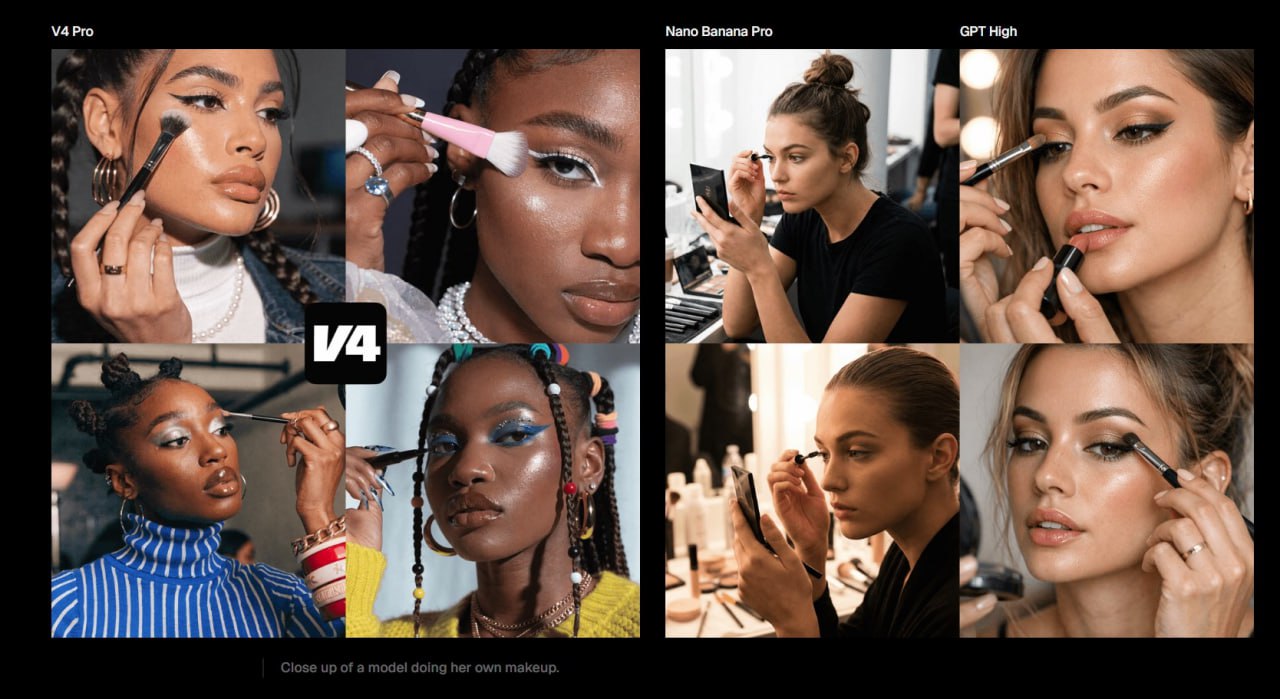
Standout features of Recraft V4 include its emphasis on aesthetics and its adeptness at interpreting complex prompts, especially for product shots. The model excels at generating high-detail visuals that incorporate natural lighting, depth, shadows, and reflections, resulting in photo-quality images that maintain cohesion and realism. For designers, this translates to the ability to create balanced compositions with colors and details that align seamlessly with brand standards, whether for editorial-style portraits, integrated fashion posters, or intricate product mockups.
Particularly noteworthy is V4’s capability in handling product shots. The model accurately interprets specifications such as object counts, branding consistency, and spatial interactions, ensuring structural integrity across variations. This makes it an ideal choice for e-commerce visuals, packaging designs, or infographics where clarity and professionalism are crucial. Furthermore, V4 supports the generation of readable text for elements like signage and menus, integrating typography as a fundamental component of its design output.
Recraft V4 is offered in several variants tailored to diverse user requirements, including Standard (V4), Pro (V4 Pro), and their vector equivalents (V4 Vector and V4 Pro Vector). The Standard version produces images at a resolution of 1024×1024 pixels, facilitating faster output (approximately 10 seconds per image) and cost-efficiency for iterative work. In contrast, the Pro version achieves a higher fidelity with a resolution of 2048×2048, taking around 28 seconds but delivering finer details suitable for print or large-scale applications.
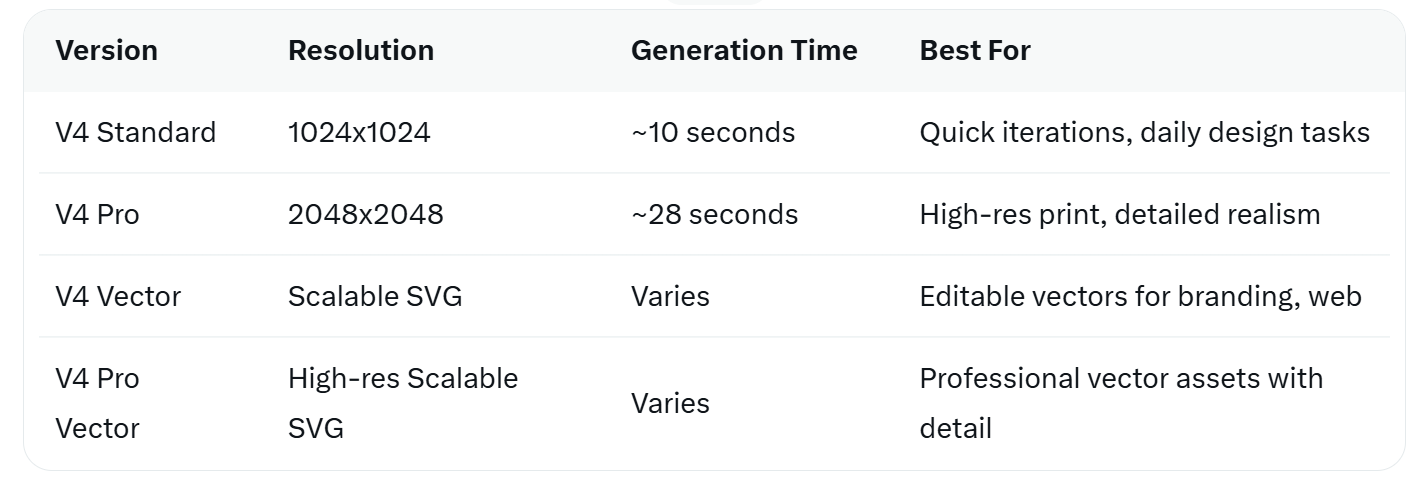 The vector versions generate editable SVG files with clean geometry and structured layers, making them ideal for logos, icons, illustrations, and scalable assets that integrate easily into tools such as Adobe Illustrator or InDesign. Despite the different resolutions, all versions share the same underlying creative intelligence, allowing users to choose based on their specific workflow needs.
A recent update further enhances usability by introducing a “Variate” tool, enabling users to extract prompts from reference images and generate variations based on them. This tool, along with features like similarity sliders and erase/modify workflows, provides an unprecedented level of creative control for users refining their outputs. By allowing users to upload a reference image, derive a prompt, and iterate on styles or elements, Recraft streamlines the design process significantly.
Accessibility remains a key strength for Recraft, which offers up to 30 free generations per day even on its Free plan, making it accessible for both casual users and professionals. Paid plans unlock unlimited access, with pricing scaled according to usage and features. Recraft Studio further enhances the user experience by integrating additional capabilities such as AI photo editing and mockup generation.
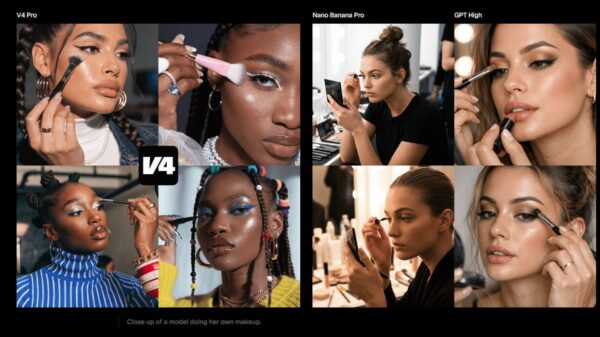
In direct comparisons, Recraft V4 often outshines competitors like Midjourney or Flux in design-specific tasks. Although other tools may produce technically accurate but neutral images, V4 is recognized for delivering expressive, art-directed results characterized by cinematic atmospheres and intentional styling. Reviews have highlighted its vector focus and production-readiness, noting superior handling of faces, logos, and group details. Nonetheless, for outputs that prioritize purely artistic or photorealistic quality without specific design requirements, alternative tools may still retain an advantage.
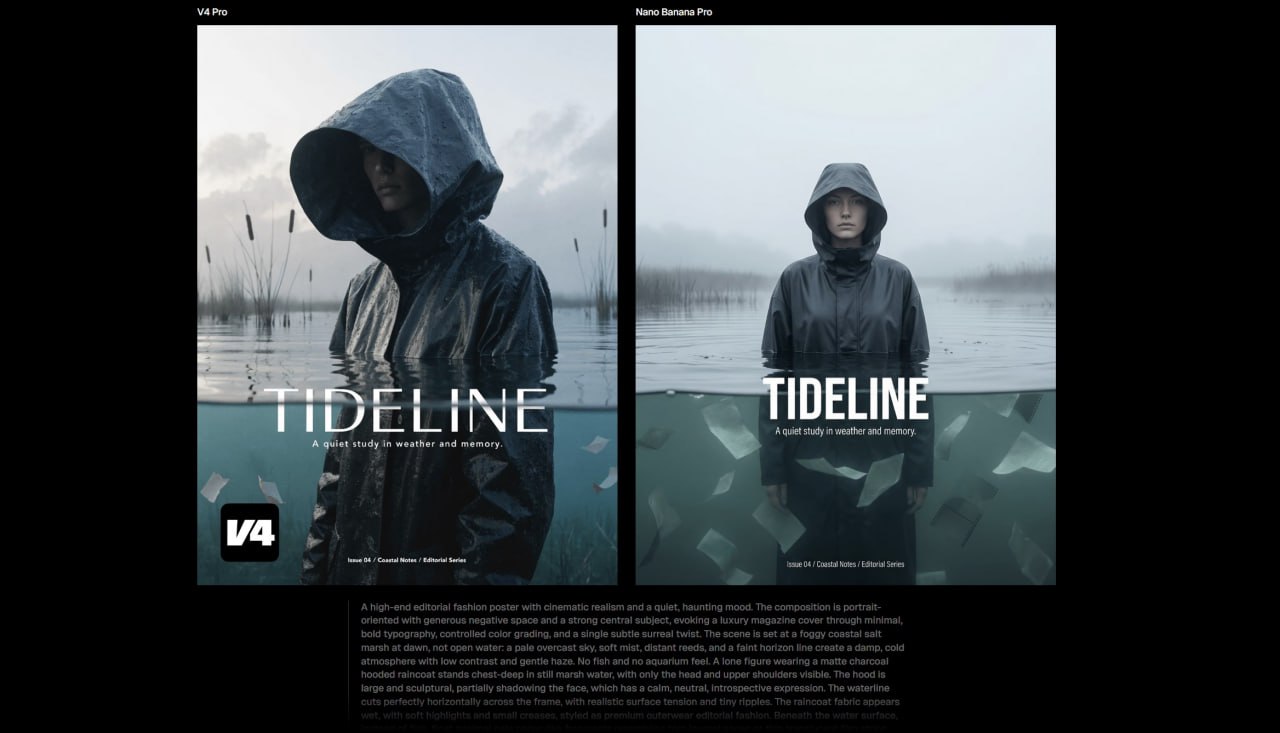 As AI technology continues to advance, Recraft V4 signifies a substantial step forward in AI image generation, emphasizing design taste and professional utility over mere novelty. With its enhanced aesthetics, versatile offerings, and new variation tools, it stands as a potent resource for designers tackling brand visuals, product shots, and vector graphics. Moving forward, as the demand for high-quality, scalable designs grows, Recraft’s commitment to real-world workflows positions it as a significant player in the evolving landscape of AI-driven design tools.
 freebeat AI Launches Revolutionary Music Video Generator for Instant Viral Content Creation
 Supreme Court Rejects Case on Copyrighting AI-Generated Art, Halting Legal Progress
 Sam Altman Praises ChatGPT for Improved Em Dash Handling
 AI Country Song Fails to Top Billboard Chart Amid Viral Buzz