











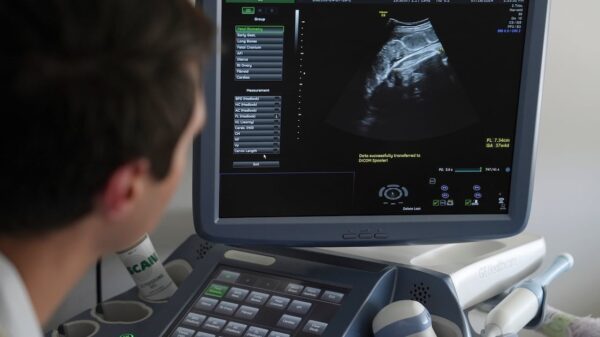





































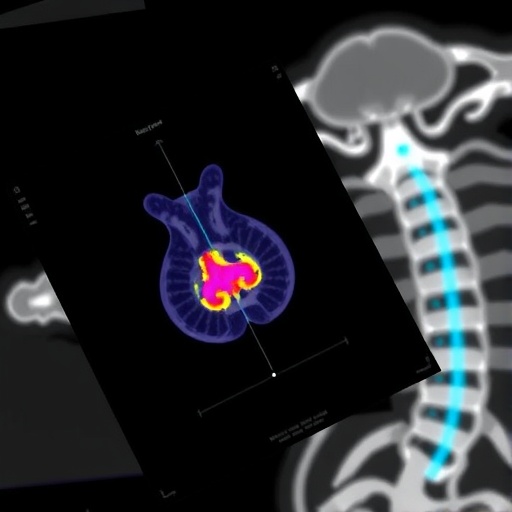
Researchers Kim K.Y., Ryu J., Kang J., and their colleagues have introduced a transformative development in surgical technology, detailed in their 2026 publication in npj Flexible Electronics. A new conformable multimodal imaging marker is set to enhance surgical navigation systems, aiming to improve precision, safety, and adaptability during complex procedures. This innovation directly addresses critical challenges surgeons face in real-time visualization and navigation within the human body.
The innovation is anchored in the concept of conformability, allowing the imaging marker to adapt to irregular anatomical surfaces and dynamic tissue movements. Unlike traditional rigid markers that can compromise both comfort and accuracy, this design ensures consistent and reliable imaging data throughout surgical interventions, particularly in minimally invasive environments where spatial constraints are prevalent.
This multimodal imaging marker integrates various imaging modalities, including optical, electromagnetic, and acoustic signals. Each modality contributes distinct information: optical signals provide high-resolution surface details, electromagnetic markers offer spatial orientation, and acoustic waves assist in visualizing subsurface structures. The integration of these modalities into a single marker delivers a multidimensional imaging capability, equipping surgeons with a comprehensive view of the operative field.
One of the significant hurdles in surgical navigation has been achieving spatial accuracy alongside real-time feedback. The researchers have addressed this by embedding ultra-thin sensors and microelectronic components within a flexible substrate. This setup enables high-fidelity tracking while maintaining the marker’s conformability. Operating wirelessly, these embedded systems minimize cumbersome connections, reducing the risk of contamination or obstruction during surgery. The wireless feature also supports immediate data transfer to external displays, allowing surgeons to adapt their techniques as needed.
The materials science behind this breakthrough relies on advancements in bio-compatible polymers and nanomaterials. Utilizing elastomers with tailored mechanical properties and conductive inks produced through flexible electronics techniques, the researchers have engineered a device that functions similarly to a second skin. This bio-mimetic characteristic enhances patient comfort and reduces inflammatory responses, promoting safer clinical outcomes.
Moreover, the marker’s imaging capability is bolstered by an intelligent algorithmic framework that interprets diverse data streams. Machine learning models embedded within the surgical navigation system extract meaningful patterns from complex datasets, enabling adaptive calibration and predictive analytics. For example, the system can anticipate tissue shifts due to factors like respiration or surgical manipulation, dynamically adjusting the marker’s spatial coordinates to align with preoperative scans.
The applications of this conformable imaging marker are extensive, spanning fields such as neurosurgery, cardiovascular interventions, and oncological resections. In neurosurgery, where millimeter accuracy is critical, the device significantly enhances surgeons’ ability to localize essential neural pathways. Cardiologists stand to gain improved guidance during minimally invasive catheterizations, while oncologists benefit from more precise tumor localization, thus maximizing resection margins while preserving healthy tissue.
Clinical trials have shown significant improvements in procedure times and reductions in intraoperative imaging errors with this device. Surgeons report enhanced confidence and improved ergonomic workflows compared to traditional rigid markers. Patient feedback has also indicated lower postoperative discomfort associated with these minimally intrusive devices, highlighting their potential for broader adoption in routine surgical practice.
The integration of this imaging marker into existing surgical navigation frameworks has been designed for seamless adoption. Standard protocols and hardware interfaces do not require extensive modifications, enabling hospitals to implement the technology with minimal disruption. This plug-and-play nature facilitates faster translation from experimental validation to commercial availability, a critical factor in expediting the introduction of such innovations to clinical settings.
The broader implications of this technology extend to environmental considerations. The device architecture includes biodegradable components for certain disposable sections, reflecting a commitment to reducing medical waste—a significant concern in modern healthcare systems. This balance between high performance and sustainability underscores the researchers’ vision for responsible innovation.
Looking ahead, the potential integration of this imaging marker with augmented reality (AR) and virtual reality (VR) platforms could redefine surgical education and intraoperative guidance. Surgeons may leverage holographic projections that align perfectly with patient anatomy, supported by the precise positional data provided by this flexible marker. Such advancements promise to enhance human-machine collaboration in the operating theater.
In summary, the conformable multimodal imaging marker developed by Kim et al. represents a significant leap in surgical technology, addressing longstanding challenges in surgical navigation. By improving precision, comfort, and interoperability of imaging markers, this innovation is poised to facilitate faster, safer, and more effective surgeries across multiple specialties. Its potential impact extends into training, patient outcomes, and healthcare accessibility, marking a pivotal moment in the evolution of surgical technology.
See also ManGO Achieves Superior Offline Optimization Performance with Advanced Diffusion Models
 Indonesia Bans Elon Musk’s Grok Over Non-Consensual Sexual Deepfakes
 Grid Dynamics Gains 8.2% After Multi-Year AWS Generative AI Partnership Announcement
 Grok AI Model Continues to Generate Sexualized Content Despite Recent Restrictions
 AI Chatbot News Experiment Reveals 18% Fabricated Sources and 47% Accuracy Rate






