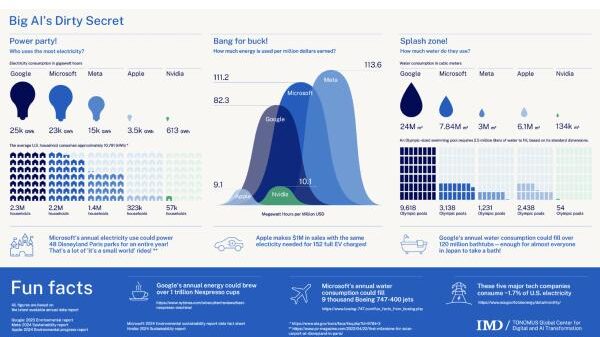







































U.S. power consumption by artificial intelligence (AI) and data center systems is projected to reach an astonishing 415 terawatt hours in 2024, according to the International Energy Agency. This figure represents over 10% of the nation’s energy output for that year and is expected to double by 2030. In response to concerns about this escalating energy demand, researchers at the School of Engineering have introduced a proof-of-concept for more efficient AI systems that could use 100 times less energy than current models while delivering enhanced accuracy.
The innovation, developed under the guidance of Matthias Scheutz, the Karol Family Applied Technology Professor, leverages a technique termed neuro-symbolic AI. This approach combines conventional neural network AI with symbolic reasoning, mimicking the human ability to break down tasks and concepts into manageable steps. The research will be unveiled at the International Conference of Robotics and Automation in Vienna in May and will be included in the conference proceedings.
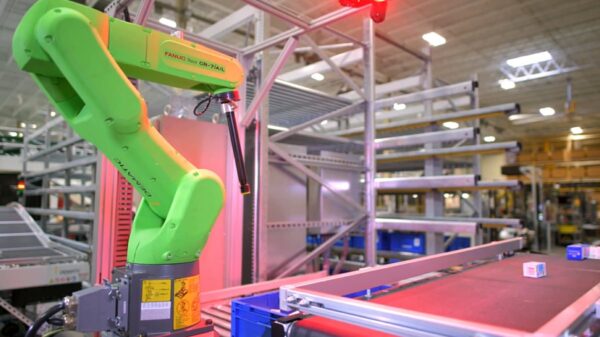
While Scheutz and his team focus on robots designed for human interaction, the AI technologies they explore differ from mainstream screen-based large language models (LLMs) like ChatGPT and Gemini. Instead, they examine visual-language-action (VLA) models—an evolved form of LLMs that integrate visual and movement capabilities for robotic applications. These models utilize camera and language inputs to generate real-world actions, such as maneuvering a robot’s wheels, legs, arms, and fingers.
In traditional VLA systems, a robot tasked with stacking blocks into a tower might struggle with interpreting the environment, potentially misidentifying block shapes or orientations due to shadows, leading to errors in execution. This scenario parallels the inaccuracies sometimes seen in chatbots, which may generate fictitious information or nonsensical results. The neuro-symbolic approach, however, streamlines the learning process by applying rules that reduce trial and error, ultimately arriving at solutions more quickly.
Experimental results underline the efficiency of the neuro-symbolic VLA system. In tests involving the standard Tower of Hanoi puzzle, this system achieved a remarkable 95% success rate, compared to just 34% for traditional VLA models. When faced with a more complex variant that the robot had not encountered during training, the neuro-symbolic system still managed a success rate of 78%, while standard VLAs failed to succeed in any attempts.
Training the neuro-symbolic model required only 34 minutes, a stark contrast to the over 36 hours needed for the traditional VLA model. Energy consumption during this training phase was similarly lower; the neuro-symbolic model consumed just 1% of the energy required for its VLA counterpart, and during task execution, it utilized only 5% of the energy needed for running a VLA.
Scheutz draws a stark comparison between his neuro-symbolic approach and conventional LLMs, stating, “These systems are just trying to predict the next word or action in a sequence, but that can be imperfect, and they can come up with inaccurate results or hallucinations.” He highlighted that the energy expenditure of LLMs often outweighs the demands of the tasks they are designed to perform, citing an example where AI-generated summaries on Google consume up to 100 times more energy than the backend generation of website listings.
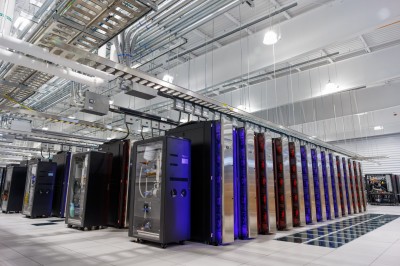
The surge in demand for AI systems, coupled with their integration into industrial applications, has triggered a competitive race for larger and more powerful data centers—facilities whose energy consumption can rival that of small cities. Researchers caution that the reliance on current LLMs and VLAs, despite their popularity, may not support a sustainable future for AI. Instead, they advocate for the adoption of hybrid neuro-symbolic AI systems as a more efficient and dependable alternative.
See also Sam Altman Praises ChatGPT for Improved Em Dash Handling
 AI Country Song Fails to Top Billboard Chart Amid Viral Buzz
 GPT-5.1 and Claude 4.5 Sonnet Personality Showdown: A Comprehensive Test
 Rethink Your Presentations with OnlyOffice: A Free PowerPoint Alternative
 OpenAI Enhances ChatGPT with Em-Dash Personalization Feature