
























































Roblox (NYSE: RBLX) has made a significant leap in the digital creation landscape with the rollout of its new “4D” creation tools within the Roblox AI Studio, marking a pivotal moment in generative technology as of late 2025. These advanced features enable the rapid development of fully functional, interactive environments and non-player characters (NPCs), transforming static 3D modeling into dynamic, immersive experiences. The tools are powered by Roblox’s open-source “Cube” model, representing a shift from traditional “generative art” to “generative systems,” allowing creators to build intricate digital worlds that exhibit both physical attributes and behaviors.
This technological advancement holds immense implications for democratizing game design. By introducing interaction as the “fourth dimension,” Roblox is empowering a new generation of creators—many lacking formal training in programming or 3D design—to construct complex ecosystems. This positions Roblox not just as a gaming platform, but as a foundational environment for the future of spatial computing and functional artificial intelligence.
Technical Details
At the core of this revolution lies the Cube 3D, a multimodal transformer architecture that Roblox open-sourced earlier this year. Unlike prior generative 3D models that depended heavily on 2D image reconstruction, often leading to geometrically unsound models, Cube utilizes native 3D data pulled from millions of assets within the Roblox ecosystem. This training enables the model to grasp the internal structure of objects; for example, it recognizes that a generated car necessitates an engine, dashboard, and functional seats, rather than just a car-shaped silhouette.
Cube operates through two fundamental components: ShapeGPT, responsible for generating 3D geometry, and LayoutGPT, which organizes spatial relationships among objects. By tokenizing 3D space in a manner akin to how Large Language Models (LLMs) tokenize text, Cube can anticipate the “next shape token,” facilitating the construction of structurally sound environments. The model is optimized for high-performance hardware such as Nvidia’s (NASDAQ: NVDA) H100 and L40S, but it also supports local execution on Apple (NASDAQ: AAPL) Silicon, demanding between 16GB and 24GB of VRAM for real-time execution.
The “4D” aspect introduces automatic functional code and physics into generated assets. When prompted to “build a rainy cyberpunk city,” the system not only places buildings but also applies wet-surface shaders, adjusts dynamic lighting, and generates scripts for environmental interaction. Initial feedback from the AI research community has been overwhelmingly positive, highlighting that Roblox’s method of “functional generation” effectively addresses the longstanding “static asset problem” that has hindered generative AI in gaming.
The launch of these tools has generated considerable excitement and concern across the tech industry, particularly for established game engine leaders such as Unity (NYSE: U) and Epic Games. While both Unity and Unreal Engine have introduced AI tools, Roblox’s unique advantage lies in its integrated ecosystem. By controlling both the engine and the social platform, Roblox can leverage user interactions to continuously refine its models, creating a feedback loop that competitors struggle to replicate.
Roblox’s open-sourcing of the Cube model is strategic; making it available on platforms like HuggingFace sets a new standard for 3D tokenization. This move encourages third-party developers to create tools compatible with the Roblox engine, challenging the proprietary dominance of 3D models from companies like OpenAI and Google. Some analysts liken Roblox’s position to that of “Linux in the Metaverse,” establishing an open foundation for others to build upon.
Market analysts indicate that this innovation is vital for Roblox’s ambition to capture 10% of the global gaming revenue. Data from the Q4 2025 rollout suggests a remarkable 31% increase in content produced by creators utilizing the AI tools. Startups in the “AI-native gaming” sector now face heightened expectations, as the emphasis shifts from merely generating 3D models to creating fully functional, scripted experiences.
The broader societal implications of these 4D creation tools are profound, signaling a transformation in how digital labor is perceived. Similar to breakthroughs with LLMs in 2023, this evolution allows creators to assume the role of “directors.” The capability to produce NPCs with dynamic dialogue APIs and autonomous behaviors means that a single individual can now generate content previously requiring a mid-sized studio’s resources. However, this democratization raises concerns about the potential oversaturation of low-quality, AI-generated content, echoing fears linked to the “dead internet” theory.
Despite these criticisms, the educational and accessibility potential is extraordinary. Students can now “prompt” historical simulations into existence, allowing them to engage with functional recreations of ancient cities that respond to their inquiries in real time. This trend aligns with the emerging concept of “world-building as a service,” where the gap between imagination and digital reality is nearly eliminated.
Looking forward to 2026, the trajectory for Roblox AI Studio suggests further seamless integration, with plans for “Real-Time Voice-to-World” creation. This development would enable developers to vocally create environments using VR headsets, transforming game development into a real-time, improvisational experience. A significant challenge for the Cube model will be achieving “Physics-Aware AI,” allowing the system to understand complex dynamics without pre-existing scripts. Experts anticipate that as these models evolve, we will witness the emergence of gameplay that adapts in real time to a player’s skill level and actions, paving the way for infinitely complex gaming experiences.
The introduction of 4D creation tools and the Cube model signifies a transformative moment in the history of AI and digital content creation. It reflects the transition of generative AI from a tool for creating images and text to one capable of constructing entire worlds. Roblox has successfully bridged engineering complexity with creative expression, offering a glimpse into a future where digital environments can be shaped as fluidly as thought itself. As the industry watches closely, the key takeaways are clear: 3D data is the next frontier for foundational models, and interactivity has become the benchmark for generative quality. The 4D era has commenced, turning the metaverse into a dynamic, evolving entity.
See also Generative AI Japan Awards 2025: COLOPL’s ‘Tsukuyomi’ Wins Grand Prix Among 8 Honorees
 Study Reveals Hidden Risks of Large Language Models: Phishing, Bias, and More
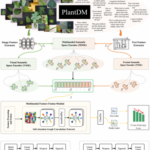 PlantIF Achieves 96.95% Accuracy in Plant Disease Diagnosis Using Multimodal Learning
 Tsinghua and Shengshu Open-Source TurboDiffusion, Boosting AI Video Generation by 97×
 Leonardo DiCaprio Critiques AI’s Role in Art, Citing Job Loss and Lack of Humanity