









































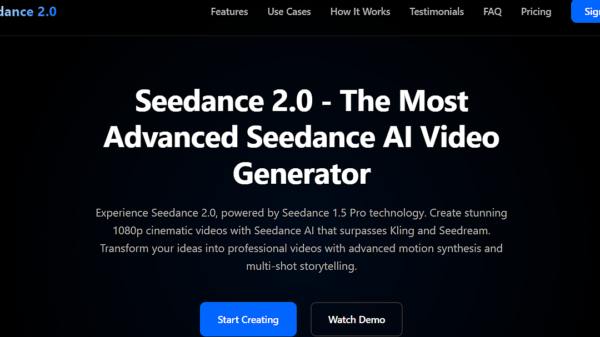





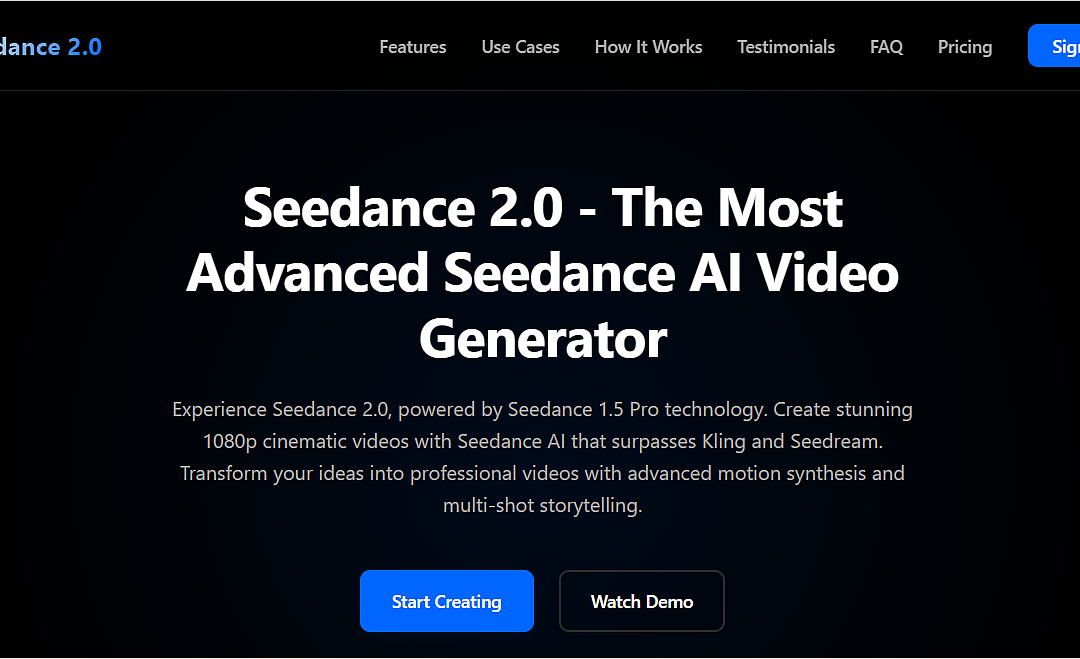
Seedance 2.0, a new AI video creation tool from ByteDance, is set to redefine the landscape of professional video production. Launched recently, the platform promises to allow users to generate high-quality video clips with remarkable ease, enabling creations before their morning coffee cools. This latest version boasts fully multimodal capabilities, blending video, image, and audio inputs seamlessly. The pressing question for content creators is whether Seedance can match the capabilities of established competitors like Sora and Veo 3 when it comes to high-volume, high-quality video production.
Seedance 2.0 leverages ByteDance’s expansive repository of data from billions of short videos, optimizing for a vibrant, high-energy aesthetic. This gives it a competitive edge in producing cinematic physics that feel intuitive and authentic, akin to gravity’s natural pull in a fast-paced scene. In contrast, Veo 3, a creation of Google DeepMind, emphasizes enterprise integration and workflow efficiency, designed primarily for professional environments. While it excels in generating polished outputs, it lacks the dynamic flair that Seedance 2.0 consistently delivers, particularly in maintaining character consistency throughout various scenes.
OpenAI’s Sora, which has received significant attention since its inception, uses Microsoft’s extensive computing resources to produce expansive clips held together by sophisticated internal logic and realistic physics. Its design philosophy is rooted in creating immersive worlds. However, Seedance 2.0’s utilization of TikTok’s training data enables it to prioritize aesthetics that keep characters consistent and cohesive, a notable improvement over Sora’s capabilities. While Sora maintains temporal consistency and can recall off-frame elements, Seedance 2.0 enhances this further by managing complex scenes without losing track of characters or settings.
When it comes to visual fidelity, Seedance 2.0 stands out with its native 2K output, eschewing artificial upscaling for genuine resolution. The platform ensures sharp, cinematic imagery devoid of soft edges, employing automatic color grading akin to Hollywood standards. In tests, its 2K output remains artifact-free, significantly enhancing the viewing experience. While Veo 3 supports 4K resolution, Seedance 2.0’s superior motion blur and cinematic texture provide a sense of vibrancy that’s often lacking in more traditional outputs.
The issue of character consistency—a common problem in AI-generated videos—has been addressed effectively in Seedance 2.0. It locks in faces and logos across various shots with unparalleled accuracy, eliminating the dreaded “AI drift.” This feature contrasts with Sora’s strong temporal memory, which, while impressive, does not extend to multi-shot narratives as robustly as Seedance 2.0. Veo 3 offers a degree of style guidance through image integration, yet is ultimately outmatched by Seedance’s ability to handle intricate scenes while ensuring character coherence.
Seedance 2.0 also excels in motion physics, providing highly realistic representations of gravity and momentum. For instance, in its “Girl hanging laundry” demonstration, the fabric flows naturally, synchronized perfectly with audio cues. The platform’s phoneme-level lip-sync capabilities ensure that characters’ mouths match spoken words, creating a more immersive and believable experience. Though Veo 3 generates sound natively, Seedance 2.0’s synchronization is notably tighter, enhancing the overall fluidity of its video outputs.
The introduction of directorial features in Seedance 2.0 marks a significant shift in how users can interact with AI for video production. It allows for mixing motion videos, styled images, and rhythmic audio in one cohesive prompt, making the directing process intuitive and accessible. This contrasts sharply with Sora’s more unpredictable prompting system, which can often feel like a gamble for creators. Veo 3 remains a solid choice for enterprise users, but Seedance 2.0’s creative flexibility is paving a new path for filmmakers.
In summary, Seedance 2.0 emerges as a formidable player in the realm of AI-generated video tools, offering features that surpass those of its competitors, Sora and Veo 3. By eliminating character drift, enhancing visual fidelity, and providing intuitive directorial controls, Seedance is reshaping the capabilities of content creators. As this technology evolves, it holds the potential to democratize high-quality video production, empowering a new generation of filmmakers with tools that were once the domain of industry professionals.
See also Sam Altman Praises ChatGPT for Improved Em Dash Handling
 AI Country Song Fails to Top Billboard Chart Amid Viral Buzz
 GPT-5.1 and Claude 4.5 Sonnet Personality Showdown: A Comprehensive Test
 Rethink Your Presentations with OnlyOffice: A Free PowerPoint Alternative
 OpenAI Enhances ChatGPT with Em-Dash Personalization Feature