





















































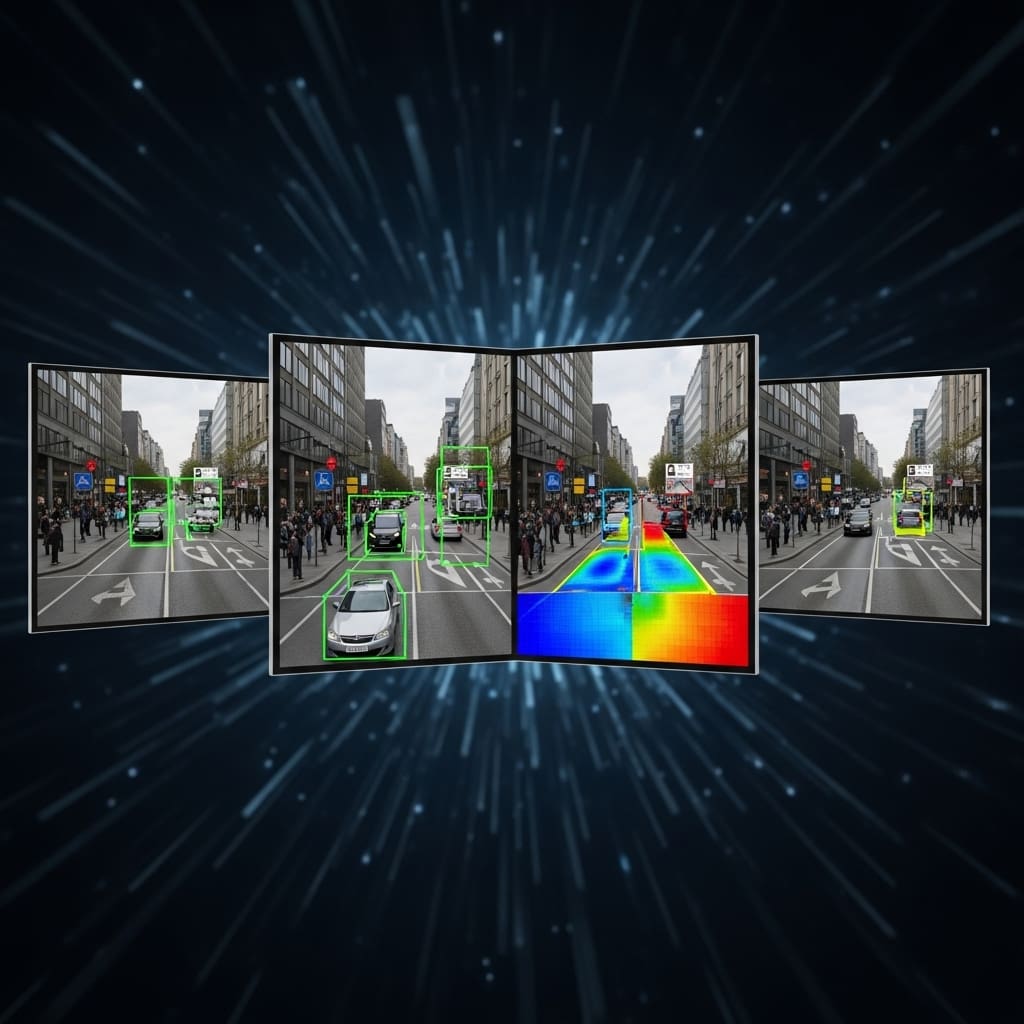
The rise of artificial intelligence (AI) in video production has created a pressing challenge in distinguishing authentic content from increasingly sophisticated synthetic media. In response, a team from Tsinghua University, including researchers Yifei Li, Wenzhao Zheng, and Yanran Zhang, has unveiled Skyra, an innovative system designed to detect AI-generated videos by identifying visual inconsistencies, or artifacts, that are often indicative of manipulation. Skyra moves beyond merely classifying videos as real or fake; it actively analyzes these artifacts and provides clear, understandable explanations for its findings, addressing a critical gap in current detection tools.
Skyra is engineered to recognize specific visual discrepancies such as shape distortions and camera motion inconsistencies, which typically signal the presence of AI-generated content. Researchers have developed a rigorous approach that allows Skyra to analyze video content frame by frame or in summary form, ultimately delivering an assessment of authenticity linked to detected artifact types. This structured analysis involves detailing the observed video characteristics, identifying any inconsistencies, and concluding whether the video is genuine or not.
Central to Skyra’s capabilities is the ViF-CoT-4K dataset, which the research team meticulously created. This comprehensive resource provides detailed human annotations of AI-generated video artifacts, marking a significant advancement in supervised fine-tuning for AI detection. The dataset serves as the backbone for training Skyra, equipping it with the necessary knowledge to identify subtle spatio-temporal inconsistencies in synthetic videos.
The training of Skyra involved a two-stage process, where initial supervised fine-tuning was conducted using a learning rate of 1e-5 over five epochs. Following this, the research team implemented reinforcement learning through a Group Relative Policy Optimization algorithm, encouraging Skyra to actively explore potential forgery indicators while adhering strictly to a predetermined output format. This method incorporated an asymmetric reward structure, imposing harsher penalties for false positives to reduce the risk of overfitting and enhance the model’s sensitivity to even minimal artifacts.
To evaluate Skyra’s performance rigorously, the research team established ViF-Bench, a benchmark consisting of 3,000 high-quality video samples generated by more than ten leading video generators. Testing results indicate that Skyra outperforms current detection methods across multiple benchmarks, excelling in both accuracy and the clarity of its explanations. The researchers noted that fostering active exploration of potential forgery cues while maintaining a strict reporting format significantly boosted Skyra’s overall effectiveness.
Skyra’s advancements address a crucial need in today’s landscape, where the proliferation of AI-generated videos can undermine trust in visual media. By not only detecting manipulations but also elucidating the reasoning behind its determinations, Skyra offers a transparency that many existing systems lack. This capability could prove vital in combating misinformation, particularly as generative models continue to evolve and produce increasingly realistic content.
Despite these strides, the authors acknowledge ongoing challenges, particularly with high-quality AI-generated videos that may exhibit minimal or undetectable artifacts. Future research aims to enhance the model’s resilience against such sophisticated generative techniques while also expanding the dataset to encompass a broader array of video types and artifact characteristics. As the battle against misinformation intensifies, Skyra represents a promising direction for explainable AI in video detection, potentially becoming an essential tool for ensuring authenticity in visual media.
See also DuckDuckGo Launches Privacy-Focused AI Image Generator with OpenAI Technology
 Actor Neil Newbon Critiques Generative AI in Gaming: “It Sounds Dull as Hell”
 New Diffusion Model Achieves Advanced Mural Restoration with Guided Residuals and Enhanced Noise Reduction
 AI Image Generators Default to 12 Generic Styles, Study Reveals Surprising Trends
 Multimodal AI Transforms Enterprise Efficiency, Enhancing Customer Service and Risk Management