









































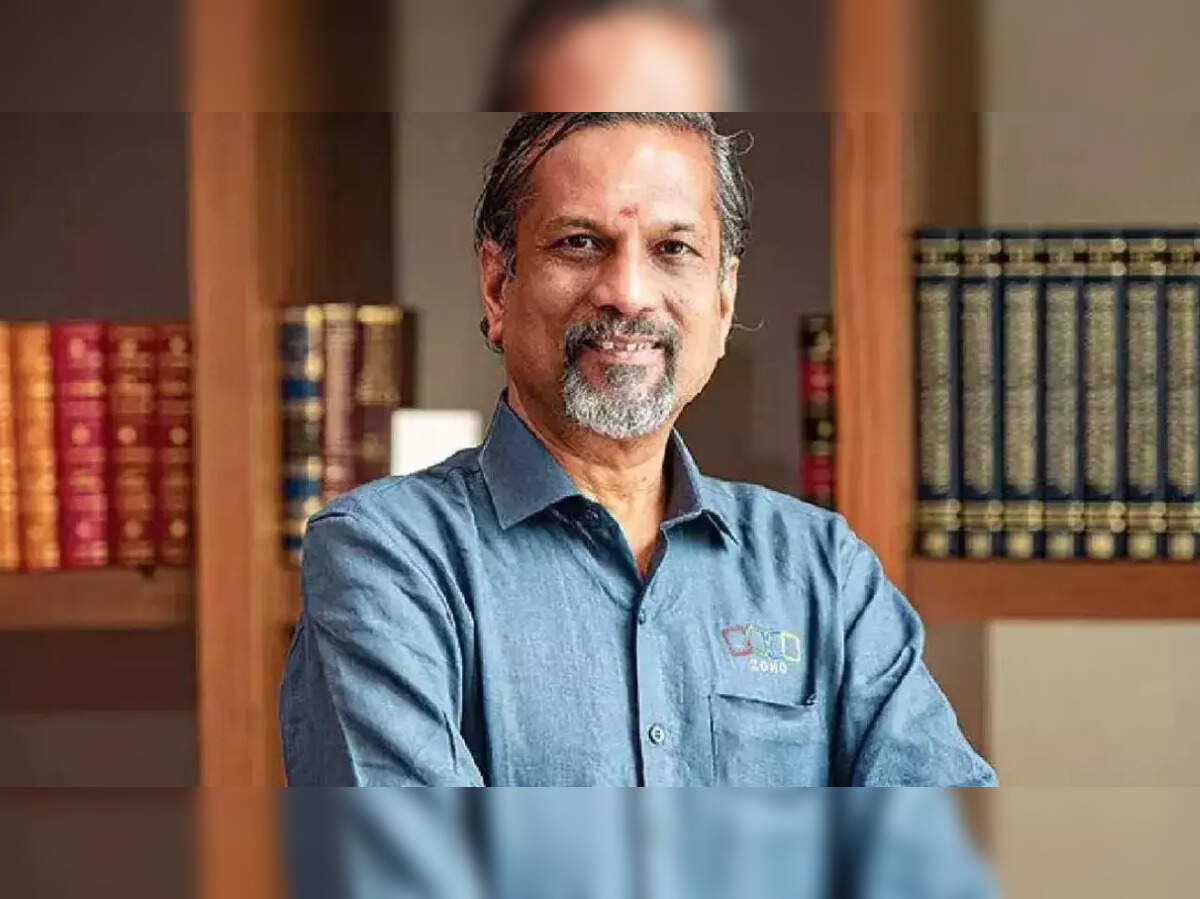
India’s burgeoning interest in artificial intelligence (AI) is prompting calls for a tailored approach to development, distinct from the large-scale models that currently dominate the global landscape. Sridhar Vembu, founder and Chief Scientist of Zoho, emphasized that India should not attempt to compete directly with massive Large Language Models (LLMs) created by major technology firms. Instead, he advocates for investing in smaller, more efficient models that are less energy-intensive and require less capital.
Vembu’s remarks coincide with the upcoming India AI Impact Summit, set to be the largest of four significant global AI gatherings this year. This summit reflects India’s growing role in shaping the international AI discourse, as interest in the technology has surged across the nation.
The Economic Survey recently echoed Vembu’s sentiments, highlighting the challenges India faces in pursuing foundational AI models, particularly due to limited access to advanced computing infrastructure and capital. The Survey recommended a bottom-up approach to AI development, which aligns more closely with the country’s current realities.
In an interview with the Press Trust of India (PTI), Vembu pointed out the staggering costs associated with developing large-scale AI models, estimating expenses between USD 50 billion and USD 100 billion. He noted that these models, predominantly produced by the “Big Tech” companies, are not only costly but also resource-intensive, putting a strain on energy supplies. “Sometimes, staying a little bit behind is a good idea,” Vembu remarked, suggesting that India should focus on leveraging its intellectual resources rather than emulating energy-hungry global counterparts.
Vembu believes that there is substantial potential for innovation within AI research, stating that Zoho is actively exploring energy-efficient alternatives. “There are other approaches to AI that don’t involve this type of large language model approach. Those all are promising, and we are pursuing some other directions,” he said. By harnessing its “brain power,” India can advance its AI capabilities more sustainably.
As the country prepares to host the India AI Impact Summit later this month, anticipation is building among the global community. Over 35,000 registrations have been recorded ahead of the event, which is expected to draw participation from more than 100 countries, including 15 to 20 Heads of Government and over 50 international ministers. Industry leaders, researchers, and civil society organizations will actively contribute to shaping the Summit’s agenda.
The summit will feature around 500 sessions and a showcase of over 500 AI startups, making it a pivotal event for global AI discourse. Key figures slated to attend include Jensen Huang, CEO of NVIDIA; Dario Amodei, CEO of Anthropic; Brad Smith, President of Microsoft; Demis Hassabis, CEO of Google DeepMind; and Julie Sweet, CEO of Accenture. Their participation underscores the growing international focus on responsible and inclusive AI.
Vembu’s insights reflect a broader conversation about the future of AI in India, particularly as the nation seeks to position itself as a leader in the technology space. With a concerted emphasis on smaller, innovative approaches, India could carve a unique niche in the AI landscape, prioritizing sustainability and efficiency over mere emulation of existing models.
See also UK Government Partners with Microsoft to Launch Comprehensive Deepfake Detection Framework
 Adele Chinda Advances Multimodal AI Research at Georgia State University with Defense Collaborations
 AI-Powered Data Quality Engineering Enhances Reliability with Automated Workflows
 HitPaw Launches VikPea V5.2.0 with Advanced AI Portrait Models and Cloud Processing
 Adobe’s Varun Parmar Enhances Brand Content with Scalable AI Solutions, Boosting Efficiency 50%