




























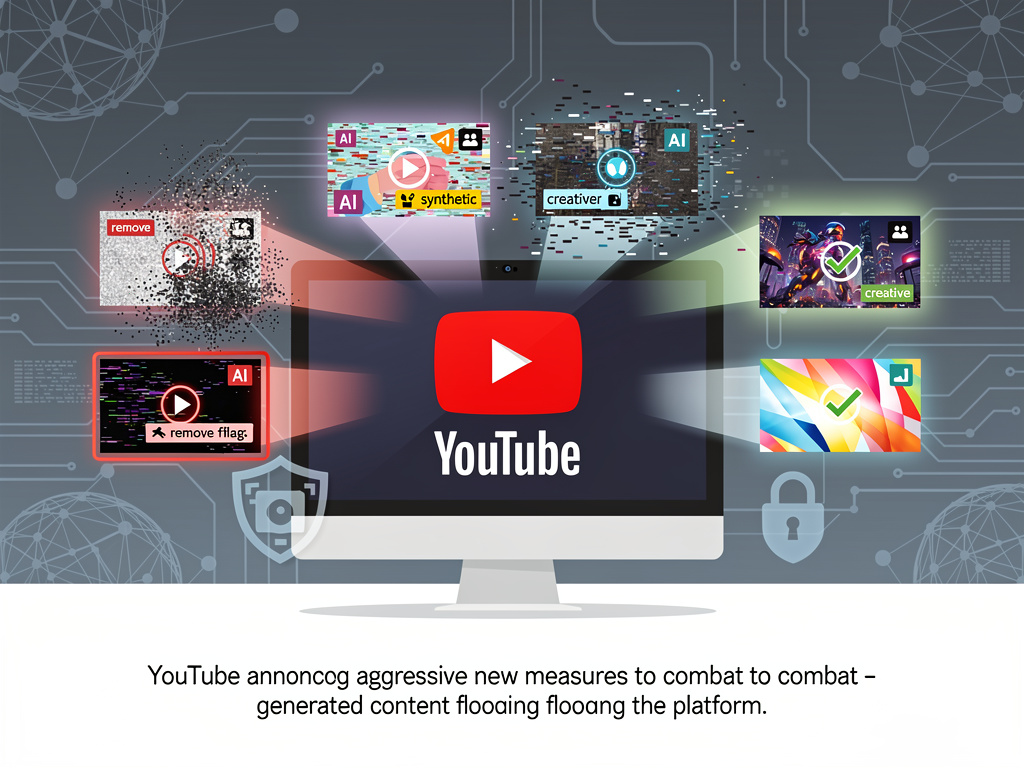
In a significant policy shift, YouTube has announced new measures aimed at reducing the proliferation of low-quality, AI-generated content on its platform, which industry insiders have termed “AI slop.” This decision marks one of the most comprehensive actions taken by a major social media company to address concerns over the impact of artificial intelligence on digital content quality. The policy comes amid growing apprehension that the lines between human creativity and machine output are increasingly indistinct.
According to Android Police, YouTube plans to implement advanced detection systems and enforcement strategies to identify and remove content that lacks substantial human creative input. This decision follows numerous complaints from creators and viewers regarding a surge in algorithmically generated videos that exploit the recommendation system while providing little value to audiences. The policy will impact various content categories, including AI-narrated news summaries and automated video essays, focusing on material that shows patterns of mass production intended primarily for ad revenue.
YouTube’s product team faces a delicate balancing act; it must differentiate between legitimate uses of AI as a creative tool and exploitative content farming. The decision to target AI-generated material stems from a broader economic context. The availability of tools like ChatGPT and Midjourney has lowered the barriers to content creation, allowing entrepreneurs to produce videos en masse targeting trending topics and keywords, often leading to substantial monthly earnings. However, this “gold rush” has resulted in widespread quality degradation; viewers frequently encounter repetitive and misleading content that skirts existing regulations.
The technical challenges of implementing this anti-AI-slop initiative are considerable. Unlike text-based platforms where detection tools have matured, identifying synthetic video content requires analyzing various elements, including voice patterns and visual consistency. YouTube is reportedly developing a multi-layered detection system that examines metadata, upload frequency, and behavioral patterns that could signal automated operations. The platform will likely use machine learning models trained on known examples of AI-generated content, coupled with heuristic rules for flagging suspicious activity for human review.
Reactions within the creator community have been mixed. Many established creators welcome the policy, arguing that AI-generated spam has diluted their visibility and revenue by competing for the same keywords. However, some express concern that the measures could lead to unintended consequences, potentially penalizing creators who leverage AI tools for legitimate purposes, such as script assistance or video editing. YouTube has emphasized that its focus is on content that is “substantially” AI-generated, but the exact parameters of this distinction remain unclear.
YouTube’s initiative also carries implications beyond its platform. As one of the largest content repositories online, YouTube’s policies often set industry standards. Other platforms are closely monitoring the situation, hesitating to implement similar countermeasures due to the complexities involved and uncertainties about delineating acceptable AI usage. This shift reflects an increasing recognition among tech companies that unchecked AI content generation threatens the integrity of user-generated content, which could lead to diminished audience trust and reduced advertiser confidence.
Future of Content Creation
YouTube’s stance effectively establishes a “human creativity premium” in its content ecosystem, signaling that genuine human creative input is valued over purely algorithmic production. This philosophical shift moves away from the platform’s historically neutral approach to content sources, highlighting the importance of human authorship in digital media. While AI tools have demonstrated remarkable capabilities, the question of whether their output constitutes true creativity remains contentious. By prioritizing substantial human input, YouTube implicitly asserts the necessity of authenticity in content creation.
The practical application of YouTube’s anti-AI-slop measures is likely to be more complex than the announcement suggests. Content exists on a spectrum, from fully human-created to entirely AI-generated, with numerous gray areas in between. For instance, if a creator combines AI-generated scripts with personal edits and voice synthesis, how does this fit into the new policy framework? YouTube must devise nuanced enforcement criteria that address these complexities while remaining scalable, as the platform processes over 500 hours of video uploads every minute.
This policy change is poised to disrupt the AI content generation industry significantly. Many businesses that have emerged to support creators in producing videos with AI tools may need to adapt to survive. Conversely, this shift could create opportunities for creators emphasizing authentic human creativity and expertise, potentially improving overall content quality. Audiences may gravitate toward creators who offer genuine knowledge and unique perspectives, qualities difficult for AI to replicate convincingly.
YouTube’s campaign against “AI slop” represents more than a simple content policy update; it raises fundamental questions about the future of digital media and the value of human creativity. As AI technologies continue to advance, other platforms will face similar dilemmas about how to regulate synthetic content. YouTube’s approach will likely influence industry norms, providing critical lessons for platforms navigating the intersection of technology and creativity.
See also Google DeepMind Launches Project Genie, Enabling Dynamic AI-Generated Worlds for Users
 Pixazo Launches Grok Imagine API for Image-Driven Animation and Sound Integration
 Any Video Converter Launches V9.1.6 with New AI Image and Video Generators
 Springboards Warns AI May Limit Creative Choices in New Advertising Experiment
 OpenAI’s Sam Altman Admits GPT-5.2’s Writing Quality Falls Short, Promises Improvements