









































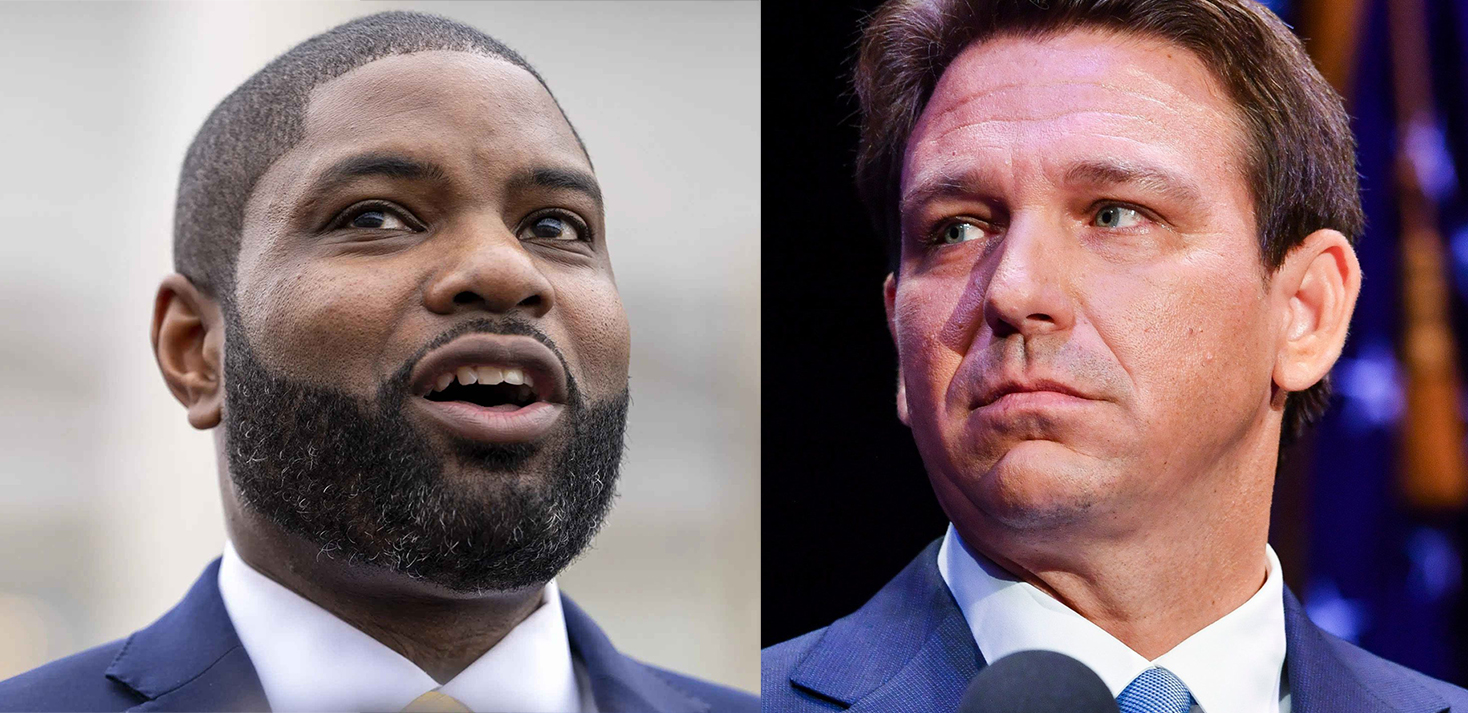
In a stark contrast of perspectives on artificial intelligence (AI), U.S. Rep. Byron Donalds has emerged as the front-runner in this year’s race for Governor of Florida, voicing a more optimistic outlook than the outgoing Governor Ron DeSantis. DeSantis has characterized AI as a harbinger of “an age of darkness and deceit,” suggesting that it could lead to job displacement, resource depletion, and a loss of moral grounding in technology.
During an appearance on podcaster Dan Bongino‘s show, Donalds expressed enthusiasm for the technological advancements on the horizon, stating, “I really believe we’re on the cusp of something magical happening in the next five to 10 years.” He highlighted AI and quantum computing as critical tools for enhancing economic efficiency, downplaying fears regarding worker displacement.
“I know the concerns about displacement, but with every change in our economy, there are always concerns about displacement,” Donalds noted. He emphasized that the principles of free-market capitalism often lead to “creative destruction,” which he believes ultimately generates new job opportunities. This optimistic stance positions Donalds as a forward-thinking candidate who sees potential in leveraging AI to enhance government operations in Florida.
Donalds argued that the state government could harness the technological wave to improve efficiency, specifically in areas such as home permitting, construction, and job creation in tech and finance sectors. “I think the next wave of Florida’s government is about leveraging AI to be incredibly efficient with the time of the people of Florida,” he stated, underscoring the potential for technology to streamline processes and reduce costs for residents.
He also acknowledged DeSantis’ achievements, asserting that the outgoing Governor’s leadership during the COVID-19 pandemic and cultural issues has been “critical for Florida.” Donalds aims to build on this foundation, indicating that his administration would seek to preserve Florida’s cherished values while preparing for the future economic landscape. “We could preserve the Florida that you love while also preparing for Florida’s future,” he said.
Conversely, DeSantis has made it clear that he is wary of the rapid integration of AI without proper safeguards. He has vowed to prioritize the welfare of Floridians, cautioning against a rush to establish data centers and deploy AI technologies without sufficient regulatory oversight. His concerns encompass a range of issues, from the potential misuse of Chinese-developed AI tools to the risks associated with deepfakes and AI-generated content that threatens personal privacy.
While Donalds appears ready to embrace the opportunities presented by AI, DeSantis seems focused on implementing protective measures aimed at safeguarding citizens from potential pitfalls. The differing viewpoints signal a pivotal moment in the state’s political landscape, particularly as Florida navigates the technological transformations shaping its future.
As the electoral race progresses, the dialogue surrounding AI will likely remain a significant point of contention. Donalds’ positive framing contrasts sharply with DeSantis’ cautionary stance, and the outcome may hinge on voters’ perceptions of technology’s role in Florida’s economic and social fabric. The state’s trajectory could be influenced heavily by the next Governor’s policies on AI, setting a precedent for how technology will be integrated into governance and daily life.
See also Adactin Joins Federal AI Directory, Boosting Public Sector Opportunities and Trust
 UK Government Uses AI Tool Consult to Analyze 50,000 Submissions in 2 Hours
 ADLM Calls for Federal Action to Ensure Equitable AI in Laboratory Medicine
 Singapore PM Wong Unveils 2026 Budget to Position Nation as AI Hub Amid Trade Challenges
 IT Ministry Mandates Prominent Labels for AI-Generated Content, Shortens Takedown Timelines