




































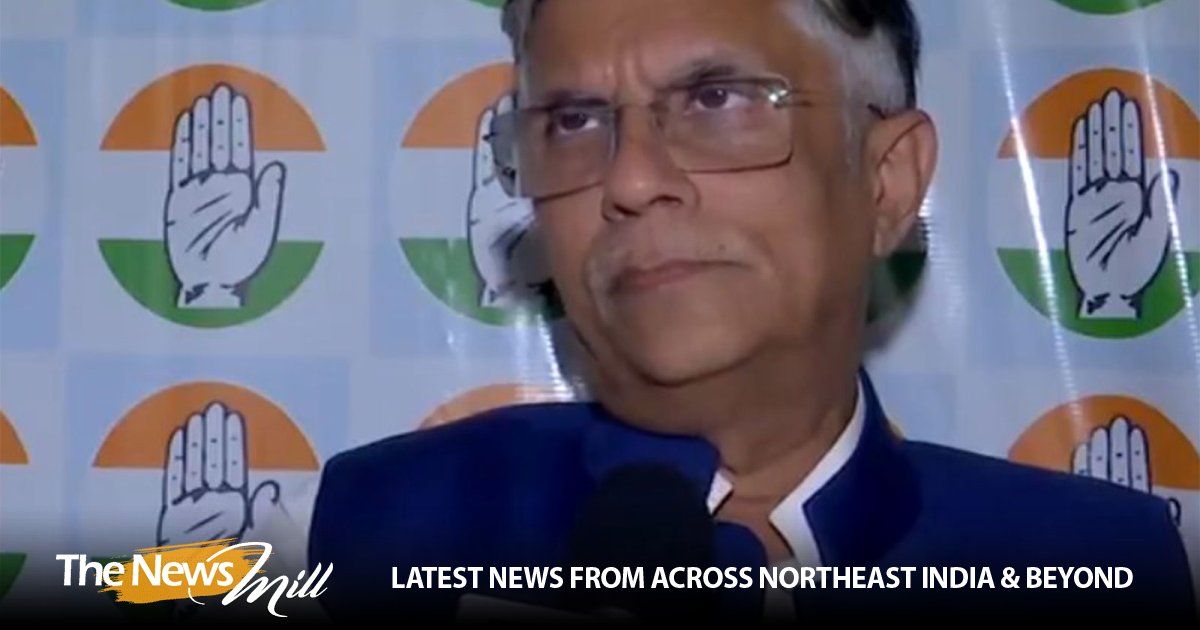
Congress leader Pawan Khera criticized the Indian government’s handling of a controversy surrounding a robodog showcased by Galgotias University at the recent AI Impact Summit. He stated that the event, intended to be a platform for innovation and knowledge exchange, was instead “reduced to a cheap China Bazaar” by the ruling Bharatiya Janata Party (BJP).
In a post on X, Khera specifically targeted Union Minister for Electronics and IT, Ashwini Vaishnaw, declaring, “@AshwiniVaishnaw has proved that in India AI means ‘Ashwini is Incompetent’. As for the ‘Pradhan (Tamasha) Mantri’ – every event is a Jhappi-Pappi Fest. This was supposed to be an AI Summit – a platform for innovation and exchange of ideas. BJP reduced it to a cheap China Bazaar.” He accompanied his remarks with a video elaborating on his criticisms.
In response, S. Krishnan, Secretary of the Ministry of Electronics and Information Technology (MeitY), expressed expectations for genuine and substantial work at expos like the AI Summit 2026. He emphasized the importance of adhering to a code of conduct and refrained from commenting on the controversy surrounding Galgotias University or the decision to vacate its stall. “We want genuine and actual work to be reflected in the way that people exhibit in expos,” he stated, underscoring the ministry’s desire to avoid distracting controversies.
Galgotias University staff vacated their stall at the summit on Wednesday following the uproar over the display of a “Chinese” robodog. Reports indicated that officials had requested the university to leave the expo in light of the situation. In a press release, Galgotias University Registrar Nitin Kumar Gaur apologized for the confusion, stating, “We at Galgotias University wish to apologize profusely for the confusion created at the recent AI Summit. One of our representatives, manning the pavilion, was ill-informed. She was not aware of the technical origins of the product and in her enthusiasm of being on camera, gave factually incorrect information even though she was not authorised to speak to the press.”
The statement further clarified that the university did not develop the robodog but contributed to its development for academic and research purposes. Gaur pointed out the misunderstanding that arose from the use of the terms “develop” and “development,” explaining that while the university worked on the robot’s development, it did not take the lead in its creation.
In an interview with ANI, he elaborated on the linguistic confusion, stating, “This is a jumble of two words, develop, and development. We didn’t develop it. We worked on its development… We want to bring them, just like that robot was brought, and an effort was made to get students to do research on it.” Additionally, Gaur addressed a viral video in which Professor Neha Singh introduced the robodog, named “Orion,” during the expo. He suggested that miscommunication may have contributed to the situation. “I can say that perhaps she (Professor Neha) might have been confused by the words ‘develop’ and ‘development’ in the flow. But the truth is that we bought this robot for children’s research… If China is making the claim, then maybe it (robodog) could be bought from China… I haven’t received any such official communication yet (on vacating the expo),” he noted.
This incident highlights ongoing tensions surrounding the representation of technology and innovation in India, as well as the sensitivities regarding international competition in the tech sector. As the nation continues to position itself as a global hub for technology and artificial intelligence, the handling of such controversies may influence public perception and trust in government initiatives and academic institutions alike.
See also Andhra Pradesh Expands Land Allotment for Google AI Data Centers to 601 Acres
 AI Strategy Shift: Genesis Mission Aims to Double Research Productivity in 10 Years
 OpenAI and Microsoft Fund £5.6M for UK AI Security Institute’s Alignment Project
 Safe Pro Secures $1M U.S. Government Contract for AI Edge Processing Systems