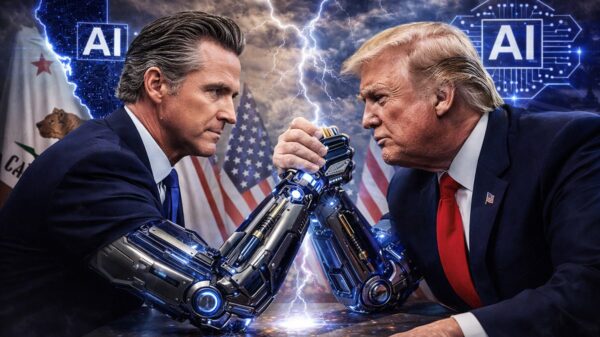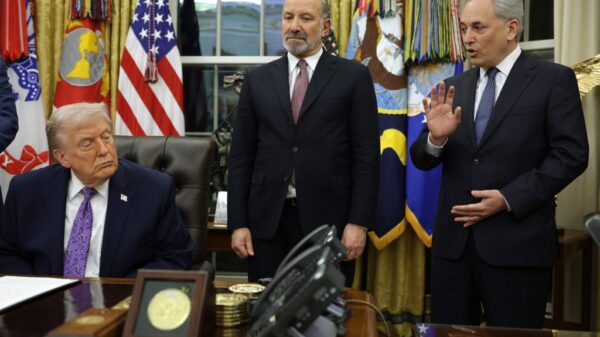
























































State governments are poised to ramp up their adoption of artificial intelligence (AI) by 2026, amid uncertainty surrounding their regulatory autonomy following an executive order signed by President Donald Trump. After taking office, Trump rescinded a previous administration’s executive order that provided guidance for AI risk management, and in July, he unveiled an AI Action Plan. However, stakeholders quickly voiced concerns over its implications for state-level regulatory authority. In December, Trump solidified his approach through another executive order, limiting states’ ability to enact what he described as “onerous AI laws.”
The ramifications of this order will vary across the country, as states have adopted different regulatory stances on AI. For instance, Idaho’s Chief Information Officer (CIO) Alberto Gonzalez remarked that the state’s approach of guidance rather than strict governance aligns with the federal directive, suggesting minimal impact on Idaho’s strategy. In contrast, some lawmakers contend that the new order undermines states’ rights to legislate.
Colorado, specifically cited in Trump’s executive order, faces scrutiny for allegedly having a law that requires the alteration of truthful AI outputs, a claim that lacks basis in current legislation. The state has enacted its own Colorado AI Act, also known as Senate Bill 24-205, aimed at establishing a risk management framework to address algorithmic discrimination. According to state lawmaker David Edinger, a working group established by Governor Jared Polis will likely issue recommendations for legislative revisions to SB 24-205 in the upcoming session beginning in January.
Colorado Representative Brianna Titone has asserted that the executive order’s attempt to limit state policymaking is legally questionable and may be challenged in court. This sentiment resonates beyond party lines, as Florida’s Republican Governor Ron DeSantis has indicated that he plans to advance a legislative proposal for an AI Bill of Rights, emphasizing the limits of an executive order in obstructing state authority.
Globally, experts are observing how Trump’s initiative to position the U.S. as a leader in AI could shape international standards, potentially favoring tech nationalism. A report from Forrester Research anticipates that the AI sector may experience a significant downturn in 2026, which could prompt a shift toward more practical AI applications that yield tangible returns on investment. States such as Georgia and North Dakota have already begun focusing on implementations that promise quick results.
Looking ahead, 2026 is expected to see a rise in the integration of “agentic AI,” a newer form of AI characterized by autonomous decision-making capabilities. Officials in various states are exploring how to incorporate this technology into their operations. For example, Alaska is investigating its potential for digital government services, Indiana aims to integrate it into the notary licensing process, and Virginia is considering its use for regulatory reviews. Utah CIO Alan Fuller expressed optimism about agentic AI, predicting it could enhance productivity within state government.
Despite these developments, the ability of states to legislate around AI remains a contentious issue. U.S. Representative Ted W. Lieu pointed out that an executive order lacks the power to create law or supersede state authority. Concurrently, the American Civil Liberties Union has labeled the order as “unconstitutional,” urging states to pursue AI legislation independently. The Center for Democracy and Technology echoed this sentiment, advocating for states to continue crafting their AI policies.
As it stands, states are expected to proceed with their AI regulatory frameworks according to their needs. New York’s governor recently signed a law establishing safety requirements and oversight for AI, demonstrating a continued commitment to state-level governance. Amidst unpredictable federal actions, the NewDEAL Forum’s December AI roadmap emphasized the urgent responsibility of state and local leaders to adopt people-first AI governance and deployment strategies.
In summary, while the landscape for AI regulation remains fraught with tensions between state and federal governance, state leaders are increasingly focused on harnessing AI technology. As they navigate these complexities, the outcomes in 2026 will be critical in shaping the future of AI legislation and its implications for various sectors.
See also Kazakhstan Achieves 60th in Government AI Readiness Index 2025, Up from 76th Last Year
 Japan’s Government Unveils AI Basic Plan to Foster Trustworthy Domestic AI Models
 Data Vault Pakistan Partners with NCP CoE AITeC to Boost Sovereign AI and HPC Capabilities
 Qatar Achieves 54th in Global AI Readiness Index 2025, Ranks 5th in MENA Region
 Kazakhstan Jumps 16 Places in 2025 AI Readiness Index, Leading Central Asia in Adoption