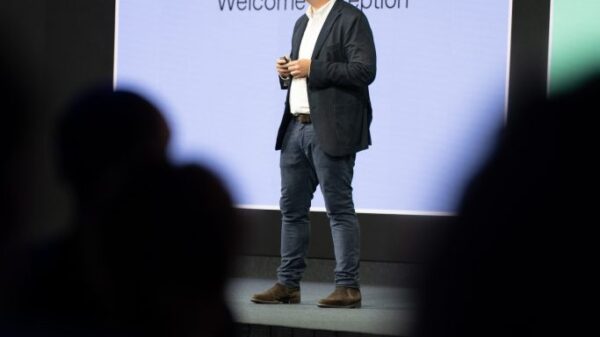
























































Australia’s advertising market is tightening, prompting marketers to justify every media dollar amid shrinking budgets. Ashton De Santis, inventory partnerships director at The Trade Desk, argues that AI-driven media buying and a more transparent ecosystem will redefine how brands approach advertising strategies by 2026.
“From retail data to attention metrics, advertisers have a huge amount of insight to inform smart, targeted campaigns across multiple digital channels,” De Santis told Mediaweek. “Layering AI on top of this data further supercharges marketers’ ability to reduce wastage and buy media with precision and impact.” He emphasized that as marketers grow more confident in AI, the technology will become integrated into every stage of their workflow.
De Santis predicts that tools once perceived as mere technical add-ons will evolve into essential components for planning, optimization, and demonstrating clear business outcomes. “The most successful advertisers will pair strong first-party data strategies with transparent, AI-driven media-buying platforms that deliver real-time optimization and measurable ROI,” he stated.
Transitioning from reactive to proactive strategies, De Santis anticipates a shift as more advertisers embrace predictive decision-making. “AI will increasingly help marketers understand likely outcomes before investment is committed, bringing intelligence earlier into planning and activation, not just optimization,” he noted. He stressed the importance of focusing on tangible business outcomes that directly affect the bottom line.
“When budgets are tight, it’s tempting to chase the cheapest inventory or obsess over vanity metrics, but that’s not where true ROI comes from,” De Santis explained. He advocated that brands should leverage data and AI to measure success by actual actions like purchases, test drives, or brand lift.
Looking ahead, De Santis expects that 2026 will usher in cleaner supply paths, enabling biddable trading to unlock greater efficiencies for advertisers. “Australia’s premium media ecosystem is poised for a meaningful shift, and 2026 is likely to be the year advertisers feel the upside,” he predicted. He highlighted a transition from fixed-price deals to transparent auctions, which will simplify the acquisition, optimization, and measurement of premium inventory in markets like Australia and New Zealand.
“As supply path optimization directs spend toward cleaner, more direct routes, advertisers gain stronger CPM efficiency, improved recall, and more meaningful brand lift,” he added. De Santis asserted that these premium environments will not only be safer but also among the most efficient and performance-driven spaces for brands to invest in.
Addressing misconceptions, De Santis clarified that modern AI in media buying is not merely rules-based automation. “Today’s most advanced media-buying platforms use machine learning to continuously adapt bidding, pacing, creative rotation, and audience strategies in real time, based on millions of signals across the open internet,” he explained. He cautioned that AI amplifies the quality of the data it receives; thus, high-quality, consented data is crucial for better outcomes.
“Efficiency isn’t about buying the cheapest media; it’s about investing where it delivers the strongest results, even if the upfront cost is higher,” he noted. This could mean targeting the right audience in premium environments like BVOD, streaming audio platforms, or trusted news sites rather than opting for the lowest-cost placements.
For advertisers beginning their journey toward AI-driven strategies, clean, well-governed, and accessible first-party data is essential. “AI cannot correct weak foundations; it simply magnifies them,” De Santis warned. He suggested viewing AI as an organizational capability rather than a standalone feature, requiring collaboration among marketing, data, and technology teams.
De Santis advised cautious marketers to start small and rigorously measure their efforts. “Prove value with one AI-assisted optimization, one predictive model, or one clean room use case, then scale based on real results,” he recommended. “Ignore the hype. AI will not replace experienced marketers. The greatest returns will come from teams that know how to guide AI, challenge its outputs, and apply human judgment, treating AI as a co-pilot rather than an autopilot.”
Keep on top of the most important media, marketing, and agency news each day with the Mediaweek Morning Report – delivered for free every morning to your inbox.
See also Keller Williams Appoints Patrick Ferry as Digital Marketing and AI Advisor for Agents
 AI Character from Controversial McDonald’s Ad Reappears, Highlights Corporate Control Risks
 Top 7 AI Writing Generators Revolutionizing Marketing Efficiency in 2023
 McDonald’s Withdraws AI-Generated Christmas Ad After Severe Public Backlash
 netpulse AG Launches AI-Driven SEO Solutions, Transforming Swiss Digital Marketing Efficiency