


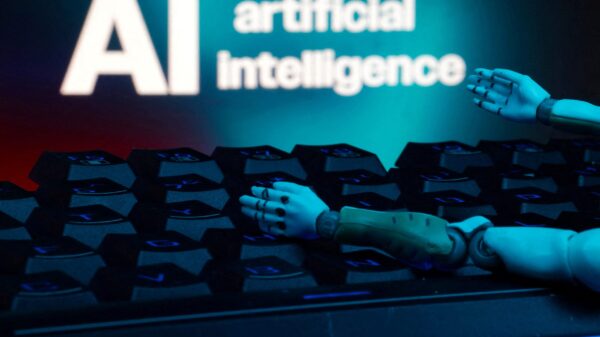






















The rapid rise of artificial intelligence (AI) has ignited a significant debate in the marketing sector regarding the future of social media marketing. As automation tools become increasingly sophisticated, marketers and businesses are grappling with whether this evolution presents a threat or an opportunity. The discussion has intensified as AI’s capabilities grow, raising questions about the role of human marketers in an increasingly automated landscape.
Many believe that AI could eventually replace social media marketing due to its remarkable ability to generate captions, analyze engagement patterns, recommend optimal posting times, and even create visual content almost instantaneously. This perception, however, often misses a crucial component: efficiency does not equate to strategic intelligence. While AI can streamline processes, the success of marketing endeavors hinges on interpretation, direction, and context—areas where human expertise remains vital.
AI is already woven into the fabric of social media marketing, impacting various aspects from audience segmentation to campaign performance prediction. Tools powered by AI optimize ad targeting, facilitate real-time analytics, and employ chatbots to manage customer interactions. Recommendation engines personalize content feeds, while automated testing identifies high-performing variations with an efficiency unattainable by human teams. Far from rendering marketing roles obsolete, AI acts as a force multiplier, enabling professionals to achieve more with fewer manual steps.
In this evolving ecosystem, social media marketing is increasingly reliant on AI-driven platforms and analytics tools. Organizations like NicePanel, nicesmmpanel, and mifasocial show that human strategy continues to play a central role in fostering sustainable growth, even as AI capabilities expand. A comprehensive understanding of whether AI will replace social media marketing requires deeper analysis beyond sensational headlines and buzzwords.
Despite its advanced functionalities, AI is yet to master aspects that require genuine human understanding. Elements such as emotional nuance, cultural awareness, humor, brand storytelling, and intuitive creativity remain challenging to automate effectively. At its core, marketing revolves around connection—understanding human motivations and crafting messages that resonate authentically. While AI can assist in execution, it lacks the deeper comprehension necessary for successful marketing, ensuring that human marketers will continue to be indispensable, particularly for brands emphasizing identity and long-term relationships.
Rather than viewing AI as a competitor, a more productive perspective is to regard it as a collaborator. AI excels in processing vast datasets and recognizing patterns, while humans excel at interpreting insights and formulating meaningful strategies. This partnership fosters faster workflows, smarter decision-making, and more adaptable campaigns. The marketers who will thrive in the coming years will not be those who resist AI, but those who integrate it thoughtfully into their processes.
With the rise of AI, it is realistic to anticipate that certain roles will evolve. Jobs that focus on repetitive, template-based tasks may see partial automation. Historical trends suggest that technological advancements rarely eliminate entire professions; instead, they redefine them. New roles focusing on AI supervision, strategy development, creative direction, and data interpretation are already emerging, reshaping marketing into a more strategic discipline.
The future of social media marketing appears to be a hybrid model. Predictive analytics will guide decision-making, hyper-personalization will refine messaging, and automated testing will accelerate optimization cycles. Yet, human oversight will remain crucial to ensure brand coherence and ethical communication. Organizations that strike a balance between machine intelligence and human creativity are likely to gain a competitive advantage, positioning the hybrid model as the new industry standard.
Concerns about AI are most pertinent for professionals engaged in purely mechanical execution. Roles that rely heavily on templated approaches, scheduling posts without strategic input, or managing routine engagement tasks may encounter disruption. Conversely, marketers who specialize in positioning, storytelling, audience psychology, and long-term growth planning are significantly less vulnerable. Adaptability, rather than mere technical skill, will mark the key differentiator in the evolving landscape.
To stay competitive, marketers must develop skills that AI cannot easily replicate, such as strategic thinking, creative leadership, behavioral insight, and advanced data interpretation. Additionally, gaining literacy in AI tools is becoming essential; understanding how to guide these technologies rather than compete against them can enhance professional efficiency while maintaining strategic control.
For organizations contemplating the replacement of marketers with AI, this move poses substantial risks. Automated systems often lack the contextual judgment needed for nuanced brand considerations. Over-relying on automation could dilute brand voice, reduce originality, and foster impersonal communication. The most resilient organizations will be those that harness AI to enhance their human teams rather than replace them. In this context, efficiency should bolster brand identity, rather than undermine it.
Ultimately, AI will transform social media marketing, but it will not replace the human element. The industry is moving towards a collaborative model where machines manage scale and analysis while humans provide vision and creativity. Marketers who adapt to these changes, learn to utilize emerging tools, and enhance their strategic capabilities are likely to outperform their peers. The pertinent question is not whether AI will take over, but how humans and AI can collaborate to shape the future of digital communication.
See also Facebook Reveals New Link Rules Impacting 2026 Social Media Strategies for Marketers
 ActiveCampaign Acquires Feedback Intelligence to Enhance AI-Driven Marketing Insights
 Cobalt Keys LLC Achieves Dual Partner Certifications to Enhance AI-Driven Marketing Solutions
 AI Search Revolutionizes Content Marketing: Organic CTR Plummets 61% Amid New Standards
 Destination NSW Launches Digital Skills Program to Boost AI and Marketing for Tourism