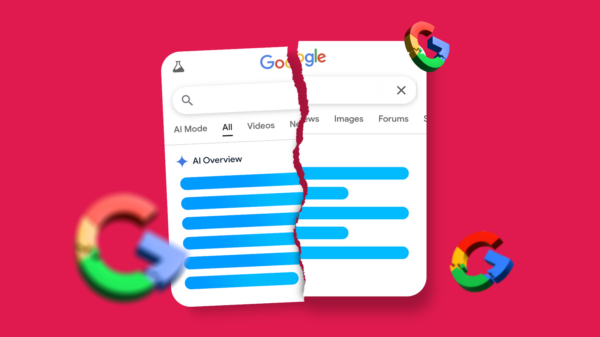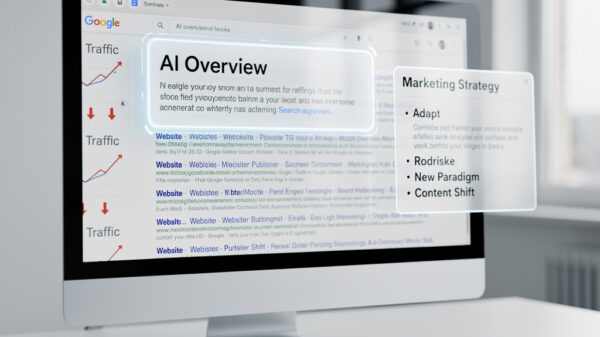




































The era of the click as the cornerstone of digital marketing is facing a significant transformation, as AI-driven search engines alter how users discover and engage with content. Marketers and businesses are now confronted with a new reality: visibility is no longer solely about high rankings or traffic volume, but also about being cited, trusted, and essential. A report from DMNews on February 3, 2026, highlights a stark decline in organic click-through rates (CTR) by 61% for searches featuring AI Overviews, while paid clicks experienced an even sharper drop of 68%. Furthermore, even queries devoid of AI Overviews saw a 41% decline in CTR, according to an analysis by Seer Interactive based on 25 million impressions.
This seismic shift is particularly challenging for content marketers who have spent decades perfecting algorithms and producing high-volume content. The traditional playbook—produce, optimize, and wait for user engagement—no longer guarantees success. The DMNews article indicates that the framework for content discovery has fundamentally shifted. However, amidst this upheaval arises a new opportunity: content that cannot be easily summarized without losing its core value is increasingly earning attention in this new AI search landscape.
The transition from the click economy to what BOSS Publishing terms the “answer economy” reflects this change. AI-powered search engines now synthesize responses rather than merely providing lists of links, emphasizing sources that are clear, structured, and authoritative. For many businesses, this evolution suggests that traditional SEO metrics—rankings, impressions, and traffic—are no longer sufficient indicators of success. Instead, visibility has become an interpretation challenge, not merely a traffic issue.
“The click isn’t dead. It’s selective. It rewards content that AI systems trust enough to reference and that humans find valuable enough to explore further,” DMNews reports. This perspective underscores a heightened threshold for content, which must now provide something AI cannot easily replicate—such as proprietary insights, expert commentary, practical tools, or original data. Brands cited in AI Overviews, for example, enjoy 35% more organic clicks and an impressive 91% more paid clicks compared to those not referenced. Thus, the click has transformed from a mere commodity into a coveted achievement for those who truly warrant it.
What types of content still capture attention today? DMNews identifies nine formats that consistently perform well in the current AI-driven environment: original research and proprietary data, expert commentary backed by credentials, interactive tools and calculators, case studies with measurable outcomes, comparative analyses featuring clear methodologies, video demonstrations and tutorials, community-driven content, comprehensive guides with practical frameworks, and updated benchmarks. These formats share a common thread: they offer essential value that cannot be distilled into a simple summary. Users engage with this content because they seek the full context, wish to verify data, or want to interact with specific tools—elements that AI alone cannot provide.
The evidence for this shift is compelling. WordStream’s analysis of AI traffic sources revealed that articles based on original statistics accounted for 50% of clicks from AI-driven sources, despite representing only 5% of clicks from traditional organic searches. Additionally, Reddit experienced a staggering 450% increase in AI citations between March and June 2025, emphasizing the rising significance of authentic, community-driven content. On platforms like YouTube, video content now constitutes over 30% of AI citations in sectors such as e-commerce and SEO, as noted in the Surfer SEO AI Citation Report. The take-home message is clear: demonstration, authenticity, and specificity continue to hold substantial importance.
Nevertheless, navigating this new landscape requires more than merely generating more content. BrightEdge’s research indicates that a remarkable 89% of citations in AI Overviews originate from URLs outside of the top 10 search rankings. This reality underscores that traditional optimization tactics are insufficient. AI systems are increasingly making editorial judgments, favoring depth, originality, and verifiable expertise over mere optimization. As DMNews asserts, “AI systems, trained on the entire web, have become remarkably good at identifying the difference” between content that contributes meaningfully to discussions and that which merely recycles existing information.
This transformation is not merely theoretical. AZ Design, a Scandinavian company led by Andreas Zwahlen, exemplifies this shift. The firm transitioned from a volume-driven content strategy to one focused on structured, machine-readable relevance, as outlined in the BOSS Publishing article. By prioritizing clear taxonomy, consistent terminology, and content centered around real decision-making questions, AZ Design increased its presence in AI-generated answers and contextual search results, even as overall click volumes diminished in the market. More importantly, this enhanced visibility coincided with higher-quality engagement, rather than just increased exposure.
The implications for business leaders are profound. AI search introduces a new layer of competition that extends beyond traditional marketing strategies. Visibility is now influenced by how effectively a company can articulate its value—clearly, consistently, and without ambiguity. In this evolving landscape, the most competitive organizations are those that regard search as a strategic communication system rather than just a means to drive traffic. “AI search does not eliminate SEO. It rewards companies that treat search as a strategic communication system rather than a mere traffic source,” BOSS Publishing observes.
As the industry adapts, the focal point shifts from merely seeking higher rankings or increased traffic to creating content that AI systems—and, crucially, human users—deem indispensable. In this answer economy, those who invest in genuine expertise, prioritize clarity and context, and adapt early will not just be found; they will be chosen.
See also Destination NSW Launches Digital Skills Program to Boost AI and Marketing for Tourism
 Influence Society Partners with Familiar to Elevate AI CRM for Boutique Hotels
 Rajesh Kumar Launches AI-Driven ‘Decoding B2B Marketing’ Playbook for Modern Marketers
 EU Notifies Meta of Antitrust Violations Over Blocking Third-Party AI Assistants
 Bluefish Signs 17K SF Lease at 315 Park Avenue South for Manhattan Headquarters