



















































In a landscape increasingly shaped by artificial intelligence, the enduring significance of deterministic systems of record was underscored by industry leaders this January. Christian Monberg, Chief Technology Officer at Zeta Global, articulated this perspective in a LinkedIn post on January 17, stating, “In a world dominated by probabilistic AI, the most valuable asset is still a modern deterministic system of record.” Monberg’s comments emerged amid discussions about the challenges legacy software platforms face in integrating AI capabilities without major architectural overhauls.
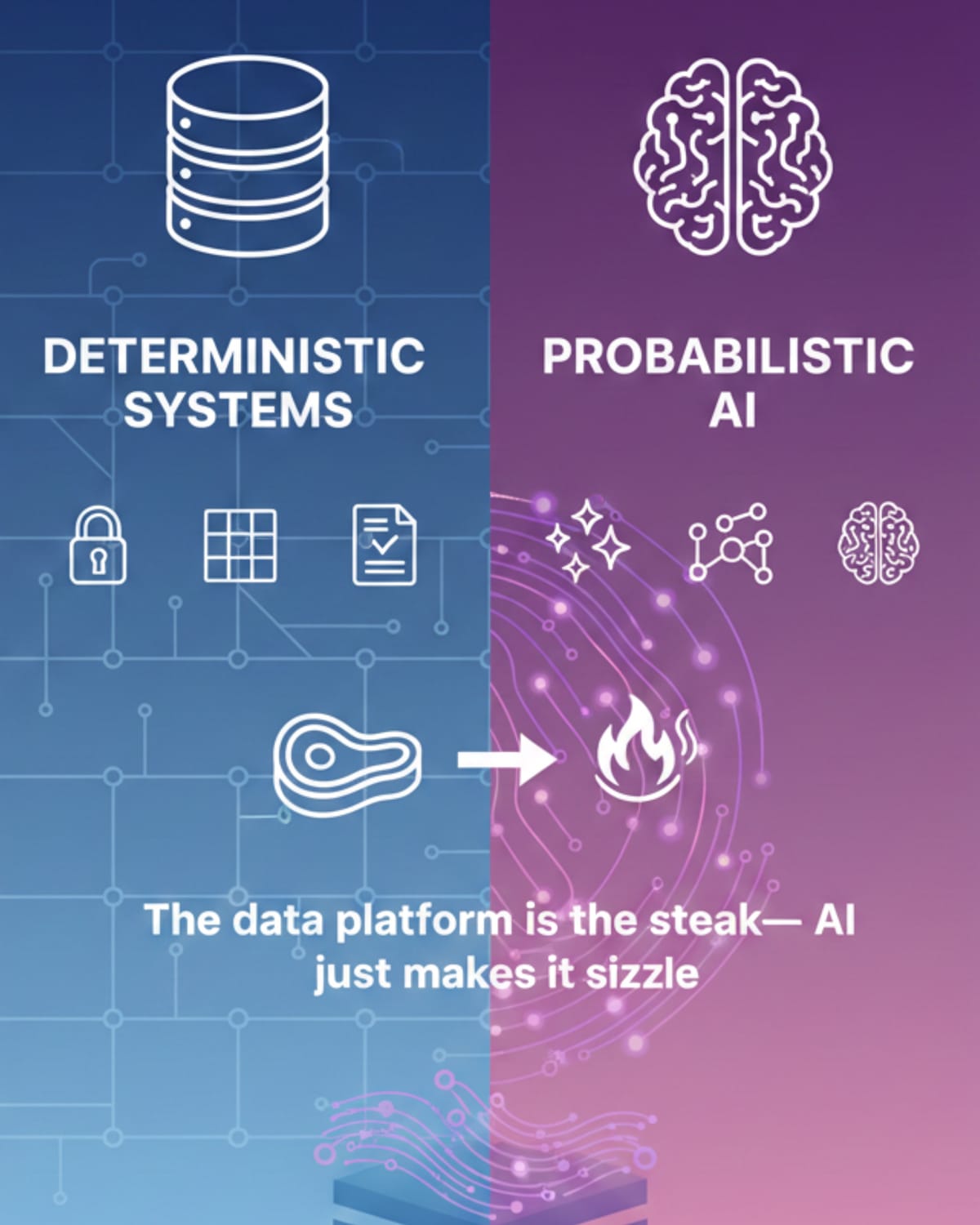
The conversation highlights two distinct yet interconnected technological paradigms within marketing technology stacks. Deterministic systems operate on defined rules and predictable outputs, ensuring data integrity. In contrast, probabilistic AI leverages statistical inference and pattern recognition, producing outputs that vary based on training data and context. Investment analyst Jamin Ball further examined these challenges on January 16 in his Clouded Judgement newsletter, emphasizing the limitations legacy platforms encounter when attempting to deploy AI across disparate systems.
“The key insight for me – agents are working across systems of record,” Ball noted, pointing out that traditional platforms excel within their specific domains but struggle with cross-system functionalities. Marketing technology analyst Scott Brinker echoed this sentiment, highlighting the diminishing value of being merely a system of record. He stressed the importance of evolving into a platform that orchestrates activities across the tech stack, saying, “Being a true platform is more than just exposing APIs.” This notion emphasizes the need for genuine innovation rather than superficial integration.
Monberg’s assertion regarding the foundational role of deterministic data platforms is crucial, as accurate and well-structured data is vital for AI agents to function effectively. While probabilistic AI offers advanced capabilities in pattern recognition and adaptive decision-making, these advantages hinge on the quality of the underlying data. “The steak is the structured data platform. The sizzle comes from AI agents that access, analyze, and act on that data,” Monberg remarked.
This architectural evolution is evident in the advertising technology sector. For instance, Amazon unveiled comprehensive agentic AI capabilities on September 17, 2025, which transformed marketplace management into an active partnership model that relies on deterministic data structures. Similarly, Adobe’s Experience Platform Agent Orchestrator, launched on September 10, 2025, exemplifies the blending of deterministic data infrastructure with the dynamic capabilities of probabilistic AI agents.
Other companies, like LiveRamp, introduced innovative frameworks like “Yours, Mine, and Ours,” which separate deterministic identity resolution from probabilistic AI decision-making. This approach demonstrates how deterministic systems can maintain structured data while enabling flexible AI orchestration across multiple platforms. The architecture allows for secure data operations while employing AI for analysis without the complications of transferring information between systems.
As organizations navigate this new AI-driven landscape, the distinction between deterministic infrastructure and probabilistic AI agents informs technology investment strategies. Deterministic systems offer verifiable audit trails and regulatory compliance, which are critical for accurate financial reporting. A recent Kochava research study revealed that marketing mix modeling demonstrated a 35% higher incremental impact of TikTok campaigns compared to traditional last-touch attribution metrics, underscoring the necessity of integrating both deterministic and probabilistic approaches.
However, as AI agents increasingly automate processes, they encounter persistent data quality challenges that traditional systems have long struggled to address. Google’s introduction of the open-source Model Context Protocol server for Ads API integration on October 7, 2025, exemplifies efforts to streamline access while maintaining the integrity of deterministic data. Furthermore, the advertising industry has initiated standardization efforts like the Ad Context Protocol to mitigate the fragmentation created by proprietary APIs, allowing for more seamless integration of AI agents across various platforms.
Despite these advancements, industry experts caution that automation can reduce transparency. Augustine Fou, a fraud researcher, emphasized that agents could potentially propagate harmful activities if not properly regulated. This underscores the importance of ensuring quality and governance as companies embrace these new technologies.
As organizations grapple with architectural changes, they must also address cultural shifts within their corporate structures. Companies that historically relied on proprietary data must transition to open ecosystems that prioritize data quality and collaboration. The successful vendors will be those that not only invest in robust deterministic infrastructures but also embrace the role of probabilistic AI as a complementary force rather than a competitive threat.
In the evolving marketing technology landscape, the strategic implications of Monberg’s observations are profound. As companies weigh the decision to favor comprehensive platforms versus specialized systems, the quality of their underlying data infrastructure will be pivotal. The platforms that successfully harmonize deterministic data with the adaptive capabilities of AI agents are poised for growth, while those that resist adaptation risk obsolescence.
See also AI Transforms SEO: Bloom Agency Reveals Data-Driven Strategies for Digital Success
 Tony Hayes Reveals 14-Hour SEO Strategy with AI Tools to Bridge Beginner-Expert Gap
 Dick’s Sporting Goods Expands Creator Program to Combat AI Content Saturation