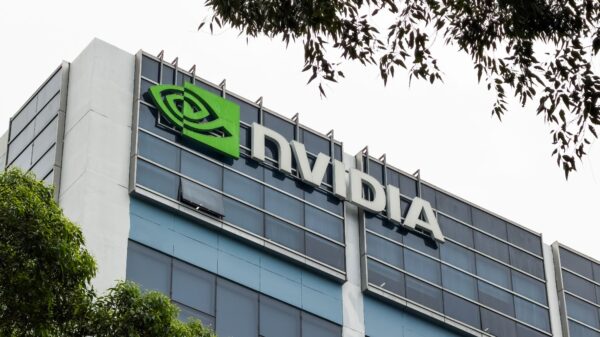



















































Tensions in the finance sector are escalating as investors await Nvidia’s upcoming earnings report, a pivotal moment not just for the company but also for the broader AI market. As a technological leader, Nvidia has been at the forefront of the AI boom, significantly impacting market dynamics. Currently, Nvidia’s stock is priced at $181.36, reflecting a decline of 2.81%. This downturn has raised concerns among investors regarding whether the company can meet the high expectations stemming from its impressive growth trajectory.
Nvidia’s Financial Outlook and AI Market Stability
Nvidia’s forthcoming earnings report is crucial for both its investors and the AI sector at large. The anticipated third-quarter results are expected to clarify the sustainability of the ongoing AI-driven market uptrend. With a market capitalization of $4.4 trillion and a price-to-earnings (PE) ratio of 51.67, Nvidia’s financial indicators suggest substantial growth potential. The company’s stock has seen a remarkable Year-to-Date increase of 43.92%, underscoring its pivotal role in AI advancements. However, the recent 2.81% dip in stock price highlights the rising concerns within the AI market.
Influence on Major Market Indices
The performance of Nvidia is poised to impact significant market indices such as the Dow Jones (^DJI) and the S&P 500 (^GSPC). Recently, the Dow Jones experienced a 1.07% drop, while the S&P 500 fell by 0.83%. These declines reflect broader economic worries, which are further amplified by expectations from Nvidia’s performance. Given that the S&P 500 has seen a six-month increase of 20.72%, Nvidia’s results are critical for maintaining this momentum. The correlation between Nvidia’s earnings and these major indices underscores the market’s heightened sensitivity to developments in the AI sector, suggesting that Nvidia’s results could set the stage for future investment strategies across technology sectors.
Nvidia Stock Analysis and Future Projections
Despite the recent decrease in stock value, analysts continue to regard Nvidia as a strong buy, with an ambitious target price set at $350. The company currently holds an A rating, reflecting its robust fundamentals and growth prospects. Analysts anticipate an earnings per share (EPS) of 3.51, demonstrating a consistent upward trend in Nvidia’s financial performance. Furthermore, the consensus among analysts leans toward a buy recommendation, indicating confidence in Nvidia’s ability to capitalize on its advantages in AI technology. Investors are advised to monitor Nvidia’s performance metrics closely to gauge long-term benefits, particularly given the company’s impressive five-year growth of 1383.23%.
Strategic Considerations for Investors Amidst AI Market Fluctuations
In light of current market volatility, investors are faced with critical decisions regarding their portfolios. Nvidia’s growth outlook aligns well with long-term investment strategies, despite short-term fluctuations. With the AI market remaining in focus, incorporating strong performers like Nvidia into investment portfolios could help mitigate risks. Accessing real-time analytics and insights from platforms such as Meyka can empower investors to make informed decisions during uncertain economic periods. Adjusting portfolios to account for the strength of the AI market may provide a buffer against immediate market unpredictability.
Conclusion
Nvidia’s upcoming earnings report serves as a key indicator for the future trajectory of the AI market. While there is palpable nervousness surrounding the results, the company’s solid growth metrics and leadership position in the industry offer a measure of reassurance. The impact on major indices like the Dow Jones and S&P 500 adds complexity to the situation, showcasing the comprehensive influence of AI on market dynamics. Investors should closely monitor Nvidia’s performance metrics and leverage strategic analytics tools such as Meyka for enhanced decision-making. The outcomes of this report are likely to significantly influence AI market stability and future investment dynamics.
FAQs
What impact does Nvidia’s earnings report have on the AI market?
Nvidia’s report serves as a barometer for AI market stability, influencing investor confidence and broader market indices like the Dow Jones and S&P 500. Positive results suggest growth, while disappointments may heighten concerns over an AI bubble.
How is Nvidia’s stock valued currently?
Nvidia’s stock is currently valued at $181.36, having experienced a 2.81% decline. Despite this, it maintains a strong buy rating with a target price of $350, indicating confidence in its growth potential driven by AI.
What should investors consider with Nvidia’s earnings?
Investors should focus on Nvidia’s growth metrics, analyst ratings, and the overall market impact. Utilizing platforms like Meyka can assist in analyzing Nvidia’s performance amid market turbulence, making portfolio adjustments for AI resilience essential.
Disclaimer:
The content shared by Meyka AI PTY LTD is solely for research and informational purposes. Meyka is not a financial advisory service, and the information provided should not be considered investment or trading advice.
 AppsFlyer Launches Eight New Products in Next-Gen Marketing Cloud for Data and AI Growth
 Top Investors Sell Nvidia Shares Amid $5.8B SoftBank Exit and AI Market Concerns
 Adobe Acquires Semrush for $1.9B to Enhance AI Marketing Tools and SEO Capabilities
 AI Integration in Marketing Boosts Customer Engagement by 30% Through Automation
 Adobe Acquires Semrush for $1.9B to Transform AI Marketing with SEO Integration