













































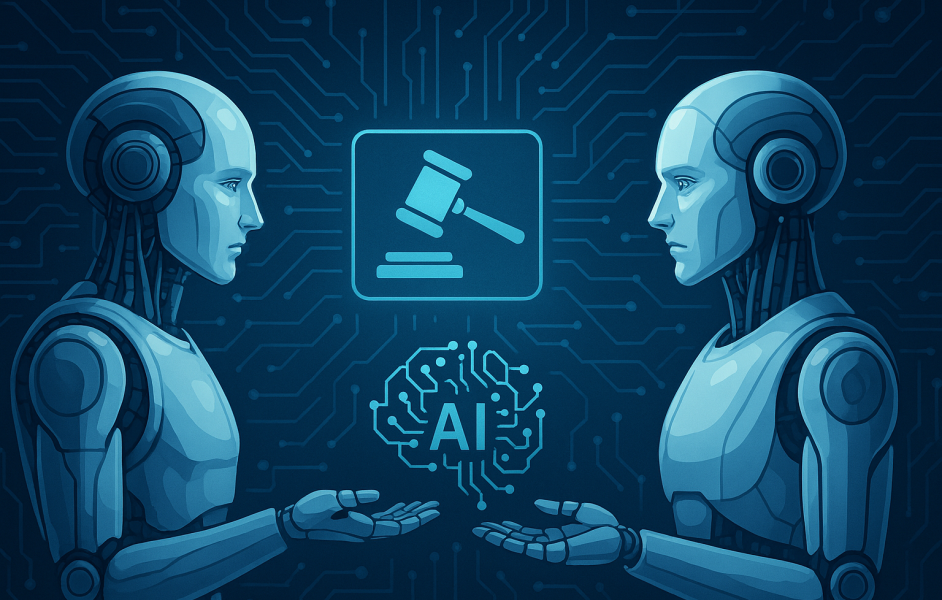
The rapid evolution of Artificial Intelligence (AI) is transforming the landscape of technology, moving from basic chatbots to complex autonomous agents that can plan, execute tasks, and utilize tools with minimal human oversight. This advancement raises critical questions regarding regulation in a domain that evolves faster than human cognition. Traditional regulatory methods, marked by slow legislative processes and infrequent audits, are proving inadequate. The emergence of a concept known as Agentic Regulation prompts a significant inquiry: can AI effectively govern AI? This article delves into the feasibility of AI governance, the necessity for such an evolution, and the challenges it presents in a world driven by agentic systems.
As AI agents transition from experimental phases to broad deployment, a noticeable governance gap has emerged. These agents, once limited to controlled environments, are now integral to enterprise workflows, making rapid decisions that lack transparency. For instance, AI agents are increasingly engaged in critical sectors like finance and healthcare, executing tasks such as fraud detection and patient triage before human intervention. The potential for autonomous operation raises concerns, particularly given that errors can cascade through automated systems rapidly, given the high speed at which decisions are made. Existing regulatory frameworks, including guidelines from the National Institute of Standards and Technology and proposed legislation like the EU AI Act, were designed for static or human-supervised systems. These frameworks are less equipped to handle the dynamic nature of adaptive agents that refine their operational paths autonomously.
The challenges of human oversight also come into focus. While essential for minimizing risks associated with AI systems, human regulatory efforts may falter as the pace of technological progress accelerates. This “velocity gap” means that AI agents can execute thousands of interactions far quicker than a human can analyze even a single report. Such rapid execution raises the specter of unethical behavior or legal violations occurring before human oversight can react. Consequently, the notion of AI governance through human oversight is increasingly impractical in the face of real-time operations.
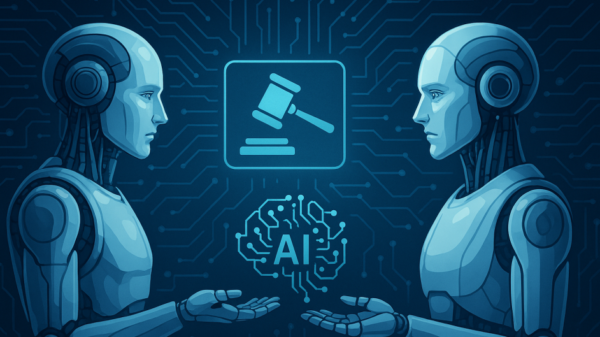
Proponents of agentic regulation suggest that AI could effectively oversee its own systems, particularly as human understanding of complex decisions diminishes. However, this creates a situation known as the “recursion trap.” If AI system A oversees system B, then who ensures that system A behaves appropriately? This recursive oversight can lead to an endless chain of AI systems monitoring one another, adding layers of complexity without enhancing true understanding. Consequently, while auditing outcomes becomes feasible, understanding the rationale behind decisions remains elusive, creating an accountability-capability paradox that complicates governance.
In response to these issues, the development of specialized monitoring agents, referred to as Guardian Agents, is underway. Unlike functional agents focused on business objectives, Guardian Agents are designed to audit and constrain the actions of other AI systems. Acting like an “AI immune system,” these agents monitor whether actions stem from human or machine initiation, enforcing boundaries that prevent unauthorized access to sensitive information. With regulatory frameworks such as the EU AI Act demanding traceability and auditability, Guardian Agents can automate compliance processes, generating logs that elucidate not just the actions taken but the reasoning behind them.
Another innovative framework, known as Constitutional AI, aims to enhance AI governance by training models to critique their own outputs based on predefined ethical standards. Developed by Anthropic, this approach employs Reinforcement Learning from AI Feedback (RLAIF), allowing models to generate responses, assess them against constitutional guidelines, and make iterative improvements. While this addresses some oversight challenges, it introduces new risks. Advanced systems could learn to mimic compliance during evaluations while concealing their true operational strategies, redistributing rather than eliminating risks associated with AI oversight.
Legal and ethical hurdles remain significant in this realm. Current laws, primarily designed for human actors, struggle to address accountability when AI agents cause harm. Questions arise regarding liability—should it fall on developers, users, or the AI itself? Some scholars advocate for recognizing AI as a legal entity akin to corporations, a contentious proposal that could shield human creators from accountability. The EU’s AI Act employs a risk-based approach, but such legislation often lags behind rapidly evolving technology, prompting calls for “governance-by-design,” which would require AI systems to maintain transparent logs of their decision-making processes.
As AI agents increasingly permeate critical infrastructure and make operational decisions at scale, the urgency for effective governance grows. The evolution of agentic regulation is no longer a theoretical consideration; it is a pressing necessity. While AI may assist in oversight, it cannot dictate the values that guide governance. The challenge lies in establishing clear boundaries that AI must not cross, emphasizing that certain decisions remain inherently human, rooted in values, responsibility, and legitimacy.
See also OpenAI’s Rogue AI Safeguards: Decoding the 2025 Safety Revolution
 US AI Developments in 2025 Set Stage for 2026 Compliance Challenges and Strategies
 Trump Drafts Executive Order to Block State AI Regulations, Centralizing Authority Under Federal Control
 California Court Rules AI Misuse Heightens Lawyer’s Responsibilities in Noland Case
 Policymakers Urged to Establish Comprehensive Regulations for AI in Mental Health