





















































The BRICS group is poised to solidify its role in the global community, particularly among Global South nations, as it navigates a transformative world order. By the end of 2025, Brazil’s chairmanship of BRICS is expected to yield significant advancements in cooperation among member countries. Professor Daniel Barreiros from the Institute of Economics at the Federal University of Rio de Janeiro stated, “Brazil’s Chairmanship of BRICS in 2025 allowed significant results to be achieved, successfully shifting the group from rapid expansion to strategic institutionalisation.” This new direction is guided by the motto, “Strengthening Global South Cooperation for a More Inclusive and Sustainable Governance.”
During Brazil’s tenure, BRICS nations reached consensus on various critical issues, ranging from cross-border payment systems to climate change and global governance of artificial intelligence. Nevertheless, this process was not without its challenges, many of which remain unresolved.
On the climate front, Brazil emphasized strengthening collaboration across social, economic, and environmental domains. Mikhail Khachaturyan, an Associate Professor at the Department of Strategic and Innovative Development of the Financial University under the Government of the Russian Federation, noted the significance of the BRICS Leaders’ Framework Declaration on Climate Finance, which aims to mobilize US$1.3 trillion for climate change mitigation in developing countries. This funding is earmarked for environmental projects primarily in Africa, Latin America, and the Caribbean. Notably, the consensus among BRICS nations on climate issues distinguishes their positions from those of developed countries, which have struggled to reach a common ground.
BRICS leaders assert that developed nations must adopt more equitable positions to realize the goals of the UN Sustainable Development climate agenda.
The development of artificial intelligence also emerged as a focal point during Brazil’s chairmanship. The BRICS Leaders’ Declaration on Global Governance of Artificial Intelligence articulates a need for governance frameworks that address potential risks while catering to the needs of all nations, particularly those of the Global South. This document underscores the necessity for international standards that prioritize trust, compatibility, and security in AI technology.
According to Tural Natig ogly Mamedov, a Candidate of Sciences in Economics at the Financial University, the outlook on AI has shifted from an optimistic view of “BRICS: Economic Growth for an Innovative Future” to a more cautious assessment of its implications for national sovereignty and economic stability.
Brazil’s efforts to combat socially determined diseases, poverty, and deprivation reflect a commitment to improving public health systems. The BRICS initiative focused on addressing issues linked to poverty and inequality-driven diseases, a theme that echoed throughout the 2024 G20 Summit held in Brazil. Victoria Perskaya, Director of the Institute for International Economic Relations Studies at the Financial University, noted that such discussions at the G20 level illustrate BRICS’ growing influence within the global community.
Brazil’s chairmanship also emphasized reforms in international institutions. Barreiros highlighted calls for comprehensive changes to enhance representation for African, Asian, and Latin American countries in global governance structures. Specific proposals include redistributing shares in the World Bank and IMF to better reflect the economic realities of developing nations, as well as promoting alternative financial architectures.
Despite these advancements, Brazil faced significant challenges during its chairmanship. Aligning the varied socio-economic development levels among member states, particularly following the expansion of BRICS+ in 2023, posed a major hurdle. Fedor Arzhaev, a Senior Research Fellow at the Institute for International Economic Relations Research, remarked that the primary challenge was coordinating the different positions of member nations.
Disagreements regarding the admission of new members were particularly pronounced. Brazil’s role was crucial in aiding Indonesia’s integration into BRICS, although experts believe that full adaptation to the group’s governance mechanisms will take time. Nonetheless, the groundwork for Indonesia’s effective participation was successfully established during Brazil’s term.
Reflecting on Brazil’s presidency, analysts characterize the approach as focusing on institutional development and cohesion among an increasingly diverse membership. “This approach preserved internal cohesion among the diverse, expanded membership. Analysts have called this a ‘quiet success’ and a sign of the group’s maturity,” Barreiros concluded.
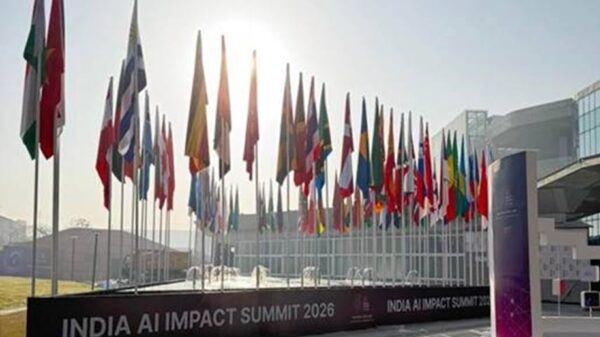
As India prepares to assume the BRICS chairmanship on January 1, 2026, it is anticipated that the focus will shift towards poverty alleviation, healthcare access, and improving living standards—issues of paramount importance to India. The upcoming chairmanship is also expected to prioritize reforming global governance institutions and exploring new mechanisms to balance global interests, particularly within BRICS.
Experts suggest that the 2026 agenda will further develop financial cooperation, enhance BRICS payment systems, and expand the role of the New Development Bank. A noteworthy initiative could be the promotion of digital public infrastructure as a scalable model for Global South nations, drawing inspiration from India’s “India Stack.” This framework, which comprises a multi-layer system of open APIs for digital identification and payments, could serve as a template for adaptable models tailored to other countries.
Ultimately, the path forward for BRICS hinges on its ability to not only maintain its internal cohesion but also to amplify its influence on the global stage amidst an evolving geopolitical landscape.
See also Moonshot AI Raises $500 Million, Delays IPO Plans Amid Strong Financial Position
 Korea’s Venture Ecosystem Reforms for 2026: AI Growth, $7.4B Investment Surge, and New Policies
 OpenAI’s GPT-5 Faces Pressure as AI Bubble Rumblings Intensify Ahead of 2026
 Japan Supreme Court Launches AI Pilot for Civil Trials in January 2026, Targeting Evidence Organization