
















































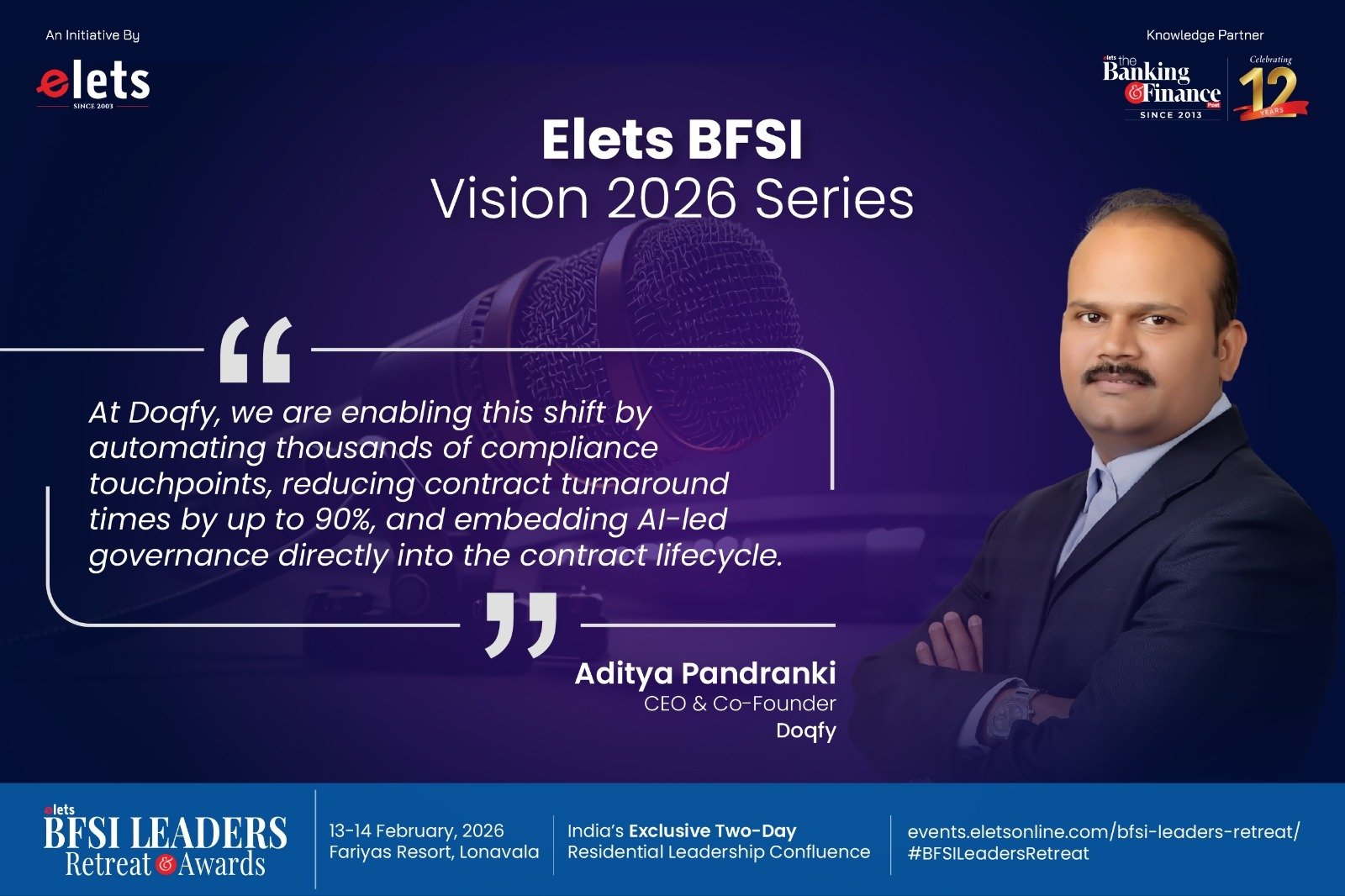
India’s banking, financial services, and insurance (BFSI) sector is navigating a transformative phase, moving beyond initial digitization toward enhancing its legal and compliance frameworks. Doqfy, a key player in this evolution, is leveraging artificial intelligence (AI) to turn legal operations from a bottleneck into a strategic advantage. In an exclusive interview with Aditya Pandranki, CEO and Co-founder of Doqfy, he outlined the company’s initiative to align its solutions with the shifting priorities of BFSI leaders as part of the Elets BFSI Vision 2026 Series.
As the industry looks to 2026, Doqfy’s roadmap emphasizes technological innovation through AI. The company aims to enhance its products by incorporating advanced capabilities such as predictive analytics and risk management in contract management. Additionally, Doqfy plans to utilize semantic AI to extract data from legacy contracts, which are often only available as digitized images. The introduction of embedded compliance in future contracts will allow for real-time validation of regulatory requirements, potentially eliminating post-execution challenges. Furthermore, the integration of blockchain technology will enable the creation of tamper-proof smart contracts, providing enhanced security.
Doqfy seeks to establish itself as an “extended arm” for legal teams, rather than merely a tool. The firm is focused on strengthening its API-based solutions, facilitating seamless integration into core banking, insurance, and enterprise management systems. By doing so, the company aims to transform legal operations into a competitive advantage for BFSI institutions.
According to Pandranki, by 2026, compliance, efficiency, and trust will be the most valued outcomes for BFSI institutions. Doqfy is facilitating this shift through significant enhancements in efficiency, claiming to reduce contract turnaround times by up to 90% and eliminate nearly 60% of repetitive manual tasks. The platform’s automation features track 1,400 to 1,500 compliance touchpoints, ensuring 100% compliance-readiness and preventing penalties through automated alerts for milestones and renewals. Trust will also be fortified by maintaining rigorous certifications such as ISO 27001, SOC 2, and GDPR compliance to protect sensitive financial data.
As the BFSI landscape evolves, Pandranki identifies three urgent technology gaps emerging over the next two years. First, many institutions still operate with disconnected systems where contract management is not integrated with disbursement or vendor onboarding processes. Second, a concerning number of companies face manual fraud risks, with 52% of global firms reporting exposure to fraud, indicating a need for real-time identity and business verification (eKYC/eKYB) within the contract execution journey. Third, fragmented data remains a significant issue, often preventing AI from yielding actionable insights; thus, centralized repositories are essential for making legacy contracts actionable.
Pandranki further emphasizes the changing role of technology partners in the BFSI ecosystem. Rather than merely providing software, partners are becoming strategic collaborators who act as an extended arm to legal and operations teams. This evolution entails a focus on customization over generic features, enabling partners to deliver tailored solutions that address specific business challenges. High-trust automation, utilizing AI models trained on Indian laws and regulations, promises greater accuracy and reduced risk compared to generic large language models (LLMs). Moreover, strategic partners now manage the entire lifecycle of contracts, including pre-contract due diligence, thereby minimizing future legal repercussions.
As BFSI institutions continue to embrace digital transformation, the integration of AI and advanced technologies will be vital in shaping the compliance landscape. Doqfy’s commitment to innovation positions it as a pivotal player in this evolving sector, where the emphasis lies not only on efficiency and compliance but also on fostering trust among consumers and stakeholders.
See also Meta Launches Two Super PACs to Influence AI Regulation in California and Beyond
 Law Firms Must Embrace Generative and Answer Engine Optimization to Thrive in 2026
 Türkiye Issues Ethical Guidelines for AI in Schools with Mandatory Declarations
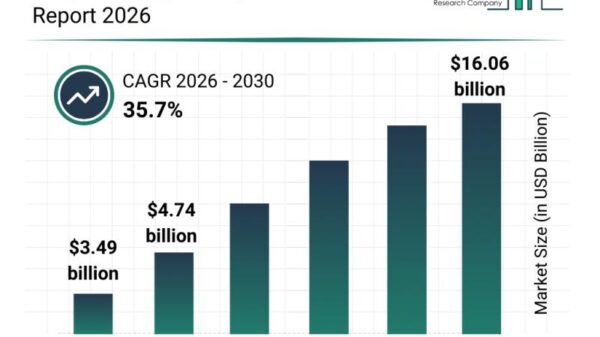
 Insurers Adapt Policies to Explicitly Cover AI Risks, Forecast $4.7B Market by 2032