



















































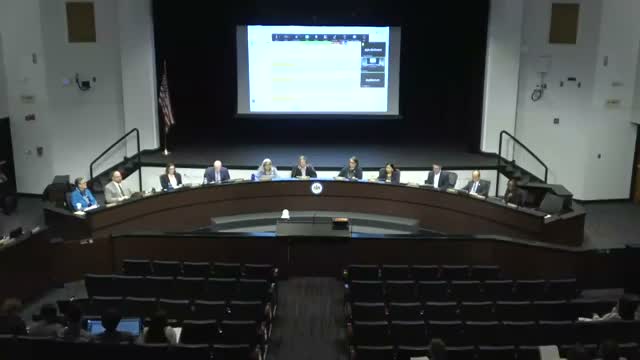
The Fairfax County School Board convened on January 8, enacting a series of significant decisions regarding student discipline, contract approvals, and compliance assessments. The meeting addressed crucial issues impacting the school division’s governance and operational framework.
Among the key actions, the board voted to expel a student associated with weapon possession that resulted in injury to another student, with the decision passing 9-0-2. Another expulsion was approved for a student who threatened a peer, recorded at 8-0-3. These disciplinary measures are reflective of ongoing efforts to ensure safety and security within schools, culminating from considerations held in closed sessions.
In addition to disciplinary actions, the board confirmed its commitment to legal protocols by authorizing legal counsel to submit further statements of fact, a motion that also passed unanimously. The board’s discussions underscored the importance of maintaining a safe educational environment while adhering to necessary legal processes.
On the facilities front, the board approved an increase in the architectural and engineering services contract for the renovation of Armstrong Elementary School, elevating the total to $2,576,424.50. The board authorized either the superintendent or chief operating officer to execute the contract on its behalf, demonstrating a commitment to improving educational infrastructure. Discussions centered around capacity planning and the prioritization of projects within the renovation queue, reflecting a strategic approach to resource allocation.
Furthermore, a contract with Accenture LLP for academic and business consulting services was approved, allowing the board to enhance operational efficiency and continue evolving its educational offerings. This partnership aligns with the board’s ongoing efforts to integrate professional insights into its strategic planning.
The board also reviewed the superintendent’s monitoring report on Executive Limitation 3, which pertains to relationships with families and community stakeholders. While the report received praise for introducing new tools—such as a mobile app and expanded translations of special education forms—concerns were raised about the need for stronger outcome metrics. Ultimately, the board found the superintendent in compliance with Executive Limitation 3, achieving a vote of 8-1. This decision reflects the board’s commitment to fostering transparent and effective communication with families and the community.
In governance matters, a proposal to rescind a prior decision regarding the restructuring of the Facilities Planning Advisory Committee (FPAC) and the Curriculum and Professional Development Committee (CPDC) was debated but ultimately failed with a vote of 5-6. This outcome indicates ongoing discussions about the board’s structure and its implications for operational effectiveness.
The board did, however, successfully amend its governance manual to establish clearer expectations for document posting and timelines, a move aimed at enhancing transparency and accountability in its operations. These amendments are part of the board’s broader initiative to ensure ongoing oversight and responsiveness to community needs.
The decisions made during this meeting underscore the board’s proactive stance in addressing various critical issues. The expulsions highlight a firm commitment to student safety, while contract approvals demonstrate an investment in both infrastructure and strategic partnerships. Additionally, the amendments to the governance manual and the compliance finding for Executive Limitation 3 reflect a continuous focus on institutional transparency and family engagement.
As the Fairfax County School Board moves forward, these actions will likely shape the educational landscape in the area, reinforcing the board’s role in ensuring student welfare, effective governance, and community collaboration.
See also US AI Regulations Emerge: $500B Investment Fuels New Ethical Frameworks Across Sectors
 AI Professionals Must Comply with State Laws Despite New Executive Order Changes
 AI Innovations Dominate CES 2026: Autonomy and Safety Take Center Stage
 Doqfy Embeds AI-Driven Compliance in BFSI Contracts to Enhance Efficiency by 90%