













































Artificial intelligence is rapidly reshaping the American economy, affecting various sectors from advanced manufacturing and logistics to health care and financial services. With Florida’s tech sector expanding and its population on the rise, getting AI policy right has become crucial for maintaining economic momentum and competitiveness in the state.
Recent reporting from Axios highlights a significant development regarding AI legislation, focusing on the White House’s engagement with Utah lawmakers. The administration has formally opposed Utah’s HB 286, the Artificial Intelligence Transparency Act, urging lawmakers to reconsider the proposed bill. While the intentions behind HB 286 may be well-meaning, it has been criticized as a “bad, big government bill” that mirrors policies from states like California and New York, characterized by heavy compliance requirements and vague mandates that could stifle innovation and burden businesses.
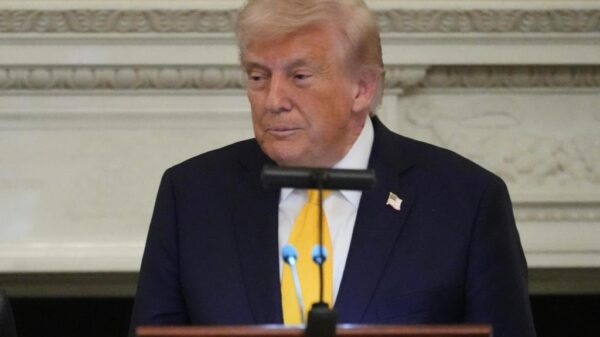
In response to the bill, former President Donald Trump intervened early, emphasizing the need for a federal framework to regulate AI instead of allowing state-by-state legislation that could lead to a fragmented and cumbersome regulatory environment. The situation in Utah serves as a case study illustrating why federal preemption of state AI laws is viewed as essential. Without a coherent national policy, the risk of choking innovation increases, potentially allowing competitors, particularly China, to advance unchecked in the AI race.
Florida is not immune to these challenges, as evidenced by the controversial SB 482, the AI Bill of Rights, which surfaced during this Legislative Session. This proposed legislation sought to impose sweeping regulatory mandates, parental consent requirements, and private rights of action on AI and digital platforms. Critics argue that such regulations would add unnecessary compliance burdens to evolving technologies, likely slowing investment, discouraging startups, and exposing companies to costly litigation.
The implications for Florida’s business landscape are dire; as other states aggressively pursue AI infrastructure, burdensome regulations could send a dangerous message to potential investors. Fortunately, Florida House Representative Daniel Perez has played a pivotal role in preventing the AI Bill of Rights from advancing, advocating instead for a unified federal approach to AI regulation.
As a small business owner, the complexity of navigating a patchwork of state regulations is palpable. Should every state adopt its own set of AI rules, particularly ones as broad and cumbersome as SB 482, the resulting uncertainty and increased costs would disproportionately impact startups and mid-sized firms. Florida has the potential to safeguard families while fostering a dynamic digital economy, but moving ahead of a comprehensive national framework could undermine the very innovation that has fueled the state’s growth and push investments toward states with more favorable regulatory climates.
Business leaders and stakeholders have a crucial role in this landscape. It is imperative that they advocate for clarity, competitiveness, and alignment with national policies regarding AI. Florida lawmakers are encouraged to collaborate with the White House’s strategy, steering clear of new state mandates that complicate the regulatory climate and deter investment.
America finds itself in a global race for technological supremacy, and a unified national strategy is vital for strengthening innovators and reinforcing the country’s competitive edge. The President’s leadership underscores a commitment to ensuring that the AI-driven future is shaped by innovators in Florida—be it in Tampa, Orlando, or Miami—rather than by companies based in Beijing.
Ultimately, it is incumbent upon business and tech leaders to actively engage with lawmakers, promoting sensible legislation that advances U.S. leadership in AI without jeopardizing Florida’s economic interests.
Bryson Bort is the founder of SCYTHE, a startup developing a next-generation threat emulation platform. He is a graduate of West Point and the University of Florida.
See also OpenAI’s Rogue AI Safeguards: Decoding the 2025 Safety Revolution
 US AI Developments in 2025 Set Stage for 2026 Compliance Challenges and Strategies
 Trump Drafts Executive Order to Block State AI Regulations, Centralizing Authority Under Federal Control
 California Court Rules AI Misuse Heightens Lawyer’s Responsibilities in Noland Case
 Policymakers Urged to Establish Comprehensive Regulations for AI in Mental Health