





















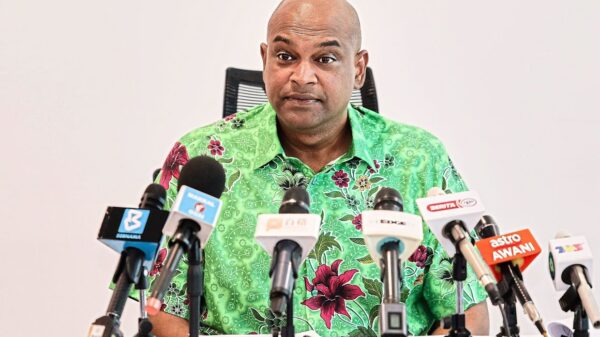
























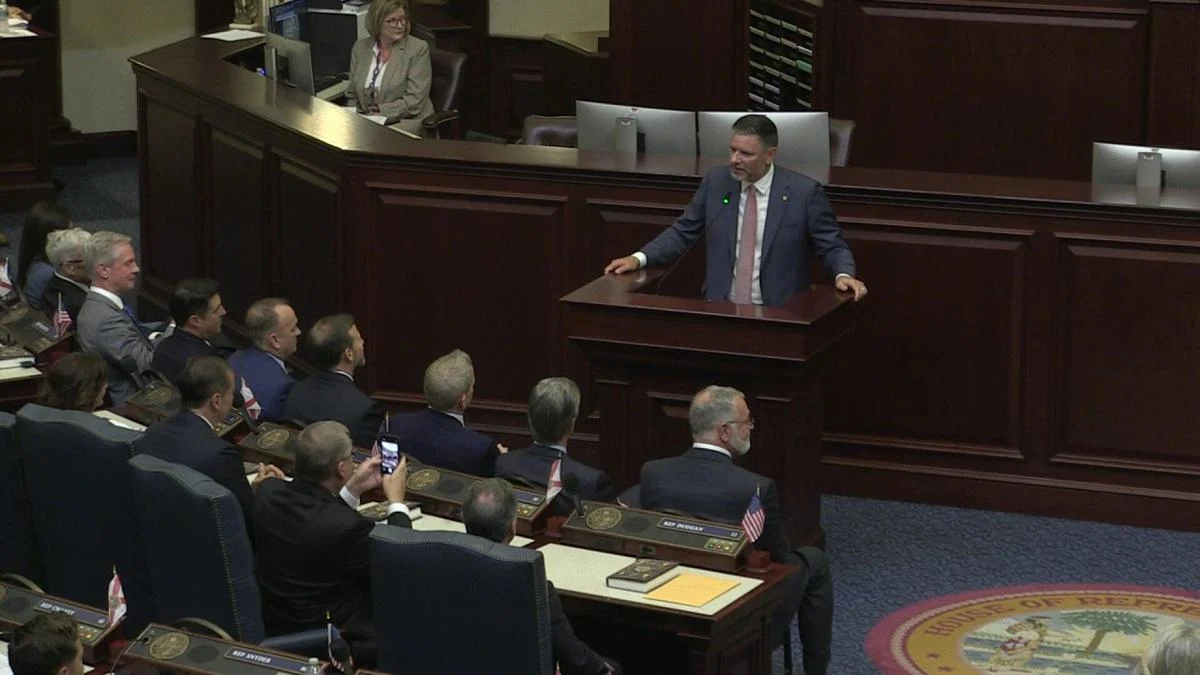
As Florida prepares for its 2026 legislative session, property tax cut proposals will take center stage, but House Speaker-designate Sam Garrison anticipates robust discussions on the regulation of artificial intelligence (AI) and data centers. Garrison, a Republican state representative from Clay County, expressed the view that AI policy could become a significant point of contention among lawmakers, noting it does not adhere strictly to traditional partisan lines.
In an interview with WJCT News 89.9’s First Coast Connect, Garrison stated, “I think this year, outside of property tax, AI policy is going to be probably the biggest area of tension that we’re going to see because it doesn’t fall on traditional partisan lines.” He suggested that both conservative Republicans and liberal Democrats could find common ground on how AI should be regulated, if not necessarily on the specifics of what regulation should entail.
Garrison’s remarks coincide with Florida Governor Ron DeSantis’ increasing emphasis on the need for state-level AI regulation, which is expected to be one of his priorities as the Legislature convenes for a 60-day session in Tallahassee. In December, DeSantis proposed a “Citizen Bill of Rights for Artificial Intelligence,” aimed at instituting new consumer protections for AI users while regulating data centers that support AI companies, including major players like OpenAI, Meta, and Amazon.
This initiative positions DeSantis at odds with a recent executive order by former President Donald Trump, which advocates for a national AI policy that sidesteps a fragmented array of state regulations. Trump’s order calls for an examination of state laws governing AI to establish a task force designed to uphold a national framework aimed at bolstering the United States’ global competitiveness in the AI sector.
While Garrison is an ally of DeSantis, he acknowledged during the interview that there are instances in which he may differ from the governor on policy specifics. However, the extent of his divergence on AI regulation remains unclear. Garrison indicated an open-minded perspective, saying, “I don’t know if I’m as skeptical as DeSantis on data centers and AI issues, but I think he has some very, very good points,” reflecting on the governor’s concerns about potential negative implications of AI for Floridians.
The regulation of AI data centers, in particular, is a pressing issue for Garrison, who emphasized the necessity of ensuring these facilities do not strain local water resources or electric grids. A report released by the U.S. Department of Energy in December 2024 revealed that data centers accounted for 4.4% of the total electricity consumption in the U.S. in 2023, with projections estimating this figure will rise to 12% by 2028. Additionally, large data centers can consume millions of gallons of water annually.
“If you’re going to have a data center, it has got to be extraordinarily regulated to make sure that you’re not adversely impacting the quality of life for Floridians,” Garrison stated. He articulated a nuanced stance on property rights, saying, “I am not a big proponent of telling people what they can and can’t do on their land. So if you’re a property owner and Amazon wants to come to town and says they want to build a data center, sure. Go for it. But you’re going to have to be regulated like heck to make sure that nothing on that property is going to adversely affect the residents of a community.”
Current Florida House Speaker Daniel Perez, who is set to pass the leadership baton to Garrison following the 2026 midterm elections, voiced his opposition to DeSantis’ approach, indicating a preference for a more subdued state involvement in national technology policy. “I don’t think states should be involved in national technology policy, but I’m open to having a conversation about AI,” Perez remarked.
Garrison’s interview also shed light on his skepticism regarding state-level incentives for data centers, arguing that Florida has not been proactive in attracting such investments. “You don’t see data centers coming up in Florida right now. A lot of other states have provided incentives to attract that sort of investment,” he noted, adding, “Florida will just never do that. It’s just not how we roll.”
A study conducted by PricewaterhouseCoopers for the Data Center Coalition found that Florida ranked third in the nation in 2023 for the number of jobs supported by data centers, with approximately 335,800 positions. While some states offer substantial tax credits and incentives for data center development, Garrison acknowledged that local incentives do exist, as evidenced by Sumter County’s offering of up to $3 million in cash incentives for qualifying projects.
As Garrison prepares to take on a leadership role, he also discussed his political responsibilities in the upcoming midterm elections, his predictions on the property tax debate, and his overarching philosophy on governance. The discussions surrounding AI regulation are poised to become a significant issue in Florida’s legislative landscape, underscoring the complexity and urgency of addressing emerging technologies in the state.
See also Fairfax County School Board Approves $2.5M Renovation and Expels Two Students for Weapons
 US AI Regulations Emerge: $500B Investment Fuels New Ethical Frameworks Across Sectors
 AI Professionals Must Comply with State Laws Despite New Executive Order Changes
 AI Innovations Dominate CES 2026: Autonomy and Safety Take Center Stage
 Doqfy Embeds AI-Driven Compliance in BFSI Contracts to Enhance Efficiency by 90%