


















































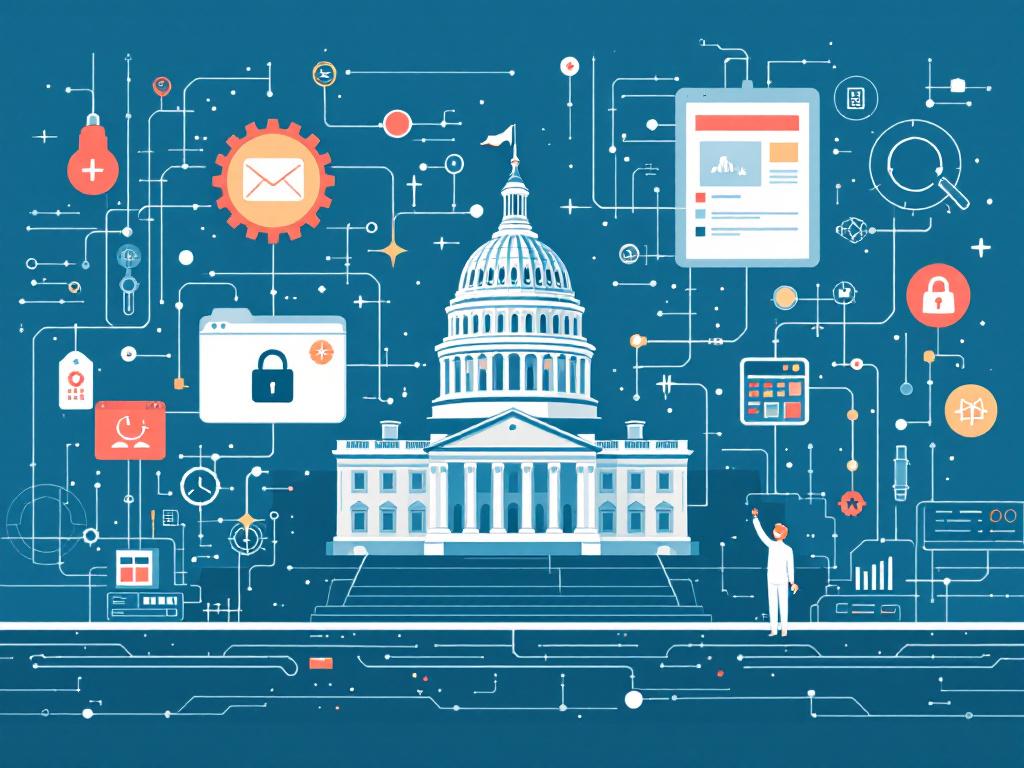
In a significant display of intraparty discord, congressional Republicans have rebuffed President Donald Trump’s attempts to preempt state-level regulations on artificial intelligence (AI). This development, which emerged during negotiations over the National Defense Authorization Act (NDAA), highlights the growing divisions within the GOP regarding the balance between technological innovation and necessary oversight. The backdrop includes escalating concerns from state lawmakers and consumer advocates who argue that unregulated AI could lead to privacy violations, biased algorithms, and job losses.
The contention revolves around a provision that Trump’s allies sought to include in the NDAA, aiming to prohibit states from establishing their own AI regulations. Reporting from Ars Technica indicates that this proposal faced bipartisan pushback and was ultimately removed from the bill. Sources familiar with the discussions describe a “widespread and powerful movement” against federal preemption, reflecting not only Democratic opposition but also significant resistance from Republicans wary of excessive federal control.
Trump’s push for this provision aligns with his broader ambition to secure U.S. dominance in AI, especially in light of competition from China. The former president has frequently characterized state regulations as impediments to innovation and economic growth. Drafts of an executive order obtained by Politico reveal plans for a multi-agency task force to enforce federal dominance, effectively sidelining state efforts to tackle AI-related challenges.
The backlash from within the GOP underscores fractures within the party itself, with some members prioritizing states’ rights—a long-standing Republican principle—over Trump’s deregulatory agenda. Lawmakers in conservative regions have expressed concern that sweeping federal preemption could expose their constituents to AI-related risks, such as discriminatory lending practices or intrusive surveillance technologies. This sentiment mirrors earlier GOP resistance encountered during budget reconciliation discussions, where similar anti-regulation clauses were presented.
Public discourse on platforms like X (formerly Twitter) has amplified this debate, with figures such as Senator Ruben Gallego and Representative Ro Khanna warning that a decade-long ban on state AI laws could stifle necessary protections against harmful algorithms. These discussions, which have attracted significant public attention, highlight widespread unease among labor groups and tech critics, including organizations like the AFL-CIO, who argue that unchecked corporate power poses a significant threat.
Tech giants, including companies supportive of Trump’s initiatives, have lobbied vigorously for federal uniformity, arguing that a patchwork of state laws complicates compliance and undermines global competitiveness. However, recent analyses suggest that bipartisan opposition contributed to the failure of this latest attempt, revealing tensions between advocates for innovation and those demanding consumer protections.
Long-standing Tensions Over State AI Governance
This incident marks not the first occasion on which Trump’s administration has targeted state governance over AI. In 2025, similar language was included in a budget reconciliation bill proposing a ten-year moratorium on state-level regulations, which sparked widespread backlash among critics who deemed it a reckless concession to big tech interests. In response to this resistance, Trump has signaled a shift toward potential executive action, drafting orders that could block state-level enforcement, which has raised alarms among safety advocates concerned about the implications for regulating AI risks.
State attorneys general, particularly in traditionally blue states like California and New York, have been at the forefront of proposing regulations focused on data privacy, bias mitigation, and transparency in AI decision-making. The administration’s strategy reflects a broader trend of federal preemption in various tech sectors, where national standards often supersede local controls. However, the unique challenges posed by AI, including deepfakes and autonomous weaponry, complicate this landscape. As noted by The Hill, the push for a unified federal framework aims to streamline oversight, though critics argue it places expedience over safety.
Industry insiders regard Trump’s efforts as critical to maintaining the United States’ edge in the fiercely competitive global AI arena. Executives from companies such as OpenAI and Google have privately supported federal preemption, citing the need for consistent regulations to expedite the deployment of advanced technologies like generative AI and machine learning. Yet, consumer protection groups and ethicists counter that state-level regulations serve as essential laboratories for policy experimentation. They warn that without these interventions, challenges such as AI-driven misinformation and biased hiring practices could proliferate unchecked.
The recent removal of the NDAA provision signals that the conflict over AI governance is far from over. Trump still has the option of issuing an executive order to enforce federal preemption, a move likely to face legal challenges from states invoking the 10th Amendment. Experts suggest that in the absence of comprehensive federal legislation, states will likely continue to establish their own regulations. California has already passed measures requiring AI companies to disclose training data and mitigate biases, serving as a potential model for other regions.
The stakes in this ongoing battle are immense, as AI is projected to contribute trillions to global GDP. Trump’s push for deregulation aligns with his “America First” ethos, aiming to unleash private sector potential and bolster national competitiveness. However, critics caution that failure to implement adequate safeguards could exacerbate inequalities if automation leads to widespread job displacement.
As negotiations evolve, the fate of the NDAA could have significant implications for the future of AI governance in the United States. If Trump opts for unilateral executive action, it may galvanize a coalition of states to legally challenge such moves, potentially reshaping the regulatory landscape for years to come. The resolution of this conflict will not only influence the trajectory of AI development but also the framework of American federalism in the digital age.
See also Jensen Huang Critiques U.S. Chip Restrictions, Claims 95% Market Share Loss in China
 Bitcoin Achieves ‘Digital Capital’ Status as Institutions Eye $180K ETFs by 2026
 Australia’s AI Ethics Framework MEET Launched, Uniting Seven Systems for Responsible Use
 EU Launches Antitrust Probe into Meta’s WhatsApp AI Policy, Potentially Blocking Competitors
 Italian Researchers Reveal Poetic Prompts Bypass AI Chatbot Safety with 62% Success Rate