
































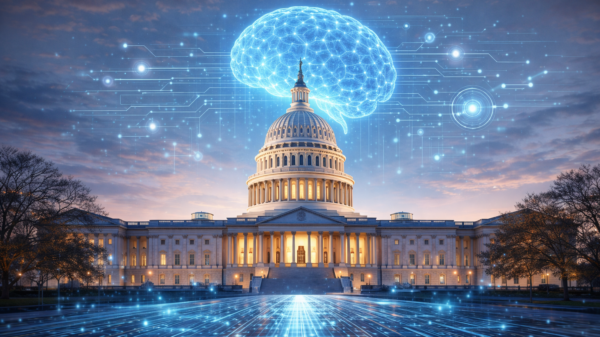
















The ongoing evolution of artificial intelligence (AI) is prompting a wave of legislative scrutiny across the United States, particularly regarding algorithmic pricing mechanisms. As of last year, over 50 bills related to AI pricing have been introduced in 24 state legislatures, with California and New York leading the charge. These bills, often characterized by broad and sometimes ambiguous definitions, threaten to stifle innovation and competition in a field still in its early stages.
Despite Congress’s inability to establish a cohesive regulatory framework, 2026 is anticipated to be a significant year as a patchwork of state laws regarding AI pricing becomes more pronounced. Central to this legislative discourse are algorithmic pricing and potential price control measures. Experts warn that the sweeping definitions found in these laws could unintentionally encompass benign practices such as happy-hour discounts, while other regulations specifically target various sectors, including real estate and grocery retail.
A controversial bill in Maine, for instance, sought to prohibit price changes in grocery stores and restaurants based on fluctuating demand, undermining core economic principles of supply and demand. In California, lawmakers initially proposed a ban on utilizing consumer data for dynamic pricing but ended up enacting broader regulations that restrict the use of a “common pricing algorithm” even for basic pricing decisions. Observers note that the vagueness of these regulations might inadvertently encapsulate nearly all market transactions.
New York has also taken significant steps in this arena, passing the Algorithmic Pricing Disclosure Act last year. This legislation mandates companies to disclose predefined phrases about their products in the name of transparency. Following pressure from state officials, Instacart, the online retail and delivery service, halted its use of data in item price testing. However, this action did not appease New York’s regulators; the Attorney General, Letitia James, threatened legal action against Instacart for potential violations of its algorithmic pricing law. James has indicated that further legislative measures are forthcoming, underscoring the urgency of the issue.
Proponents of free-market principles argue that pricing decisions—regardless of whether AI plays a role—should remain in the hands of market forces. They contend that competition naturally drives businesses to adapt their pricing strategies in response to market conditions and rival offerings. The introduction of AI tools in pricing should not inherently raise concerns; rather, these innovations can foster competition and offer consumers more personalized options, thereby streamlining their purchasing experiences.
Innovative approaches to AI in commerce are already emerging. Recently, Google and a consortium of major retailers unveiled the Universal Commerce Protocol and Agent Payments Protocol, aiming to simplify how vendors and consumers utilize AI for more personalized purchasing experiences. Critics have labeled this initiative as potentially intrusive, likening it to “an NSA for capitalism,” and have called for stricter regulations, arguing it could lead to price-fixing. Such claims, however, are viewed as overreaching by many, who assert that engagement with private AI tools is voluntary and can yield tangible benefits for consumers. They caution against preemptive regulations based on hypothetical scenarios.
To address concerns surrounding algorithmic pricing, any necessary regulatory oversight should ideally occur at the federal level. Federal antitrust authorities possess the necessary legal frameworks to address concerns of “algorithmic price fixing” and can leverage existing consumer protection laws against unfair practices, irrespective of the technology employed. The proliferation of state-level AI pricing disclosure laws could lead to confusion, especially if multiple jurisdictions impose varying transparency mandates, potentially overwhelming consumers with excessive warnings.
State lawmakers are encouraged to reconsider the imposition of stringent regulatory frameworks that could impair national competition and inhibit the introduction of beneficial AI-enabled services. With an increasing number of laws already established, the focus should shift toward fostering AI opportunities, dismantling existing barriers to innovation, and promoting investment, rather than erecting new obstacles that hinder competition and choice.
See also Majority of Congressional Aides Support Federal-State Hybrid for AI Regulation, Survey Reveals
 AI Governance: 80% of Organizations Fail to Implement Effective Strategies by 2026
 IMAA Updates AI Guiding Principles for Ethical Use, Adding New Targeting Guidelines
 US Department of Transportation Announces AI Initiative to Streamline Regulation Drafting
 US Congress Calls for Stricter AI Workplace Regulations Amid Rising Concerns on Worker Rights