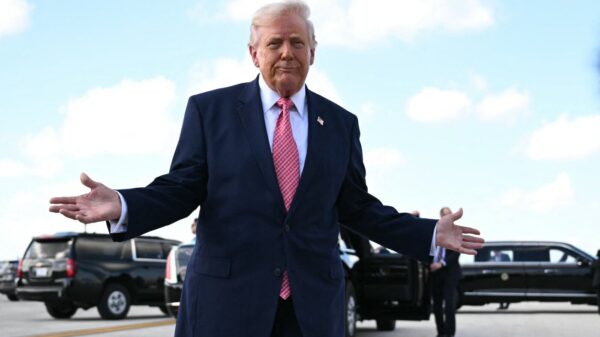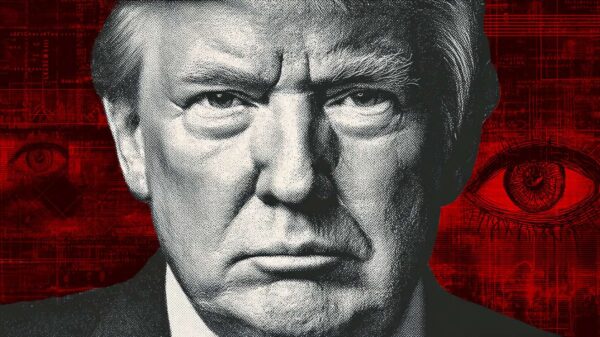










































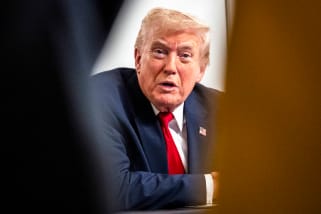
Former President Donald Trump’s controversial initiative to prohibit states from regulating artificial intelligence (AI) has faced yet another setback, leading some to label it as a “zombie” proposal that refuses to fade away. Despite its previous failures, it continues to draw attention in political circles.
The most recent attempt was embedded in the National Defense Authorization Act (NDAA), but it appears to have stalled once again. House Majority Leader Steve Scalise stated on Tuesday that Republican leadership is “looking at other places” to incorporate the moratorium, concluding that the NDAA “wasn’t the best place for this to fit.” This comes after Trump’s initial push for a 10-year halt on state-level AI regulations was stripped from the budget earlier this year.
The proposal has faced substantial opposition across the political spectrum. Notably, even loyal supporters of Trump, including Rep. Marjorie Taylor Greene and former advisor Steve Bannon, voiced their dissent against the initiative. Trump’s second attempt to implement the ban garnered similar pushback, uniting voices from unlikely allies such as House Progressive Caucus Leader Greg Casar and Florida Republican Governor Ron DeSantis.
Critics argue that banning state regulation of AI could lead to a lack of oversight in a sector that is rapidly evolving and has significant implications for various aspects of society. The technology is increasingly being integrated into industries like healthcare, finance, and transportation, raising concerns about ethical use, data privacy, and job displacement. Supporters of state-level regulation contend that local governments are better equipped to address the specific needs and concerns of their communities.
The ongoing debate highlights a looming tension between federal and state powers in regulating emerging technologies. As AI becomes more pervasive, the question of who should oversee its development and deployment is increasingly pressing. Trump’s attempts to impose a federal moratorium reflect broader anxieties within the tech industry and among politicians about the potential consequences of unregulated AI.
For now, the proposal appears dormant, but speculation persists about its potential revival. Prominent figures within the MAGA movement are reportedly concerned about alternative methods Trump may explore to enforce such a ban, indicating that this issue is far from resolved. As the political landscape evolves, the future of AI regulation remains uncertain, with potential ramifications for both consumers and innovators in the tech sector.
The conversation surrounding AI regulation is likely to continue as lawmakers grapple with balancing innovation and public safety. As technology advances, finding a way to navigate these complex challenges will be crucial for both state and federal government officials. The next steps from Republican leaders will be closely monitored as they seek to redefine their approach to AI oversight.
See also Kovr.ai Partners with Carahsoft to Streamline Cyber Compliance for Government Agencies
 AI Enhances Healthcare Communication Efficiency with 20% Market Growth Expected by 2030
 UNDP Reports AI Could Exacerbate Global Inequality, Urges Immediate Action from Governments
 Harvard’s Koh Warns AI Threatens Human Rights Amid Rising Authoritarianism
 Florida House Discusses AI Regulation and Redistricting Ahead of 2026 Midterms