












































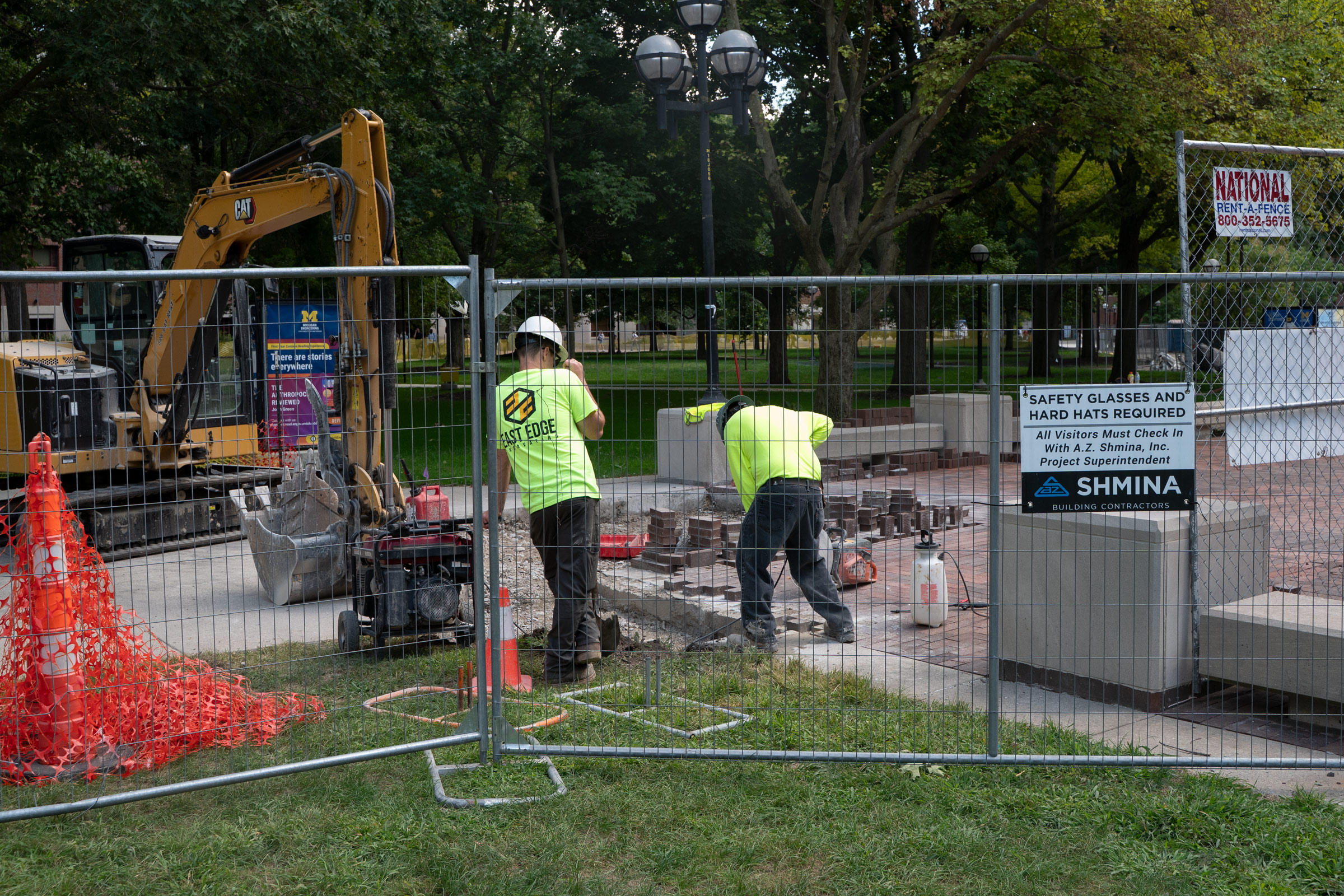
The University of Michigan’s decision to maintain publicly accessible live camera feeds at construction sites has sparked significant debate over privacy and surveillance practices. These cameras, designed to document construction progress and enhance safety, allow viewers to see ongoing projects without any password protection. With footage dating back to January 2025, concerns have emerged about the potential implications for privacy and the risks associated with artificial intelligence technologies.
The live feeds, which are available on the Architecture, Engineering and Construction website, capture construction activities at various sites, including the University of Michigan Center for Innovation in downtown Detroit and the new College of Pharmacy building in Ann Arbor. Some of the camera feeds have documented the interior of already occupied facilities, such as the D. Dan and Betty Kahn Health Care Pavilion, raising privacy concerns as they displayed individuals in office-like environments. As of January 6, 2026, that particular feed has since been taken down.
While the cameras are seen by some as a means to enhance security on campus, critics point to potential misuse of the footage. Kaitlin Karmen, chair of the Solidarity and Political Action Committee of the Graduate Employees’ Organization, expressed her concerns in an email to The Michigan Daily. “I have serious concerns about the (mis)use of footage, and the fact that many of these cameras also capture public and private spaces,” Karmen stated, emphasizing fears that the footage could be improperly utilized in student disciplinary cases.
In contrast, some students, such as Engineering freshman Timothy Saval, believe the cameras could benefit campus security but advocate for greater transparency regarding the data collected. “I want transparency on exactly what data is being collected and stored, the security of how it’s being kept, who will be able to access it, what it will be used for, the costs of the program and continual transparent monitoring from the (STEP) committee,” Saval said, underscoring the need for oversight to ensure the safety of the community.
The governance of university surveillance practices is primarily dictated by Standard Practice Guide 510.01, which grants the Division of Public Safety and Security (DPSS) authority over physical security technologies, including surveillance cameras. However, the publicly accessible construction cameras are operated by the Executive Vice President and Chief Financial Officer, not DPSS, creating a gap in policy regarding their oversight. While some feeds are publicly accessible, the university has denied requests from The Daily for access to other campus camera footage, citing security concerns that releasing such information could jeopardize campus safety.
Although DPSS-owned cameras are not utilized for facial recognition, university policy does not explicitly regulate the use of artificial intelligence analytics nor establish retention limits or require a review process before publicizing feeds. As highlighted by concerns from information professor Kentaro Toyama, the construction camera feeds may exemplify “scope creep” in campus surveillance. “More cameras means that there’s potential for more surveillance, as well as unintentional breaches of privacy,” Toyama noted. He expressed concern over the dramatic increase in surveillance cameras on campus alongside unannounced changes in surveillance policies.
Melissa Overton, DPSS deputy chief of police, confirmed that formalized policies regarding AI and new software for surveillance are still in development. “As a result, guidance and implementation details are not yet finalized,” Overton stated in an email to The Daily. This lack of formalization comes amid ongoing discussions about the role of surveillance in campus safety, particularly in the wake of recent tragedies, such as the shooting at Brown University, where authorities struggled to obtain usable footage despite a substantial number of cameras on campus.
Supporters of enhanced surveillance argue that such technology can be crucial for maintaining safety during emergencies. Megan Hartline, associate university librarian for access and fulfillment, acknowledged the valid concerns regarding misuse while reinforcing the university’s perspective that surveillance technologies are vital for supporting campus safety. “For DPSS, technology is a critical tool for campus safety, for example in active-shooter situations when real-time visibility can aid response and save lives,” Hartline wrote. The conversation surrounding the use of surveillance technologies at the University of Michigan underscores a growing tension between the need for security and the imperative to protect individual privacy.
See also Regulators Shift Focus to Real-World AI Testing, Elevating QA’s Role in Compliance
 Global Key Solutions Launches KeyPedia™, AI Platform for Real-Time Regulatory Compliance Tracking
 ZeroDrift Launches AI-Driven Compliance Tool with $2M Backing from a16z Speedrun
 Bretton AI Secures $75 Million Series B to Transform Financial Crime Compliance
 OpenAI’s GPT-5.3-Codex Release Allegedly Violates California AI Safety Law