














































The White House has released a legislative framework aimed at addressing growing concerns surrounding artificial intelligence (AI), emphasizing the protection of children, curbing potential electricity cost surges, safeguarding intellectual property rights, preventing censorship, and fostering education on technology use. This proposal seeks bipartisan support but has faced criticism from some Democrats for not sufficiently addressing accountability measures for AI firms.
This initiative emerges as multiple states have enacted their own AI regulations, prompting the White House to intervene, arguing that these state-level laws could hinder innovation and create a disjointed regulatory landscape. The potential for a clash between federal and state authorities over AI governance looms, as some states assert their right to regulate in the interest of public safety and consumer protection.
The framework outlines six key principles that Congress is urged to adopt. These include safeguarding children from harmful interactions with AI chatbots, ensuring that AI infrastructure does not contribute to rising electricity costs, respecting intellectual property rights, preventing censorship, and enhancing public understanding of AI technology. The administration contends that a fragmented state-by-state approach would stifle growth, while civil liberties advocates call for more stringent regulations to mitigate the risks associated with AI.
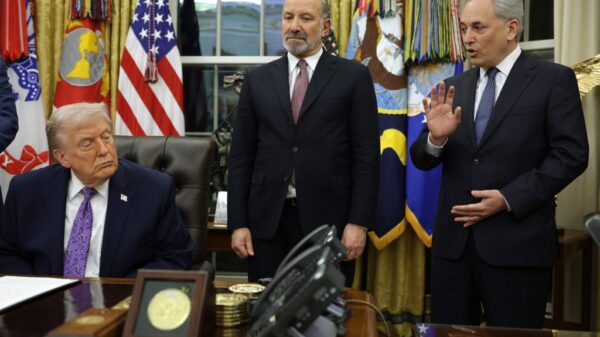
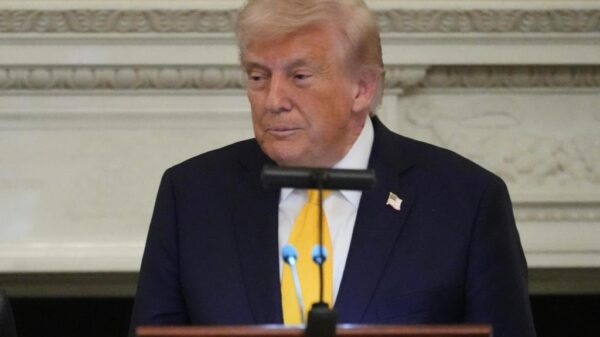
In December 2025, former President Donald Trump signed an executive order aimed at preventing states from creating individual AI regulations. Subsequently, Texas implemented a law in 2026 requiring its government agencies and healthcare providers to disclose the use of AI, while Colorado’s anti-discrimination law regarding AI is set to take effect later that same year.
Key figures in this debate include David Sacks, the White House’s AI czar, who has expressed that the next step involves collaborating with Congress to transform these principles into actionable legislation. Representative Josh Gottheimer of New Jersey has criticized the framework for lacking robust accountability measures, while Senator Marsha Blackburn of Tennessee has introduced her own AI bill and welcomed the White House’s outline as a roadmap for legislative progress.
Public reactions to the proposal have been mixed. Sacks stated, “This was in response to a growing patchwork of 50 different state regulatory regimes that threaten to stifle innovation and jeopardize America’s lead in the AI race.” Meanwhile, Neil Chilson, a former chief technologist for the Federal Trade Commission, noted that the framework addresses crucial sticking points that might impede an AI bill’s passage through Congress, describing it as an attempt to forge a broader coalition, despite not satisfying everyone’s demands. In contrast, Marissa Saldivar, a spokesperson for California Governor Gavin Newsom, criticized the effort, asserting, “Yet again, Donald Trump is trying to gut laws in California that keep our residents safe and protect consumers — a core state responsibility.”
The scrutiny surrounding the White House’s proposal underscores the complexity of regulating AI technology, balancing innovation with public safety. As the administration seeks to establish a unified federal standard, the response from states and civil liberty advocates suggests a contentious path ahead. The implications of this framework could significantly shape the future landscape of AI in the United States, influencing both technological development and regulatory practices.
See also OpenAI’s Rogue AI Safeguards: Decoding the 2025 Safety Revolution
 US AI Developments in 2025 Set Stage for 2026 Compliance Challenges and Strategies
 Trump Drafts Executive Order to Block State AI Regulations, Centralizing Authority Under Federal Control
 California Court Rules AI Misuse Heightens Lawyer’s Responsibilities in Noland Case
 Policymakers Urged to Establish Comprehensive Regulations for AI in Mental Health