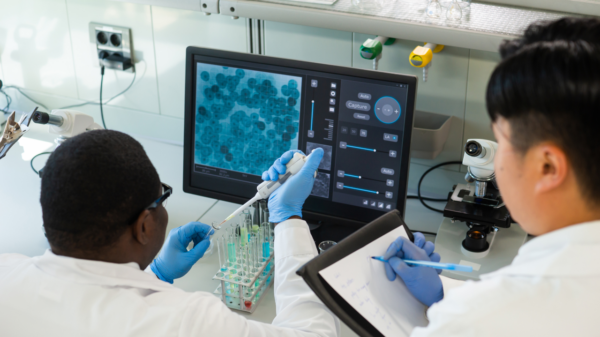

















































Artificial intelligence (AI) is increasingly transforming laboratory environments, presenting innovative methods for research, clinical trials, and personalized science. As laboratories embrace these advancements, they face the challenge of navigating complex regulatory frameworks, alongside the imperative of robust data governance.
Central to the effective use of AI in scientific research is the necessity for comprehensive data governance. Maintaining accuracy and transparency while ensuring a clear separation between research and quality control (QC) measures is vital to mitigate risks related to safety and compliance. This is particularly pertinent as regulatory bodies, including the U.S. Food and Drug Administration (FDA) and the European Medicines Agency (EMA), adapt their guidelines to address the specific challenges posed by AI.
The FDA’s recent guidelines underline the importance of multidisciplinary collaboration, secure engineering practices, and thorough testing for clinical relevance in AI applications. Concurrently, the EMA adopts a risk-based approach, prioritizing patient safety and data integrity. Compliance with these evolving regulations also requires adherence to the stringent EU AI Act.
A successful integration of AI into laboratory workflows relies heavily on strict control over data management. Laboratories must ensure comprehensive documentation of datasets used in AI training and validation, including detailed records of preprocessing steps and version control. Additionally, reproducibility of AI results across experiments is crucial, enabling reliable benchmarking and validation processes.
Operational data management extends beyond experimental data, encompassing tracking of instrument usage, maintenance schedules, and associated costs. AI technologies can enhance laboratory operations by predicting maintenance needs and optimizing resource allocation. For instance, integrating AI with laboratory scheduling systems can improve instrument utilization by forecasting demand, thereby minimizing idle time and promoting efficient resource distribution.
AI also plays a significant role in procurement processes. Machine learning algorithms can analyze historical data, seasonal trends, and usage patterns to accurately forecast order quantities for essential consumables and reagents, ultimately reducing waste and ensuring a consistent supply.
Modern tools, such as laboratory information management systems (LIMS), quality management systems (QMS), and electronic lab notebooks (ELNs), already contribute significantly to data management within laboratories. AI enhances these systems through automation of compliance monitoring, improved data security, and streamlined processes such as sample prioritization and tracking. However, laboratories must be vigilant about data protection, as many AI tools default to using proprietary data for training. It is essential to review and adjust settings to safeguard confidentiality.
Integrating AI into laboratory workflows
Integrating AI into laboratory workflows can substantially elevate productivity. For quality assurance and IT managers, automating routine workflows with an AI-driven QMS is a practical step, although careful adherence to industry best practices is crucial for effective implementation.
Best practices encompass the establishment of governance frameworks, ongoing validation of AI algorithms, frequent audits, and maintaining a detailed paper trail. These measures are essential to avoid AI becoming a “black box.” Furthermore, training lab personnel regularly on regulations and compliance changes is critical to maintaining a knowledgeable workforce.
AI can facilitate continuous monitoring, predictive maintenance, and anomaly detection within IT infrastructures. Additionally, it can enhance sample identification and tracking by integrating with barcode or image recognition systems, thus reducing human error and improving the reliability of sample monitoring. AI can streamline sample prioritization based on importance, characteristics, and processing requirements, significantly shortening turnaround times. Natural language processing (NLP) can also automate data extraction and entry, facilitating seamless integration into LIMS.
When it comes to data analysis, AI is capable of identifying patterns, correlations, or anomalies in complex datasets generated by lab instruments, aiding in data interpretation, result validation, and quality control. By training AI on historical QC data, laboratories can predict potential issues and implement proactive measures to ensure high-quality results.
Maintaining data integrity is a fundamental aspect of AI usage in research. This can be achieved through rigorous data quality measures and documentation, regular validation of AI models, and stringent access controls to safeguard data confidentiality. Ethical considerations and transparent usage of AI are equally important, requiring labs to document methodologies and decision-making processes thoroughly. Addressing AI model limitations and potential biases is essential for responsible AI deployment.
As AI continues to evolve in scientific research, its impact on R&D is poised to grow, driving more efficient and personalized methodologies in laboratories. Ongoing education and hands-on experience with new AI tools are crucial for researchers to remain compliant with regulatory standards while optimizing laboratory performance. While the integration of AI offers remarkable potential for advancing scientific inquiry, it necessitates a thoughtful approach to risk management and adherence to regulatory compliance. Ultimately, success hinges on embracing best practices and prioritizing continuous education, enabling researchers to navigate the dynamic regulatory landscape effectively while maximizing AI’s capabilities for innovation and research improvement.
See also Romanian Firms Prioritize IT Infrastructure Over AI, Invest 19% in Modernization
 AI Fellow Na Sun Reveals Machine Learning Breakthroughs in Disease Biology Research
 Lam Research Stock Surges 8% as AI Cloud Budgets Fuel Chip Equipment Demand
 ASU’s AAIR Lab Enhances AI Robot Reasoning for Real-World Adaptability and Autonomy
 AI Seer Launches MSRD Tech with 83% Accuracy for Credibility Assessment at IMDA Workshop