








































A new research initiative aims to explore whether a combination of artificial intelligence and online exchanges among women can enhance support for those experiencing menopause. As social media and blogs become increasingly popular platforms for sharing experiences related to perimenopause and menopause, experts are seeking to leverage these insights to improve health education and overall well-being.
Medical professionals often find it challenging to incorporate the advice shared in online communities, which may hinder its potential to inform clinical practices. Many women hesitate to discuss their symptoms openly with doctors, leading to a disconnect between patient experiences and medical guidance.
To address this issue, a team of researchers from the University of Exeter, the Monterrey Institute of Technology, the Federal University of Minas Gerais, and Makerere University is embarking on a project aimed at systematically analyzing the coping strategies communicated in these online forums. The project will utilize AI to sift through social media posts and blog entries while ensuring the privacy of contributors is safeguarded.
By employing advanced data analytics, the researchers plan to develop an AI model that identifies common themes and coping strategies shared by women during menopause. This model could potentially generate tailored written advice, thus bridging the gap between personal experiences and medical knowledge.
Leading the research is Dr. Rodrigo Wilkens, alongside colleagues Ana Beduschi, Aline Villavicencio, Huma Samin, and Karen Knapp. Dr. Wilkens highlighted the importance of this project, stating, “Women are using online spaces to open up about their experiences and find support. But doctors can access this potentially useful information people are sharing online. First-person accounts remain largely untapped in research due to the difficulty of fully complying with platform rules and data-protection requirements.”
The research aims to arm medical professionals with insights into common symptoms faced by women and the coping mechanisms they employ. Dr. Wilkens emphasized that the focus is on well-being rather than diagnosis. The project will identify emotions, coping strategies, and stigma patterns to understand better what supports women in their daily lives, both at home and in the workplace. This approach promises to provide new empirical evidence on healthy aging and gendered well-being.
Professor Beduschi, who is concentrating on the data privacy aspects of the study, noted that the project will enable the extraction of valuable messages from online forums to support health research without violating users’ privacy. This careful handling of data is crucial in maintaining the trust of the communities involved while still generating beneficial insights for health practitioners.
As the project unfolds, the research team anticipates that their findings will not only bolster the understanding of women’s health but also contribute to a broader conversation about the importance of patient voices in shaping healthcare practices. This initiative reflects a growing recognition of the need to integrate personal experiences into health discussions, particularly in areas such as menopause, where traditional medical advice may not always resonate with patients.
Ultimately, the intersection of AI and personal narratives has the potential to enrich health education, paving the way for more informed and compassionate care for women experiencing menopause. As this research progresses, it will be interesting to see how these insights can reshape the dialogue around women’s health and the role of technology in facilitating that conversation.
See also HCLTech and IIT Kanpur Announce Partnership to Advance AI and Data Science Initiatives
 MUSC Team Unveils BIOPREVENT AI Tool to Predict cGVHD Risk Months Before Symptoms
 Kobe University AI Achieves High Accuracy in Diagnosing Acromegaly Using Hand Images
 Perplexity Launches Perplexity Computer, a Multi-Model AI Research Assistant for Complex Tasks
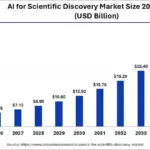 AI for Scientific Discovery Market Projected to Reach $34.78B by 2035 with 21.90% CAGR