




















































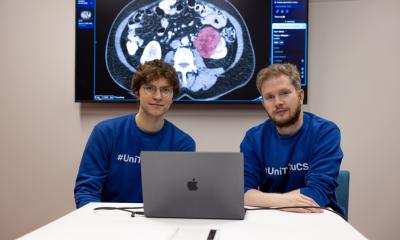
In a significant advancement for medical imaging, researchers from the University of Tartu, in collaboration with Better Medicine, have unveiled BMVision, a machine-learning-based solution designed to enhance the accuracy and efficiency of **CT scans**. This tool aims to support radiologists by quickly identifying both **malignant** and **benign lesions** in medical images. The effectiveness of BMVision was highlighted in a retrospective study conducted at **Tartu University Hospital** and published in **Nature Communications Medicine**.
The study involved six radiologists who reviewed 200 **CT scans** under two conditions: with and without the assistance of AI. In total, the researchers analyzed 2,400 individual readings, assessing several clinical indicators such as diagnostic sensitivity, accuracy of tumor measurement, reporting speed, and inter-radiologist agreement. The results indicated that the use of BMVision reduced the time required for radiologists to identify, measure, and report malignant lesions by approximately one-third.
Dmytro Fishman, Associate Professor in **Artificial Intelligence** and co-founder of Better Medicine, stated, “This study adds to the growing body of evidence that modern AI tools developed in research labs can make a real impact in clinical practice and support doctors in their daily work. We are very encouraged by these results, which show that AI research in medicine is not only meaningful, but it can truly be used for good.”
The findings underscore that while AI tools like BMVision can significantly enhance diagnostic capabilities, they do not replace the expertise of radiologists. Instead, they serve as a reliable assistant, allowing medical professionals to concentrate on the most complex cases and improving the chances of early diagnosis for patients.
Dr. Pilvi Ilves, a Professor of Radiology at Tartu University Hospital, emphasized the potential of BMVision to improve diagnostic quality, particularly for conditions such as **kidney cancer**. “While the solution has so far been used at Tartu University Hospital only for research purposes, it is now being integrated into the clinical workflow. In the future, all abdominal CT scans performed at our hospital will be processed through BMVision,” Ilves noted.
In a significant development for commercial deployment, Better Medicine has obtained a **CE marking** for BMVision, which certifies that the product meets essential health, safety, and environmental standards within the **European Economic Area**. This certification positions BMVision as the first AI tool on the market specifically designed to facilitate early detection and more accurate assessment of kidney cancer.
The introduction of BMVision not only exemplifies the potential of AI to transform medical diagnostics but also represents a crucial step in bridging the gap between research and practical application in healthcare settings. As AI continues to evolve, it promises to enhance the quality of care, alleviate the workload on healthcare professionals, and ultimately contribute to better patient outcomes.
See also Carnegie Mellon Unveils Image2Gcode Framework, Directly Converts 2D Images to G-code
 Deep Learning Model Classifies Bamboo Density with 95% Accuracy Using PyTorch
 AI Research Submissions Surge 200% in 2025, Raising Urgent Novelty Concerns
 AI Systems Projected to Consume Up to 765 Billion Litres of Water Annually, Surpassing Bottled Water Use
 AI Research in Cardiovascular Disease Surges 400% Since 2018, Reveals Key Trends and Insights






