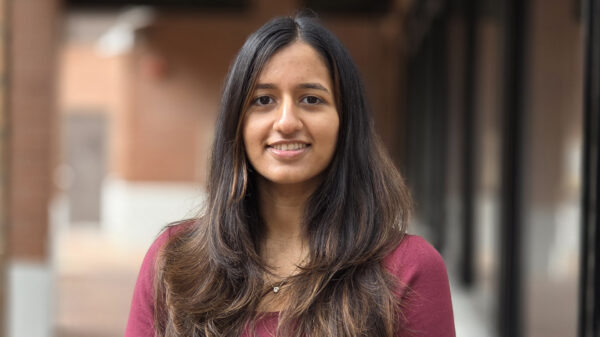




































The Autonomous Agents and Intelligent Robots Lab (AAIR Lab) at Arizona State University’s School of Computing and Augmented Intelligence is pioneering advancements in artificial intelligence systems that can reason, plan, and adapt to diverse environments. Directed by Siddharth Srivastava, a professor at SCAI, the lab’s primary objective is to enable AI, including robots and digital assistants, to effectively reuse knowledge across multiple tasks instead of learning each task independently. Srivastava emphasized the importance of developing AI systems that not only grow more functional over time but also allow users to confidently delegate tasks for autonomous execution.
“In order to make more productive use of AI systems, we need to reach a level where users can identify what their AI systems can safely do and let them do it autonomously,” Srivastava stated, highlighting the need for research into AI system assessment. He noted that this is essential for managing AI systems as they evolve.
A significant aspect of the lab’s research is focused on creating generalizable learning and planning models, enabling AI to perform reliably across various environments. Daniel Bramblett, a doctoral student in computer science, pointed out that this work ensures autonomous agents can competently execute tasks in real-world settings. “AI is a huge field, so we’re trying to focus on the planning side of it,” he remarked.
Bramblett also underscored the importance of measuring the capabilities of AI systems and the success rates of their tasks, alongside investigating the confidence level required by users when assigning tasks to agents. This research aims to bridge the gap between theoretical frameworks and practical applications.
The AAIR Lab employs several robotic platforms that facilitate the testing of algorithms in physical settings, with Srivastava noting that hands-on experimentation often reveals critical assumptions that must be addressed for reliable deployment. “Assumption is so important that if you remove it, many of the existing methods don’t work at all,” he explained.
The lab utilizes three research robots crucial to its studies: Alfred, a mobile manipulator robot; HoShi-R, a Toyota human support robot; and YuMi, a tabletop robot. These robots are so integral to the lab’s mission that they are featured prominently on the AAIR Lab website.
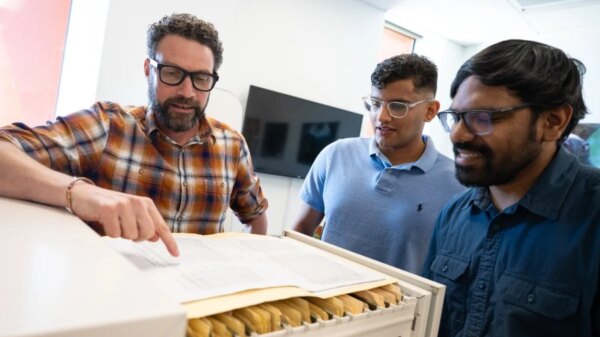
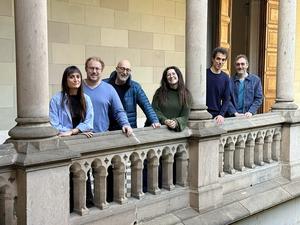
Student involvement is a cornerstone of the lab’s operations, with undergraduate, master’s, and doctoral students collaborating on projects, mentoring newer members, and contributing to research efforts. Nhi Tran, a doctoral student and newcomer to the lab, shared insights into the collaborative culture, stating, “The lab culture is very supportive in terms of how we collaborate.” She emphasized the interplay between experienced members and novices, fostering skill development and project completion.
Tran also noted the potential for robots to take on tasks that may be challenging for many individuals, particularly in varied environments ranging from warehouses to households. The lab’s research aims to enhance the utility of these systems in practical, everyday scenarios.
Looking to the future, Srivastava articulated the lab’s long-term vision: to develop autonomous systems that are both more capable and trustworthy. The goal is to enable these technologies to operate safely and efficiently alongside humans in everyday contexts. “We don’t make robots; we make robots intelligent,” Srivastava concluded, underscoring the lab’s commitment to advancing the field of AI.
As the AAIR Lab continues its research endeavors, it remains at the forefront of revolutionizing how AI integrates into daily life, striving for a future where intelligent systems enhance human capabilities across diverse applications.
See also AI Seer Launches MSRD Tech with 83% Accuracy for Credibility Assessment at IMDA Workshop
 New Study Reveals AI Misrepresents Neanderthals, Reflecting Outdated Science
 AI Development Shifts to Core Capability by 2026, Demanding Accountability and Trust
 PART Introduces Off-Grid Self-Supervised Learning for Enhanced Image Composition Understanding
 OpenAI’s GPT-5 Launch Sparks User Grief and Protest Over AI Model Changes