The emergence of a prototype for extreme ultraviolet (EUV) lithography in China has sparked significant market reactions, despite the capabilities of the machine remaining unverified by independent sources. EUV lithography, a technology used to etch intricate patterns onto silicon wafers, is crucial for producing cutting-edge computer chips. The reports suggest a potential shift in the competitive landscape of chip manufacturing, particularly as China seeks to bolster its self-sufficiency in this vital sector.
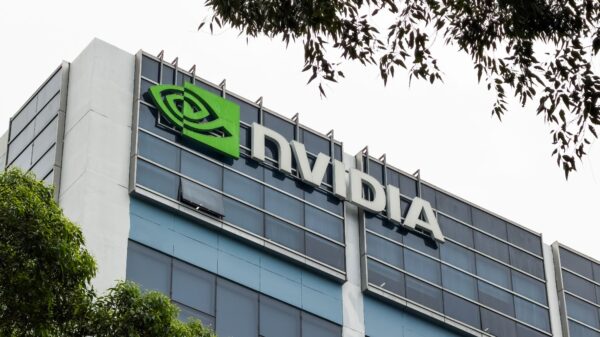
At present, Dutch company ASML is the leading manufacturer of EUV machines, but stringent export restrictions have hindered China’s access to this technology. Consequently, Chinese manufacturers are making strides in developing their own EUV capabilities, which could allow them to produce advanced chips and machines at significantly lower prices. This could disrupt the existing market, affecting the earnings of established firms such as ASML and NVIDIA.
The latest developments underscore China’s ambition to become a self-reliant powerhouse in technology, potentially altering the dynamics of future trade negotiations. On December 17, shares of ASML fell by 3.81%, mirroring a similar decline in NVIDIA’s stock. The downtrend highlights investor concerns regarding the viability of Western chip companies maintaining their technological edge amidst China’s rapid advancements.
In the broader economic context, China is facing substantial challenges as it attempts to achieve its 5% GDP growth target for 2025. Domestic demand has weakened sharply, particularly evident in November, while hopes for a recovery in the housing market have dimmed as property prices continued to decline. Lawmakers have promised fiscal and monetary support to stabilize the labor market and boost consumer spending, but the ongoing housing crisis and competitive pressures are dampening consumer sentiment.
Recent reports indicate that the city government of Beijing has intervened by summoning online platforms to remove misleading information related to property, reflecting the urgency with which authorities are trying to manage public perceptions in a fragile market. The house price index in China fell by 2.4% year-on-year in November, a slight acceleration from the 2.2% decline recorded in October, as the market grapples with a protracted decline.
Furthermore, the Central Finance Office of China has identified expanding domestic demand as a priority for next year’s policies, reinforcing the need for robust fiscal interventions. The medium-term outlook, while cautiously optimistic, hinges on effective policy measures that enhance consumer confidence and stimulate spending.
As the November downturn highlights, successful implementation of these measures, combined with improved external demand, could support a bullish outlook for Mainland China-listed stocks. The Hang Seng Index experienced a 5.44% decline in the fourth quarter, potentially ending a three-quarter winning streak; however, it remains up 26.54% year-to-date (YTD). The CSI 300 has gained 15.64% YTD, despite a modest 1.95% fall in the current quarter.
In contrast, the Nasdaq Composite Index has seen a marginal increase of 0.15% in Q4, although it has retreated from an all-time high of 24,020 reached in October. While the Nasdaq remains close to its peak, the CSI 300 is currently situated at 4,550, significantly below its 2021 record high of 5,931.
Technical indicators for the CSI 300 suggest bearish fundamentals. The index is trading below its 50-day exponential moving average (EMA) but remains above the 200-day EMA. This pattern points to a bearish near-term outlook, with resistance at the 4,500 level. A sustained decline below this threshold could prompt further drops toward the 4,365 support level and the September low of 4,328. If the index falls below 4,365, the bullish medium-term outlook would be compromised, raising concerns about the resilience of China’s economic recovery and technological advancements.
See also NASA’s OSIRIS-REx Reveals Life’s Building Blocks in Asteroid Sample, Challenges Biology Detection
 UCSD’s Hao AI Lab Acquires NVIDIA DGX B200, Boosts Low-Latency LLM Performance
 Google Research Advances AI to Amplify Human Ingenuity and Drive Real-World Impact
 New Protocol Reduces Communication Complexity in Distributed Estimation by 50%
 AI-Driven Research Boosts Productivity by 89% but Raises Concerns Over Quality, Study Finds