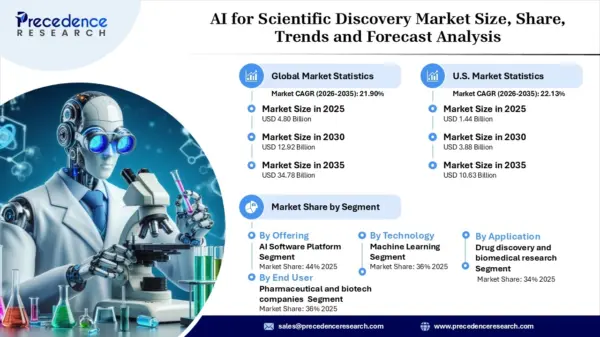












































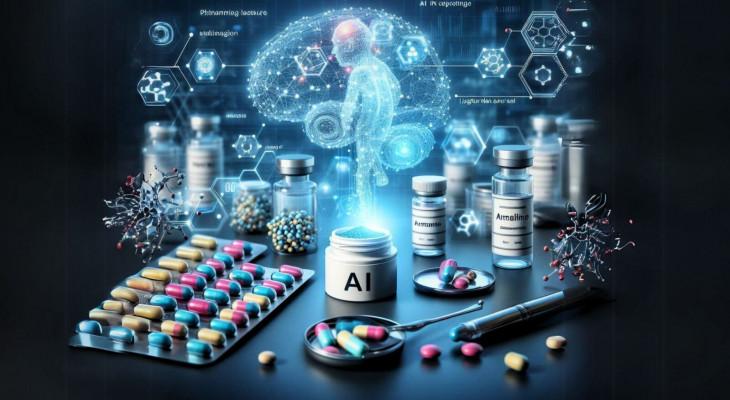
The Generative AI Drug Discovery Market is transforming the pharmaceutical landscape, moving away from traditional methods characterized by chance and extensive screening. This shift is driven by the application of Generative AI, which has the potential to reverse decades of increasing costs and inefficiencies in drug discovery typified by “Eroom’s Law.” By employing advanced models such as Transformers, Variational Autoencoders (VAEs), and Diffusion Models, researchers can create novel molecular structures tailored to specific criteria like potency and toxicity, significantly streamlining the discovery process.
As of 2026, the market is seeing practical applications of this technology, with AI-generated molecules entering Phase II clinical trials. This development underscores the role of Generative AI as more than just a research tool; it is becoming a critical component of commercial drug development. The emergence of a “Digital Biotech” ecosystem underscores the intersection of high-performance computing, structural biology, and deep learning in drug discovery.
Innovation is a key driver in this market, fueled by advances in Generative Biology and Protein Language Models. These models, akin to Large Language Models like GPT-4, learn the intricacies of amino acid sequences to design proteins and tackle previously “undruggable” targets. The industry is moving towards a “Lab-in-the-Loop” approach, where Generative AI is integrated with automated robotic laboratories. This closed-loop system allows for real-time feedback between AI-designed molecules and experimental results, drastically shortening the timeline for Lead Optimization from years to mere months.
Furthermore, the distribution model is evolving from software licensing to “Asset-Centric Partnerships.” Companies are transitioning from merely selling AI platforms to utilizing these technologies for proprietary drug discovery and subsequently partnering with pharmaceutical firms for clinical development and commercialization. This change emphasizes the pursuit of high-value milestone payments and royalties rather than low-margin software fees.
Looking ahead, the future of Generative AI in drug discovery appears robust, with trends toward “Polypharmacology” and Multi-Target Design. Whereas traditional drug development typically targets one specific ailment, future applications may yield “Promiscuous Drugs” that can simultaneously address multiple targets to combat complex diseases like Alzheimer’s. The anticipated integration of Quantum Computing also promises to enhance the accuracy of binding affinity predictions at a quantum mechanical level.
Several factors are driving this market forward, including the looming patent cliff faced by the pharmaceutical industry, where billions are at risk as key drugs lose exclusivity. This scenario coincides with skyrocketing costs associated with bringing new drugs to market, often exceeding $2 billion with a staggering 90 percent failure rate in clinical trials. Generative AI offers a timely solution by potentially cutting early-stage discovery timelines by up to 50 percent while improving the probability of success by filtering out ineffective candidates before human trials.
The explosion of multi-omics data from next-generation sequencing, single-cell genomics, and proteomics further fuels Generative AI’s capabilities. High-quality biological datasets, when combined with chemical structure databases like ChEMBL or ZINC, serve as vital training grounds for deep learning models to discern the intricate relationships between molecular structures and biological activities.
However, challenges remain, particularly concerning data quality and the “hallucinations” that can occur during AI training. The reliability of AI models heavily depends on the quality of the data they are trained on. Noisy or incomplete datasets can lead to the generation of chemically unstable or toxic molecules. Regulatory agencies, such as the FDA, demand transparency in AI-generated predictions, making the “Black Box” nature of many deep learning models a significant hurdle for acceptance in clinical trials.
The issue of intellectual property rights surrounding AI-generated inventions is another pressing challenge. Existing patent laws often require a human inventor, leading to complicated legal questions about ownership of novel molecules. This uncertainty could hinder commercialization efforts until legal frameworks are updated to adapt to advancements in AI.
Despite these challenges, opportunities abound in areas such as biologics and antibody design. While small molecules have dominated early AI discovery efforts, there is considerable potential for innovations in biologics, particularly in developing next-generation immunotherapies. Generative AI’s capacity to screen existing medicines for new therapeutic uses also presents exciting prospects for drug repurposing and “rescue” strategies for previously failed candidates.
North America currently leads the market, bolstered by substantial venture capital investments and a strong regulatory framework that encourages rapid adoption of AI technologies in drug development. In Europe, collaborative research initiatives like the MELLODDY project showcase how AI can be trained on shared data while respecting trade secrets. Meanwhile, the Asia-Pacific region is rapidly emerging as a key player, particularly due to the pharmaceutical manufacturing capabilities of China and India.
As the industry navigates these transformative changes, the convergence of technology and biology stands to redefine the future of drug discovery. The integration of Generative AI into the pharmaceutical sector not only promises to enhance R&D efficiency but also represents a significant shift in how the industry approaches the development of new therapeutics.
See also CURE-ND Event Unites AI Experts to Enhance Collaboration in Disease Research
 ISG Launches Study on Microsoft AI Services to Enhance Enterprise Business Processes
 Taiwan and Sweden Expand Tech Partnership in Chips, AI, Drones through 2031