





































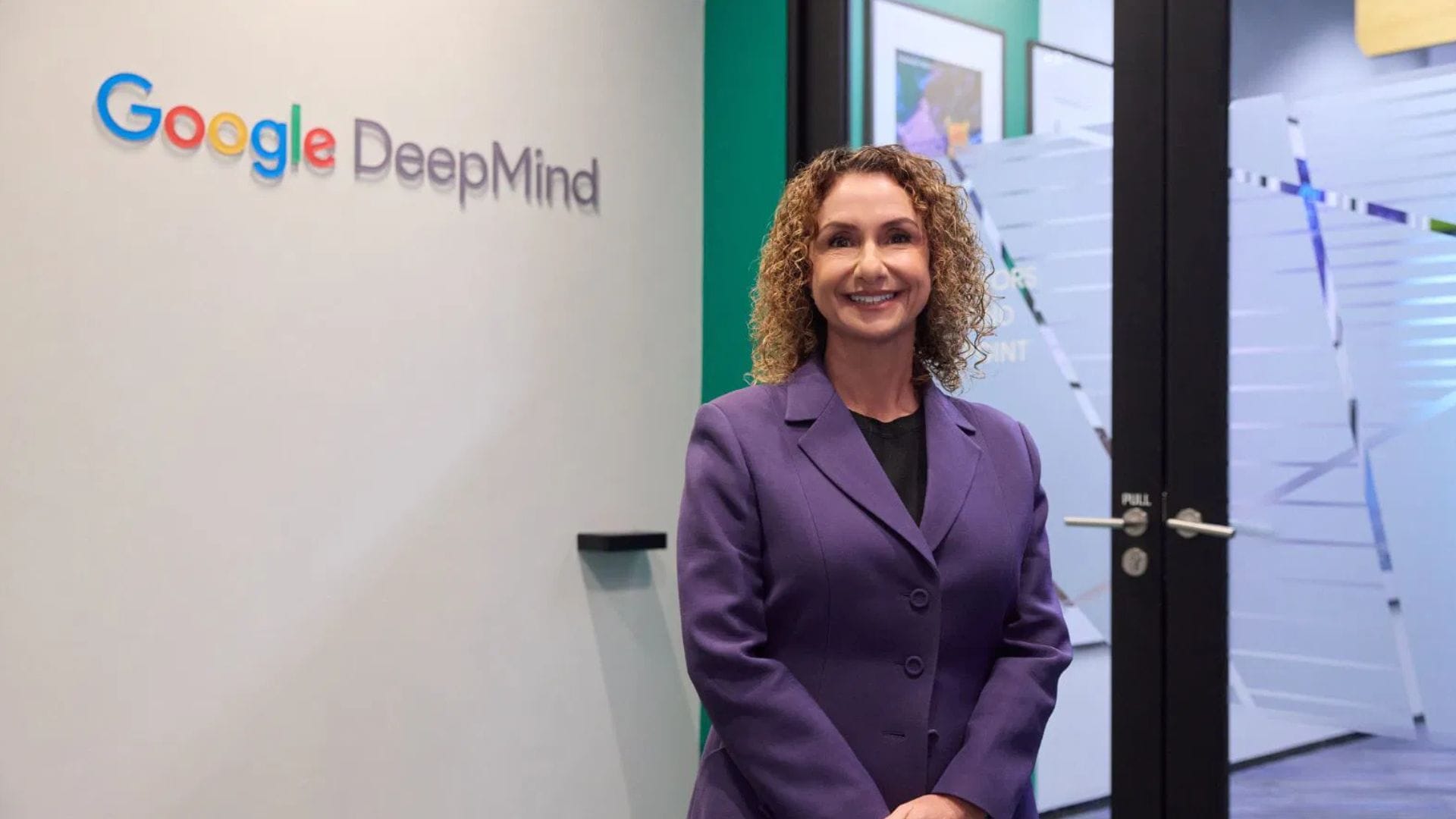
Google DeepMind has launched a new artificial intelligence research lab in Singapore, aimed at advancing its Gemini AI model by focusing on regional languages, cultural understanding, and advanced reasoning. This initiative, announced during a media event at the company’s Pasir Panjang office on November 19, seeks to establish a stronger research presence in Southeast Asia while contributing to global projects across sectors like energy, healthcare, and climate.
The Singapore lab plans to collaborate with local agencies and academic institutions to develop AI models that can better interpret Southeast Asian languages and the cultural nuances that influence communication in the region. Lila Ibrahim, Google DeepMind’s chief operating officer, highlighted Singapore’s commitment to innovation and digital growth as key factors in the decision to open the lab there. “We need a partnership that helps us balance both long-term and short-term goals,” she stated, emphasizing the importance of making AI accessible beyond elite applications to avoid leaving marginalized communities behind.
Founded in London in 2010 and acquired by Google in 2014, DeepMind has made significant strides in the AI field, with notable achievements such as AlphaFold, which accurately predicts 3D models of protein structures. This technology has already facilitated major scientific advancements, including a breakthrough by Singapore’s National Neuroscience Institute and A*STAR in understanding Parkinson’s disease.
DeepMind has been increasingly forming local partnerships, recently collaborating with AI Singapore on Project Aquarium, a platform designed to collect data on regional languages. This initiative aligns with Singapore’s home-grown AI model, Sea-Lion, which recognizes 13 languages, including Malay, Tamil, Thai, and Vietnamese. Yolyn Ang, vice-president of Google’s knowledge and information partnerships team in the Asia-Pacific, stressed the importance of localizing AI models for better public adoption. “Does it sound too formal? Does it sound like a textbook, or like a friend? Being able to tune it appropriately really changes how people can adapt,” she noted, highlighting the role this adaptability plays in advancing healthcare and education.
In addition to linguistic nuances, Ms. Ibrahim pointed out that improving AI understanding also encompasses culturally relevant visual cues that enhance how these models respond in diverse social settings.
Over the past year, Google DeepMind has more than doubled its investments in the Asia-Pacific region, with the new Singapore lab following recent facility openings in Japan and India. This expansion reflects a broader trend of global tech companies, including Microsoft and Alibaba Cloud, establishing AI research centers in Singapore. The new lab will recruit research scientists, software engineers, and operations specialists to work collaboratively with governments, businesses, civil society, and academic institutions. Though Ms. Ibrahim did not disclose specific hiring numbers, job postings for various positions, including operations manager and foundational research scientist lead, have already appeared on Google’s website.
Turning research into practical applications is a key focus for DeepMind. Ms. Ibrahim emphasized the necessity of strong partnerships with governments and industries to ensure research leads to real-world solutions. She cited the company’s collaboration with the National Hurricane Centre in the United States, where DeepMind contributed to predicting the path of Hurricane Melissa. The recent release of WeatherNext 2, a weather prediction model capable of forecasting patterns up to two weeks in advance, underscores the potential of these technological advancements in supporting crisis management globally.
Mark Pereira, head of partnerships in strategy and growth at AI Singapore, commented on how Google DeepMind’s presence in Singapore will facilitate the transition of research findings from theoretical projects to practical applications. “A lot of research projects just tend to be left on the shelf and don’t really see true use,” he remarked. The partnership aims to bring AI technology to the public while ensuring responsible governance of AI systems.
Pereira further noted that the Singaporean Government would benefit from a global perspective when shaping AI regulations. “We’ve been speaking closely with the Google team to understand what’s good for Singapore and Southeast Asia,” he said. “Having all these different lenses helps to frame what’s the best way we can build a truly safe and ethical AI, a large-language model that’s representative of us in Singapore.” As Google DeepMind continues to expand its footprint in the region, the implications for AI development and deployment in Southeast Asia are significant, offering potential benefits across various sectors and communities.
See also AI Chatbots Exposed: 62% Successfully Reveal Nuclear Bomb Info via Poetic Prompts
 Anthropic Researchers Reveal AI Model Exhibits Alarming Misalignment Behaviors
 High School Dropout Gabriel Petersson Joins OpenAI, Mastered AI with ChatGPT
 AI Models Bypassed by Poetry: 62% Respond to Harmful Prompts, Study Finds
 Philips Launches Verida, First AI-Powered Detector-Based Spectral CT, Boosting Diagnostic Precision