









































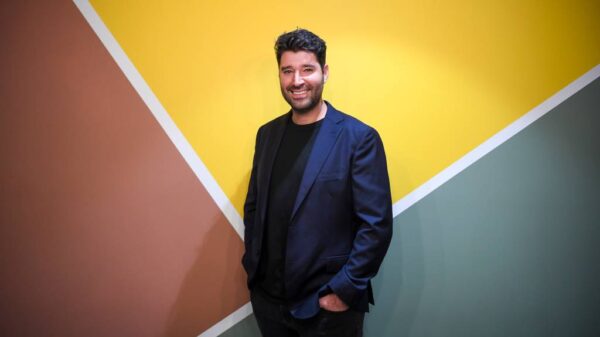

A high school dropout has leveraged machine learning education through ChatGPT to secure a position as a research scientist at OpenAI, working specifically on the Sora project. Gabriel Petersson shared his unconventional journey during an episode of the “Extraordinary” podcast released on Thursday, highlighting how he achieved a role typically reserved for PhD holders.
Petersson emphasized that, unlike in the past, universities no longer monopolize foundational knowledge. “You can just get any foundational knowledge from ChatGPT,” he stated, explaining that his learning approach involved starting with a problem and recursively breaking it down into manageable components.
Joining the Sora team at OpenAI in December, as indicated on his LinkedIn profile, Petersson previously worked as a software engineer at Midjourney and Dataland. He dropped out of high school in Sweden in 2019, choosing to join a small startup where he rapidly acquired coding skills out of necessity. “We had to build things, and we have to make product recommendation systems, scraping, integrations,” he recalled of his early experiences.
Petersson’s hands-on work experience informed his learning methodology. “The good thing with just working is that you always have a real problem,” he said, noting that solving genuine challenges accelerates the learning process. He adopted a top-down approach for his machine learning education, initially asking ChatGPT for project ideas, allowing the AI to generate code, and then debugging with its assistance. This iterative process led him to a comprehensive understanding of machine learning concepts.
“Suddenly, you have all the foundational knowledge, like, it doesn’t need to go bottom up anymore,” he added, underscoring the efficiency of this targeted learning approach. Petersson also advocated for a results-oriented mindset, asserting that companies prioritize outcomes over credentials. “Companies just want to make money. You show them how to make money, that you can code, and they’ll hire you,” he stated, indicating a shift in how talent is evaluated in the tech industry.
The rise of college dropouts in the tech sector has been bolstered by advancements in artificial intelligence. OpenAI CEO Sam Altman, himself a Stanford dropout, expressed envy for today’s young dropouts, acknowledging the vast opportunities available for innovation. In a recent interview at the DevDay conference, he remarked, “The amount of stuff you can build, the opportunity in this space is so incredibly wide.”
Venture firm Andreessen Horowitz noted in a March blog post that the landscape has become more favorable for younger founders, suggesting it is an opportune time for dropouts and recent graduates to launch their ventures. This sentiment is echoed among some CEOs who openly challenge the value of traditional higher education. Palantir CEO Alex Karp stated in February that much of what is taught in schools is “intellectually incorrect,” further promoting alternative pathways like the Meritocracy Fellowship launched by his company, aimed at high school graduates who choose not to pursue college.
The narratives surrounding education, work, and success in the tech industry are evolving. As more professionals like Petersson challenge conventional paths, the emphasis on practical skills and tangible results continues to reshape the hiring landscape. This trend not only reflects changes in educational paradigms but also highlights the increasing importance of adaptability in the face of rapid technological advancements.
See also AI Models Bypassed by Poetry: 62% Respond to Harmful Prompts, Study Finds
 Philips Launches Verida, First AI-Powered Detector-Based Spectral CT, Boosting Diagnostic Precision
 REF-AI Report Reveals Universities Must Define Generative AI Use for Research Integrity
 New Study Reveals Poetic Prompts Bypass AI Safety Systems in 62% of Tests
 Agentic AI Redefines Enterprise IT with 45% of Firms Achieving Autonomy by 2030