





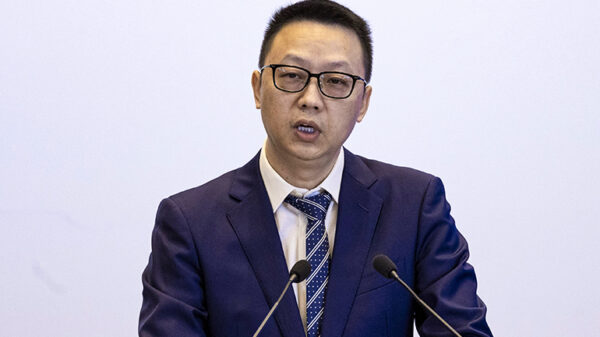















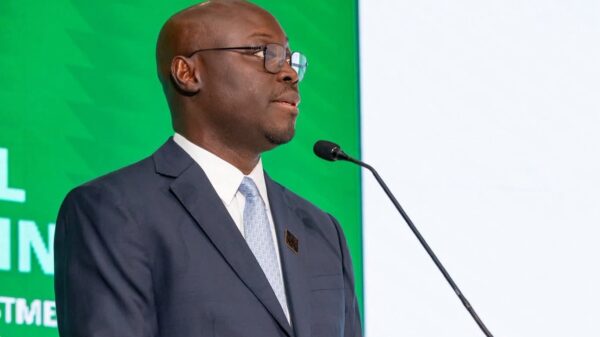
















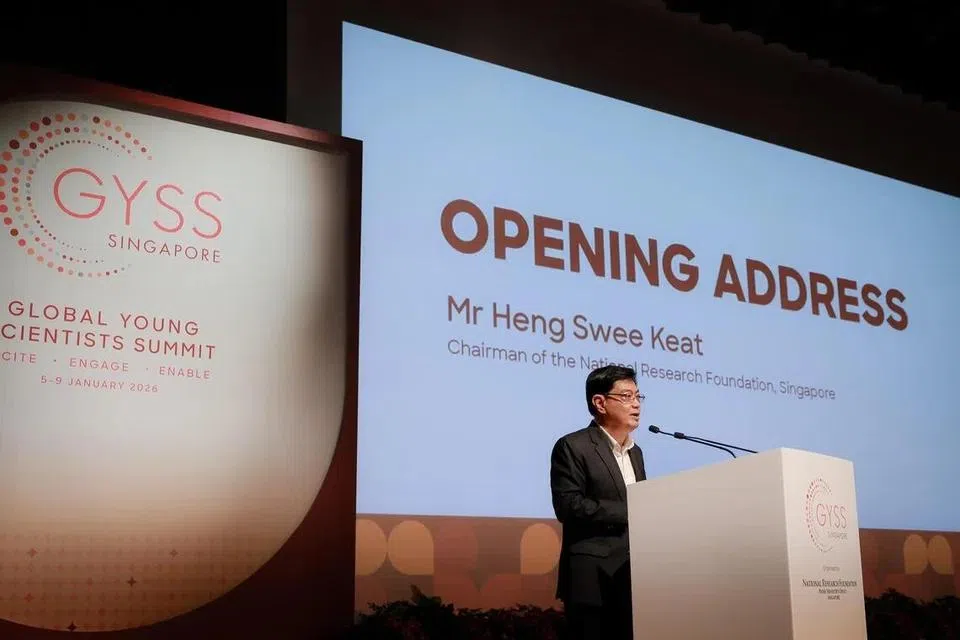
As global advancements in artificial intelligence (AI) and machine learning transform the landscape of research and innovation, the National Research Foundation (NRF) of Singapore is poised to adapt to these changes, according to NRF chairman Heng Swee Keat. Speaking at the opening ceremony of the 14th Global Young Scientists Summit on January 6, 2026, he outlined three pivotal trends that are anticipated to shape the future of science.
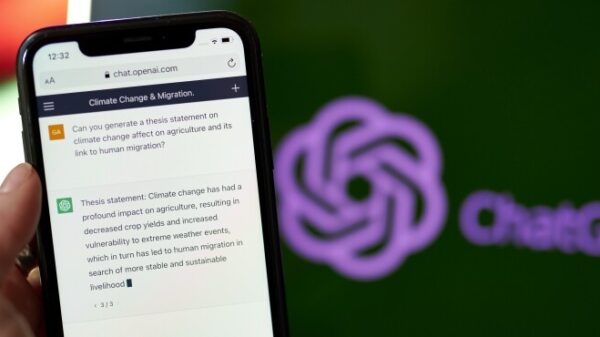
The first trend is the integration of AI, which offers scientists sophisticated tools to tackle increasingly complex scientific problems. Mr. Heng emphasized that while these developments present significant opportunities, they also raise ethical questions regarding accountability and potential misuse. “Scientists and innovators must work with policymakers all over the world to develop and apply AI systems ethically and responsibly,” he stated.
The second notable trend highlighted by Heng is the rapid advancement of quantum computing. Unlike traditional computing, which operates at higher temperatures, quantum computing functions at ultra-cold temperatures near absolute zero. At these temperatures, quantum particles such as electrons or photons can be manipulated to perform complex mathematical computations that traditional systems struggle to achieve. “Quantum computing is advancing swiftly and is on the brink of solving what are once-unsolvable computational problems—from simulating complex biological systems to optimizing supply chains,” he said. However, he cautioned that significant work remains to develop scalable, reliable, fault-tolerant quantum systems.
The third trend is the growing importance of interdisciplinary research, which becomes essential as humanity faces increasingly complex challenges. For instance, addressing climate change necessitates expertise from various fields, including environmental science, engineering, data science, and policy analysis. “At the NRF, we are committed to fostering such interdisciplinary collaboration, knowing that the solutions to our greatest challenges will come from these intersections of scientific and other fields of knowledge,” Mr. Heng remarked.
This outlook comes as Singapore prepares to implement its Research, Innovation and Enterprise (RIE) 2030 plan, aimed at strengthening the nation’s research capabilities over the next five years. Announced in December 2025, the RIE 2030 plan features a budget of $37 billion, approximately 1% of the country’s gross domestic product.
Of this funding, $3 billion will be allocated to two new high-level research programs: the RIE Grand Challenges, which aim to generate significant impact in national strategic priorities, and the RIE Flagships, designed to foster creation of economic value. The first Grand Challenge will focus on the ageing population, while the initial Flagship project will address semiconductors, positioning Singapore as a key research and development hub in this sector.
Mr. Heng explained that through the RIE Flagships and Grand Challenges, NRF is adopting a systematic approach to define desired economic and strategic outcomes, identify critical research bottlenecks, and develop coordinated research and innovation programs to realize these targeted goals. He added that NRF will continue to invest heavily to retain Singapore’s basic research talent and expertise at the forefront of global advancements while developing capabilities and infrastructure in AI, data, and advanced computing.
Looking ahead, NRF plans to implement a long-term funding strategy to sustain and upgrade essential research infrastructure, ensuring that scientists have access to the advanced tools and facilities necessary for globally competitive research. Mr. Heng further stressed that excellence in research is about assembling top talent from Singapore and around the world to address the most pressing challenges. To bolster this aim, NRF will enhance its portfolio of research grants, fellowships, and investigatorships to support both established and emerging local researchers, while attracting premier research talent from abroad.
The five-day Global Young Scientists Summit, which concludes on January 9, has witnessed its largest participation since its inception in 2013, with over 400 young researchers from 57 countries, including first-time contributors from Kazakhstan, Mexico, and South Africa. The event also features 21 distinguished scientists, including Nobel laureates, Turing Prize winners, and recipients of the Millennium Technology Prize.
As Singapore embarks on this ambitious research agenda, the NRF’s commitment to harnessing AI, quantum computing, and interdisciplinary collaboration signals a forward-looking approach to addressing the multifaceted challenges facing humanity.
See also GCC AI Market Set for Rapid Growth, Driven by $1B UAE Initiative and M&A Surge
 Austria Invests €2.7 Million in Machine Learning for Steelmaking at Johannes-Keppler-Universität
 Stanford AI Tool Predicts 130 Diseases from One Night of Sleep with 80% Accuracy
 FactSet Expands AI Integration, Projects $2.4B Revenue by 2026 Amid Rising Tech Costs
 Latin America Lags in AI and Disinformation Research, Study Reveals Urgent Need for Action